Best Places to Install Pigeon Deterrents at Home for Maximum Effectiveness | Smart Distribution That Prevents Their Return Permanently | Shaheen Company
The issue with pigeons in homes is not just their presence, but the specific spots they repeatedly use for perching or nesting. This is where the difference appears between random installation and a smart, targeted placement strategy. Based on real on-site experience, the same repellent can succeed in one location and fail in another simply because of placement. The key is not only the type of repellent but where it is installed, since pigeons tend to return to the same safe نقاط. When these نقاط are properly targeted, the problem is significantly reduced and may even disappear completely without the need for additional solutions.
Best Places to Install Pigeon Repellent for Effective Results
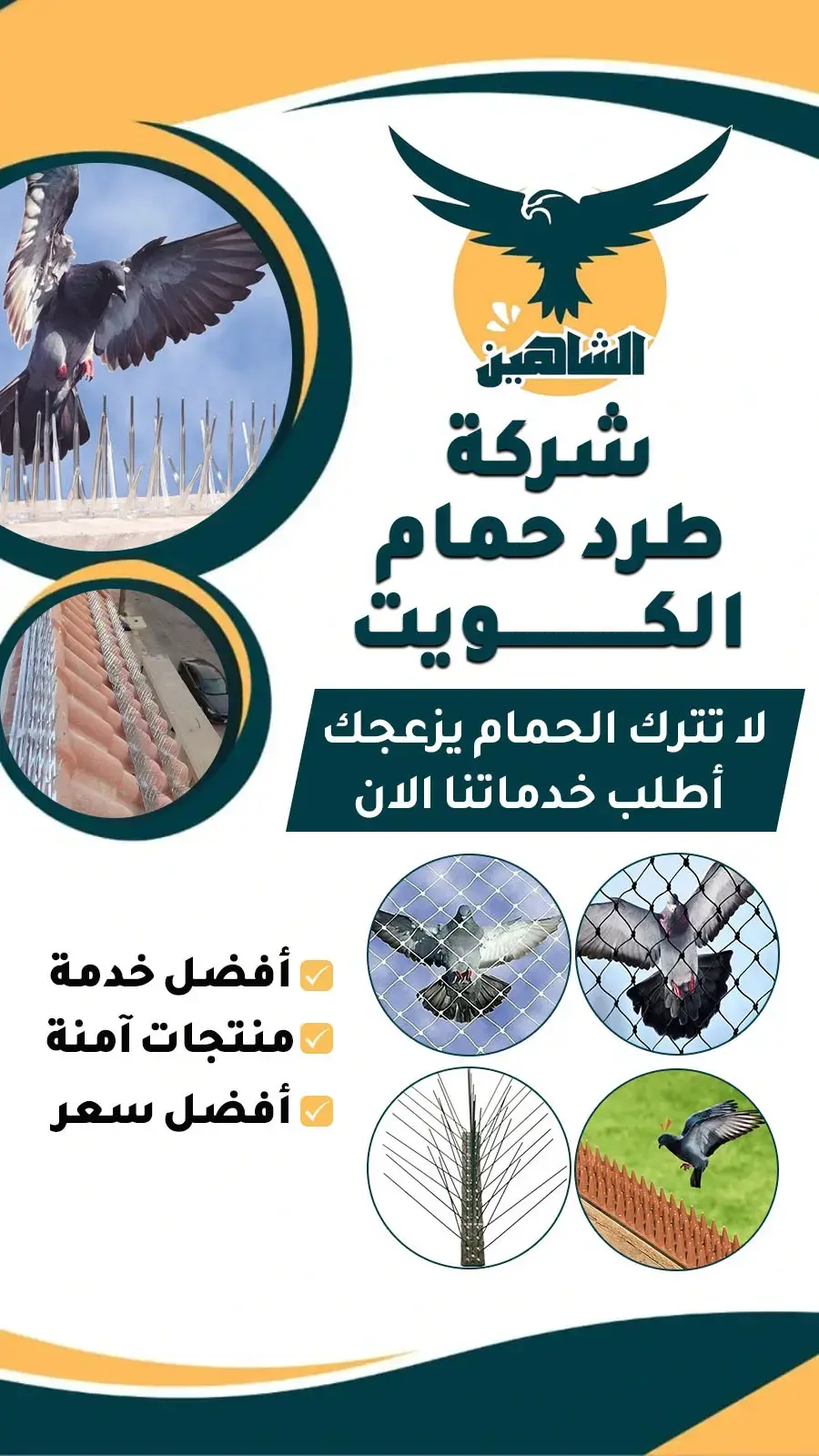
Choosing the right location is the most important step because even the best repellent will fail if installed in the wrong place.
-
Elevated edges commonly used for perching should be treated first
-
Quiet corners suitable for nesting must be covered
-
Areas near food or water sources require direct attention
-
Any spot with repeated pigeon activity should be targeted instead of random placement
Common تجمع Areas in Balconies and Rooftops and How to Target Them
Pigeons select specific نقاط within balconies and rooftops, so understanding these spots helps apply solutions more effectively.
-
Balcony rail edges are frequently used for perching
-
Hidden corners behind objects are ideal for nesting
-
Open rooftop spaces without obstacles encourage settling
-
Targeting these areas reduces the need for full coverage
Best Placement Points Around Windows and AC Units
Windows and AC units are weak points in many homes because they offer stability and easy access.
-
Window edges should be protected to prevent direct perching
-
The top of outdoor AC units attracts pigeons
-
Small gaps around units can turn into nesting spots
-
Treating these areas prevents indoor intrusion
Where to Install Netting to Block Entry into Balconies
Netting is used when full prevention is required, so it must be installed strategically to close off access.
-
Open balcony spaces that allow pigeons to enter
-
Gaps between walls or columns that act as entry points
-
Elevated areas that are difficult to secure otherwise
-
Proper installation ensures airflow while blocking access
How to Prevent Pigeons from Perching on Edges and Corners
Perching is the first step before nesting, so preventing it significantly reduces the problem.
-
Installing spikes on edges prevents direct landing
-
Treating stable corners removes comfortable spots
-
Modifying surfaces makes them unsuitable for perching
-
Combining methods increases effectiveness
Smart Distribution of Spikes and Netting
Effective results depend on using each solution in the right place rather than applying one method everywhere.
-
Spikes are best for edges and narrow areas
-
Netting is used for open spaces requiring full blockage
-
Combining both methods provides complete coverage
-
Distribution should be based on site analysis, not guesswork
Strategy for Installing Pigeon Repellent for Best Results
Strong results come from a clear placement plan that covers key impact points rather than random installation.
-
Start by identifying the most active perching and nesting spots
-
Choose the right type of repellent for each specific area
-
Prioritize high-impact zones for faster results
-
Review the installation to ensure no weak points remain
Key Areas That Must Be Protected in the Home
Not all areas are equally important, so focusing on critical spots leads to faster and better outcomes.
-
External edges that are easily accessible from flight paths
-
Areas near ventilation or AC units
-
Enclosed corners suitable for nesting
-
Locations with visible repeated pigeon traces
Is Installing Repellent in One Spot Enough
Relying on a single location is a common mistake because pigeons simply move to nearby نقاط.
-
Treating one spot pushes pigeons to another within the same area
-
Effective solutions require covering all possible movement paths
-
Partial installation gives temporary results only
-
Proper distribution prevents relocation within the site
Common Installation Mistakes That Reduce Effectiveness
Many failures are caused by simple mistakes rather than the type of repellent used.
-
Leaving uncovered gaps that allow pigeons to land or enter
-
Choosing the wrong repellent for the specific area
-
Installing without understanding pigeon movement patterns
-
Ignoring follow-up checks after installation
How to Fully Cover Rooftops to Prevent تجمع Completely
Rooftops require full treatment because they are open spaces that allow free movement.
-
Use netting to cover open areas and block access
-
Treat edges to prevent perching
-
Ensure no openings or unprotected sections remain
-
Apply a complete solution for lasting results
Where to Place Repellent to Prevent Perching and Nesting Completely
The ideal placement targets areas that are both attractive to pigeons and critical in their movement.
-
Install repellent where pigeons begin settling
-
Focus on frequently used نقاط rather than random areas
-
Cover movement paths to stop repetition
-
Proper placement reduces the need for additional solutions
Frequently Asked Questions
-
Is installing repellent in one place enough
Usually not because pigeons will move to another nearby spot -
What is the first area to treat
Start with spots showing the highest activity and droppings -
Can partial coverage be effective
Yes in some cases but large open areas may require wider coverage -
How do I know the placement is correct
When pigeons stop appearing or moving within the same space -
Do placement points differ between homes
Yes every home layout requires a different approach -
Can pigeons return after installation
Yes if attractants remain or some areas are left unprotected
Conclusion
In the end, successful pigeon control is not just about the type of repellent but where it is installed. Proper placement is the key factor that determines whether the solution is temporary or long-lasting. Real experience shows that the best results come from identifying pigeon points and applying a strategic distribution that covers all critical areas without leaving gaps. Any overlooked spot can bring the problem back again. Smart planning based on understanding pigeon behavior and movement is what ensures a stable solution that lasts without the need for repeated fixes or additional measures over time.
 Contact Us on WhatsApp