Termite Control Company in Kuwait and Building Protection
Termites are not a surface-level pest problem that can be judged by the number of insects you see. A large part of their activity may remain hidden inside timber, structural voids, or protected routes for a long time before obvious signs appear. Sometimes the first indication is a small change around a door frame or skirting board while the more important part of the infestation remains out of sight. That is why choosing a termite control company in Kuwait should start with diagnosing the condition before deciding on treatment. At Al Shaheen, we assess the type of damage, where it appears, the age of the building, and the surrounding elements before defining the correct treatment scope. The goal is not simply to spray damaged wood, but to understand the problem, protect unaffected areas, and avoid confusing termite control with repairs to damage that has already occurred.
Termite Control Company in Kuwait
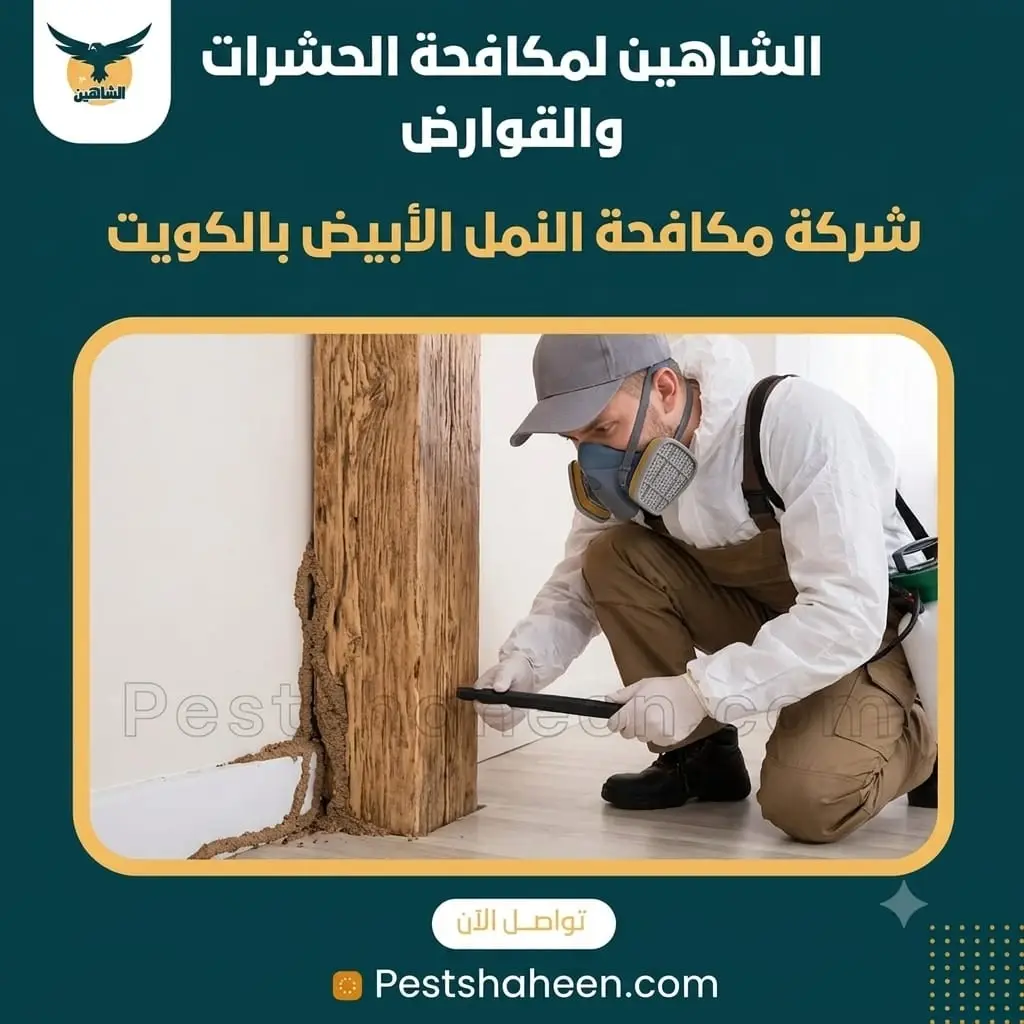
Choosing a termite control company in Kuwait starts with one important question: can the company identify what actually needs treatment before applying pesticide? This matters because the first thing the customer notices does not always reflect the true extent of the infestation. A visible sign may be limited to one door frame, or it may be part of activity connected to a wider area. For that reason, the decision should not be based only on the appearance of the wood from a distance or on a photo sent by phone when the condition requires an on-site inspection.
A professional company begins by building a history of the problem. When did the residents first notice the damage? Has it changed noticeably over a short period? Has the same section of wood been replaced before? Have similar signs appeared elsewhere in the property? Has any maintenance, renovation, or structural alteration recently been carried out nearby? These questions help create a clearer picture instead of treating every visible sign as an isolated new infestation.
The company should also understand the limits of its own role. Termite control is intended to manage pest activity and the access routes addressed within the treatment plan, while timber that has already lost structural strength may require a carpenter, contractor, or another qualified professional to assess repair or replacement. When these two roles are mixed together, customers may incorrectly expect pesticide treatment to restore damaged timber to its original condition.
At Al Shaheen, we make sure the property owner understands the inspection findings before treatment begins. If there are strong indicators of current termite activity, we define the appropriate treatment area. If the visible damage appears more consistent with an older issue, that difference is explained instead of automatically applying a larger treatment than the condition requires.
-
The treatment decision is based on the signs present their history and their distribution throughout the property so the service scope reflects the actual condition rather than a general assumption about termites
-
Pest control is clearly separated from repairing damaged timber because successful termite treatment does not restore the structural strength of an element that has already been weakened
-
Areas requiring active treatment are distinguished from areas that only need monitoring so the inspection does not turn into unnecessary whole-building treatment
-
A reliable company explains what was found in clear terms instead of relying on fear or promising that one visit will solve every termite problem regardless of the condition of the building
Termite Control in Kuwait
Effective termite control in Kuwait depends on understanding termite biology rather than simply reacting to the visible damage. Termites live in organized colonies and feed on materials containing cellulose, which is why timber and certain paper and cardboard products deserve particular attention when an infestation is present. Worker termites also tend to move through protected environments instead of travelling openly across exposed surfaces like ordinary ants, and this is one reason infestations can remain unnoticed for a long time.
For that reason, treatment should not focus only on spraying the damaged piece of wood. If termite damage is found in one timber element, it is important to determine whether that item is the only affected cellulose source or whether the activity extends to nearby materials. Long-term cardboard storage, unused timber, or accumulated cellulose-based materials can increase the amount of available food within the area.
It is also important to separate active termite control from the damage left behind by previous activity. Managing current pest activity requires one plan, while cleaning the area, removing unnecessary materials, and repairing damaged timber are separate supporting steps with different purposes.
One common mistake is removing damaged wood and installing new timber before understanding where the problem is coming from. The appearance may improve immediately, but if the conditions or termite activity remain, signs can eventually develop again around the new material.
At Al Shaheen, we assess the infestation beyond the visibly damaged timber. We review nearby materials, storage practices, and other elements that may fall within the same activity zone.
-
Cellulose-based materials in the affected area are assessed so treatment is not limited to one timber element while other potential food sources remain nearby
-
Cardboard and timber stored unnecessarily are reorganized or removed where appropriate because reducing excess cellulose sources helps improve environmental management after treatment
-
Replacing damaged timber is not treated as a stand-alone solution because changing the visible material without addressing the infestation may improve appearance without dealing with the cause
-
Treatment success is judged by stability in the affected area and the absence of new signs rather than by assuming the problem is solved simply because the damaged timber was removed
Subterranean Termite Control in Kuwait

The term subterranean termite control in Kuwait is commonly used by customers when referring to termite activity associated with species that can move from soil into parts of a building. In these cases, the focus shifts toward understanding the relationship between the property, the ground, and the surrounding environment because the visible damage inside a room is not necessarily close to the colony or the original access point.
In villas and ground-level buildings, it is important to consider how the affected areas relate to yards, gardens, flooring, exterior walls, and service zones. Damage may appear around an internal door frame even though the possible access route begins much farther away. For this reason, using the damaged location alone to identify the source can create an incomplete picture.
The way a timber element connects to the building also matters. Wood located in an elevated and isolated position is not the same as timber close to ground level or connected to a section with continuous contact with exterior surroundings. The aim of assessment is to understand the possible route rather than assume every infestation originates directly beneath the damaged material.
If signs appear in more than one area of a villa, their locations and patterns are compared rather than immediately concluding that the entire building is infested. Sometimes the signs form one clear treatment zone, while in other cases different areas may need separate evaluation.
This article focuses on existing buildings where termite activity has already appeared. Preventive soil treatment during construction involves different timing and procedures and should not be confused with treating termites in an occupied property.
-
The relationship between affected areas and the ground surrounding the property is assessed so possible access routes can be understood without assuming the colony is directly beneath the visible damage
-
Villas and buildings with greater contact with yards and soil require a different assessment from internal residential units because possible access routes are not the same
-
Signs appearing in several areas are analyzed according to the building layout instead of treating each sign as a separate colony or assuming the whole property is infested without evidence
-
Existing-building termite treatment is kept separate from preventive soil treatment during construction so each service has a clear purpose and the search intent of both topics remains distinct
Termite Damage Control in Kuwait
When customers ask for termite damage control in Kuwait, the first real task is to confirm whether the damage is actually associated with termites. The word “termite damage” is often used broadly, but timber can weaken for other reasons, including persistent moisture, decay, other wood-damaging pests, or even an old material-quality issue. Treating before diagnosing the cause can waste both time and money.
The inspection therefore focuses on the pattern and character of the damage rather than on the simple presence of weakened wood. Does the outer surface remain relatively intact while the inside is hollowed or weakened? Are there signs that are consistent with active pest behavior? Does the damage pattern fit termite activity, or is it concentrated around an obvious water problem? Is the damage recent, or has it been known about for years?
Sometimes a homeowner sees dust, debris, or changes in timber and immediately assumes termites are responsible. However, certain types of frass or wood debris may be associated with other wood pests whose behavior is different from termites. This is why the technician needs to know when the signs are consistent with termites and when another diagnosis should be considered.
It can also be useful not to remove every sign before inspection unless there is an urgent reason to do so. The damaged element itself may provide valuable information. Photographing the sign, recording its location, and noting when it appeared can all improve the quality of the assessment.
The value of a professional company is shown by its willingness to tell the customer whether termite treatment is actually needed rather than using the word “termite” as a reason to sell a service regardless of the true cause of damage.
-
The nature of the damage is confirmed before it is described as termite-related because choosing the correct treatment starts with identifying the actual cause of timber deterioration
-
Termite indicators are distinguished from moisture decay and other wood pest problems so an unsuitable treatment is not used
-
Damage pattern location and history are used together as evidence instead of relying on weakened timber alone
-
A trustworthy diagnosis may sometimes conclude that termite treatment is not required and that honesty is part of professional service rather than a weakness
Termite Spraying Company

Searching for a termite spraying company is common, but the word “spraying” can oversimplify the problem. Termites are not pests that can always be managed by spraying wherever they are seen on an open surface because most activity may be hidden in areas that ordinary surface applications cannot reach. What matters is not simply whether the company sprays, but what type of application is required and why a particular location has been selected.
In some cases, clearly defined zones connected to termite activity may need targeted treatment. In others, the spread of the signs may require a broader treatment scope. The decision should depend on the condition of the property rather than on the assumption that using more product automatically provides stronger protection.
Randomly spraying visible timber may look impressive to the customer because they can see something being done, but it does not necessarily address the route termites use to reach the material. This is where the difference appears between treatment based on diagnosis and broad surface coverage designed mainly to create the impression that everything has been treated.
The company should also explain whether the service is intended to treat an active infestation or to provide prevention during construction because these are different services. Pre-construction soil treatment or backfill treatment is not the same as managing termite signs that have already appeared in an existing home.
At Al Shaheen, every application is connected to a clear purpose, and the customer is told which area is being targeted, what the treatment is expected to address, and what may need monitoring afterward.
-
Treatment points and treatment zones are selected according to termite activity instead of spraying large areas simply to increase the amount of pesticide used
-
The purpose of each application is explained so the customer understands whether the service is addressing active infestation or forming part of a wider treatment plan
-
Surface spraying is not treated as a universal solution for every termite case because access to the infestation varies from one property to another
-
Preventive treatment during construction remains separate from treatment of an already infested building so different procedures and timings are not mixed within the same service
Termite Control Price
The termite control price depends on the amount of work required rather than on the number of insects the customer has seen because many termite infestations involve little or no visible surface activity. Accurate pricing therefore needs to consider property size, the number of suspected areas, accessibility, and the treatment method required after assessment.
A limited sign in one clearly defined timber element is different from a villa where evidence appears in several rooms or separate structures. Likewise, a property requiring inspection of concealed or difficult-to-reach areas is different from a location where the affected zone is open and easy to assess.
It is also important to ask what the quoted price actually includes. Does it cover inspection and treatment only? Are follow-up visits included according to the agreement? Is timber repair included, or is that a separate service? When these details are clear, customers can compare companies fairly instead of comparing two prices for services that are not equivalent.
One common mistake is trying to determine an exact price based only on the statement “I have termites” without knowing anything about the property. A preliminary range may sometimes be possible, but an accurate price should reflect the real service scope.
The cheapest option is not always better if it only includes limited treatment that does not match the condition, and the highest price is not automatically proof of professionalism. Value comes from accurate assessment, appropriate treatment scope, and clear communication.
-
Cost is influenced by the number of areas requiring intervention property type and accessibility rather than by the size of the visible damaged timber alone
-
The quotation should explain what is included so the customer understands the difference between inspection treatment follow-up and separate repair work
-
Larger properties are not automatically more expensive in every case if the infestation is highly localized which is why activity scope matters more than property size alone
-
Comparing companies is more accurate when both quotations include the same level of inspection and treatment scope instead of comparing prices for fundamentally different services
Termite Control Technician

The role of a termite control technician is not to enter the building with equipment and immediately begin applying treatment. The technician is the person who turns the homeowner’s observations into an organized diagnosis and determines which areas deserve priority and which may only require monitoring. Observation and documentation are therefore essential parts of the service.
The technician starts by listening to the history of the problem because the people living in the property know details that may not be visible during a short visit. They may explain that a door looked normal a month ago and has deteriorated recently, or that a similar sign appeared previously in another section of the property. These details help determine where to focus the inspection.
The next step is to compare damage patterns between different locations. If several timber elements are affected, they should not automatically be treated as identical cases. Their severity, age, position, and connection to surrounding structures may differ, and those differences affect treatment priorities.
Documentation also matters. Recording where signs appeared or photographing them before repair provides a reference point for later comparison. Without this baseline, the customer may struggle to know whether a mark is new or whether it was already present before treatment.
A professional technician also knows when the property owner needs another specialist. If a timber element has become significantly weakened, a carpenter, contractor, or other qualified professional may need to assess its repair independently from the pest control treatment.
-
Resident observations are collected before treatment decisions are made because the timing and development of damage can provide information that a single inspection cannot reveal
-
Affected locations are prioritized according to their condition instead of automatically applying the same action to every point
-
Important signs are documented so future comparisons are based on a clear reference rather than memory or guesswork
-
A skilled technician understands the limits of pest control and refers the customer for structural or timber repair when necessary instead of implying that pesticide treatment repairs existing damage
Treating Termites in the Home
Treating termites in the home focuses on managing the infestation within a property that is actively used every day while avoiding rushed decisions that could hide valuable evidence. When a homeowner discovers damage in a door frame, cabinet, or skirting board, the first reaction may be to remove or replace it immediately. If the condition allows, however, it is often better to assess the sign before disposing of the damaged material.
Once the affected element has been identified, its impact on normal use should also be considered. A door that has lost a significant amount of strength is not the same as a decorative timber element with limited surface damage. The first may need repair or replacement after pest activity is addressed, while the second may have different priorities. This is why home termite treatment needs to separate pest control from damage management.
The surrounding area should also be organized before and after treatment. If the location is crowded with cardboard boxes, old timber, or stored materials that prevent access, clearing the relevant area can improve both treatment and later monitoring. The goal is not to empty the entire home, but to make the affected zone accessible enough for proper assessment.
After treatment, it may not be wise to immediately cover every sign with paint or new finishing if the area still needs to be monitored. Timing matters because premature cosmetic work can remove the ability to compare the condition later.
At Al Shaheen, we explain what should remain visible for a period, what can be repaired, and what may require a carpenter or contractor depending on the extent of the damage.
-
The damaged element is assessed before removal whenever possible because the damage pattern itself can provide useful information about the infestation
-
The area around the infestation is organized so treatment and follow-up can be carried out without unnecessarily removing unrelated household contents
-
Timber repair requirements are assessed separately from termite control so customers do not assume that stopping pest activity automatically restores damaged material
-
Finishing and cosmetic repairs are timed carefully so signs that still need monitoring are not hidden too early
Eliminating Termite Activity in the Building
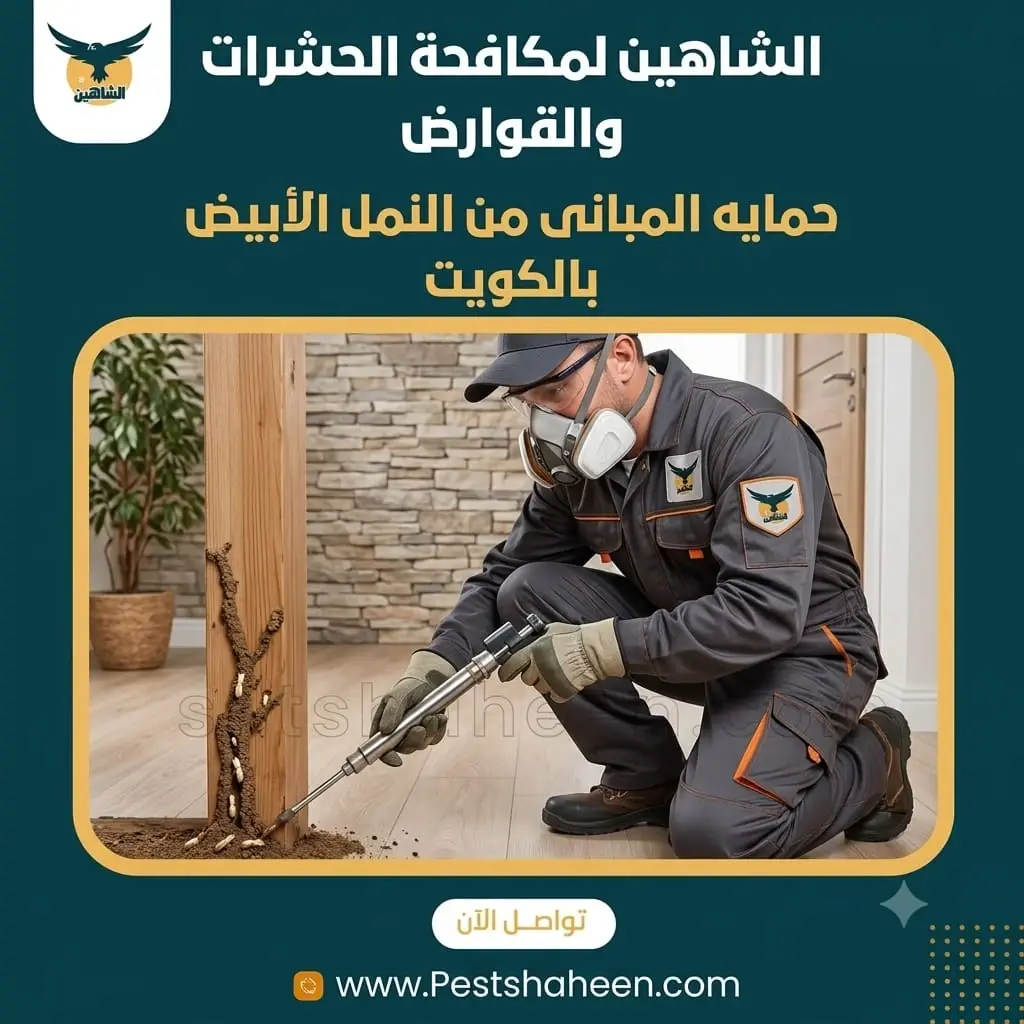
When discussing eliminating termite activity in the building, the service scope becomes wider than treating one room or one piece of timber. A large property may contain different-use areas such as living spaces, storage rooms, annexes, and utility rooms, and each area should be assessed according to actual evidence instead of assuming that one sign means the entire property has the same level of infestation.
A practical approach is to divide the building into zones. The area where clear damage has appeared receives priority, while surrounding sections are evaluated according to their relationship with it. Distant parts of the building that show no evidence are not automatically treated as equally affected.
This approach prevents two common mistakes. The first is over-treating the building and expanding the service without evidence. The second is the opposite: treating only one piece of timber while ignoring related signs in other areas. The treatment scope should always match the actual distribution of activity.
After treatment, areas that were active or suspicious are recorded and monitored differently from sections where no signs were found. Old damage remaining visible after treatment does not automatically mean the infestation has returned because historic damage does not disappear when termite activity is controlled.
A better measure is whether genuinely new signs appear or whether the condition changes in an area that was previously stable.
-
The building is divided into zones according to the distribution of signs so the entire property is not automatically treated as having the same level of infestation
-
Nearby affected locations are connected when the evidence supports a relationship instead of treating every damaged element as a completely separate case
-
A record is maintained for areas requiring follow-up so any future change can be judged against a clear history
-
Controlling termites in a large building means managing activity according to its actual scope rather than promising that every part of the property requires the same treatment
Protecting Buildings from Termites
Protecting buildings from termites goes beyond treating an existing infestation because it focuses on reducing future risk and identifying changes before they develop into more serious damage. Protection is not based on one product or one visit. It depends on maintenance, material management, monitoring vulnerable areas, and applying appropriate preventive measures according to the age and condition of the building.
In occupied properties, it is useful to avoid leaving timber and cardboard for long periods in direct contact with damp areas or the ground when better storage is possible. Any unusual change in doors, skirting boards, or other timber elements is also worth investigating instead of waiting until the damage becomes severe.
Maintenance work can change the building environment as well. New service openings, alterations, leaks, or structural modifications can create conditions that did not exist when an earlier treatment was carried out. This is why the idea that a property received protection once and never needs attention again is not realistic.
Buildings under construction have different preventive procedures, including soil-related treatments performed at specific stages. Those measures deserve a separate page because their timing and method are different from protecting an existing occupied building.
At Al Shaheen, we see building protection as ongoing risk management. The aim is for the property owner to know what to watch, respond quickly to maintenance issues, and request an inspection when a sign deserves professional assessment.
-
Timber and cardboard are stored in a way that reduces direct contact with damp areas and the ground wherever possible instead of leaving cellulose materials for long periods in locations that are difficult to inspect
-
Changes following maintenance or renovation are monitored because buildings are not static environments and access conditions can change over time
-
Previous treatment or prevention does not mean new signs should be ignored because protection depends on the current condition of the property rather than relying indefinitely on an old service
-
Early investigation of unusual timber damage provides a better opportunity for clear decision-making than waiting until the affected element has become significantly weakened
Conclusion
Choosing a termite control company in Kuwait and protecting the building starts with understanding that termites are not a surface-level problem that disappears simply because damaged timber has been sprayed. Activity can remain hidden, and old damage may still be visible even after termite activity has been controlled. This is why diagnosis and treatment scope are just as important as the treatment itself.
At Al Shaheen, we clearly separate the different roles involved. Inspecting the signs is one task, controlling active termites is another, repairing damaged timber is a separate responsibility, and protecting the property against future risk requires its own preventive measures. Keeping these roles separate helps the customer understand exactly what the service is intended to achieve.
Every property also has a different situation. A limited problem around one door frame is not the same as a building showing signs in several areas, and a villa connected directly to a yard and soil is not the same as an internal residential unit. The treatment plan should therefore be based on the actual condition rather than on the pest name alone.
Whenever possible, property owners should avoid covering the signs or replacing damaged timber before the cause has been understood. The clearer the condition is from the beginning, the easier it becomes to choose the right treatment and protect the remaining building elements without doing too much or too little.
Frequently Asked Questions
How can I tell if I have termites in my home?
Signs worth investigating include unusual weakness in timber, sections that appear hollow inside, mud tubes in certain locations, or discarded wings associated with termite swarmers. However, one sign alone is not enough for a reliable diagnosis because other problems can produce similar damage.
Are termites the same as what people call arda or rumma?
In Kuwait, the Arabic terms commonly translated as “arda” or “rumma” are often used informally to refer to termites. A professional company still bases its diagnosis on the actual signs and pest activity rather than on the name used by the customer.
Is spraying damaged timber enough to eliminate termites?
Not always. The damaged timber may only be one part of a larger activity route. Treatment depends on where the infestation is located and how far it extends, so surface spraying one element is not a universal solution for every termite problem.
Does every damaged piece of wood mean termites are present?
No. Moisture, decay, other wood-damaging pests, and older material defects can all cause timber deterioration. The cause should be identified before termite treatment is selected.
Should I replace damaged timber immediately?
Not in every case. If there is no urgent safety reason to remove it, inspecting the affected element first can provide useful information about the infestation. Once pest activity is addressed, the timber can be assessed for repair or replacement.
What determines the cost of termite control?
The scope of the infestation, property type, number of areas requiring assessment, accessibility, treatment method, and follow-up requirements can all affect the cost. The price should not be based only on the size of the visibly damaged timber.
Does moisture cause termites?
Moisture alone does not automatically mean termites are present, but it can create conditions that support certain infestations. Persistent leaks and damp areas should therefore be repaired whether termites are found or not.
Can termites return after treatment?
New activity can appear in the future if building conditions change, new access points develop, or contributing factors remain. Maintenance and monitoring therefore continue to matter after the current infestation has been controlled.
Does termite treatment repair damaged wood?
No. Termite control is intended to manage pest activity. Timber that has already lost part of its strength may still require assessment, repair, or replacement by a carpenter, contractor, or other appropriate specialist.
How do I choose a termite control company in Kuwait?
Choose a company that first investigates the signs, explains the treatment scope, clearly separates termite control from structural or timber repair, and tells you what needs to be monitored afterward instead of beginning with spraying before understanding the problem.
 Contact Us on WhatsApp