Grain and Rice Weevil Control in Kuwait Home Kitchens
Finding small weevils inside a bag of rice or crawling along kitchen shelves is not a problem that can be solved simply by spraying the cupboard. The infestation often begins inside one contaminated dry-food product and then adult insects spread to other vulnerable packages. Grain and rice weevil control in the home kitchen therefore starts by locating the source, inspecting stored foods, disposing of infested products, cleaning cracks and corners, and then returning unaffected food to tightly sealed containers. Some stored-product pests spend important stages of their life cycle inside individual grains, so the condition of a package cannot always be judged by its outside appearance alone. At Al Shaheen, we keep food areas separate from unnecessary pesticide use and focus first on removing the source because spraying alone cannot eliminate insects developing inside an infested food package.
Grain Weevil Control in Kuwait
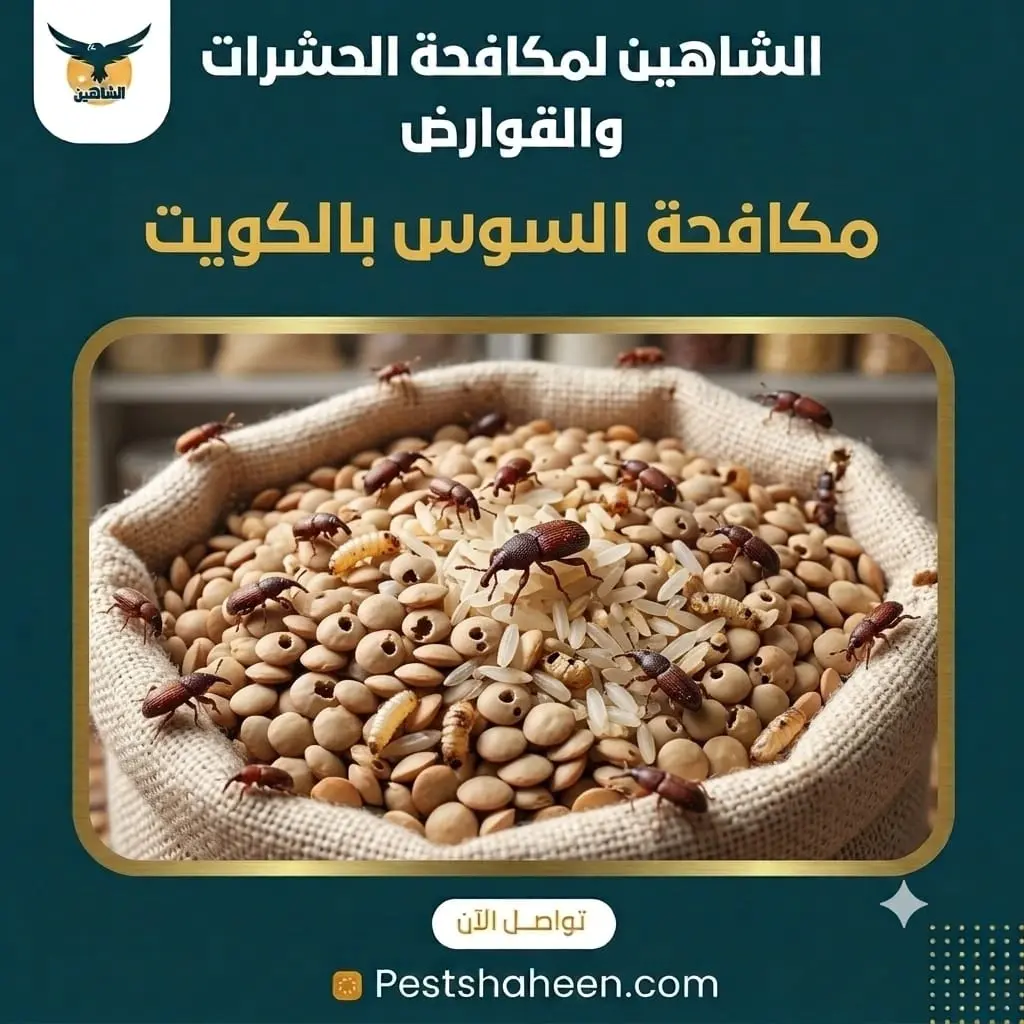
Effective grain weevil control in Kuwait begins with identifying which product contains the insect because people often use the term grain weevil for several different pests found in stored dry foods. True grain and rice weevils are more closely associated with whole grains and seeds, while other pantry beetles and stored-product insects may infest flour, processed cereals, nuts, dried fruit, and many other dry foods. This means finding one tiny insect on a pantry shelf is not enough by itself to identify the pest or determine where the infestation started.
The first step is to inspect the package where the problem was initially noticed, then move systematically to products stored around it instead of emptying the entire kitchen without a clear plan. Rice, whole grains, pulses, seeds, and other susceptible dry foods are checked because the infestation may begin in one product before adult insects later move into neighboring packages.
It is also important to understand that the infestation may have entered the home inside a product that already contained eggs, larvae, or small insects at the time it was purchased. Finding grain pests does not automatically mean the kitchen is dirty. Stored food can become infested at different points before or after it reaches the home, and the population may only become noticeable after the product remains stored for some time.
At Al Shaheen, identifying the true source is considered more important than simply killing the insects walking across the shelf. If the original infested bag remains in the cupboard, activity can continue even after the visible surfaces have been cleaned repeatedly.
-
The first product where the insects were noticed is identified and nearby dry foods are inspected so the actual infestation source can be found instead of chasing adult insects that have already left the package
-
Grain weevils are distinguished from flour beetles and other pantry pests because the type of affected food helps narrow the likely pest and guide a more accurate control plan
-
An infestation may enter the home inside a newly purchased or older food product so the presence of pantry insects is not automatically linked to poor household hygiene
-
Successful control begins with removing the infested food source because wiping the shelf or killing insects that have already emerged cannot compensate for leaving the contaminated package inside the cupboard
Rice Weevil Control in Kuwait
Effective rice weevil control in Kuwait requires understanding that an important part of the life cycle of certain weevils can occur inside the rice grain or another whole grain itself. Rice and grain weevil larvae may develop inside individual kernels where they are difficult to see, and the adult insect later emerges through a hole after completing its development. This explains why a customer may open a package that initially looks normal and only later notice weevils moving among the grains or crawling on the cupboard walls.
When a bag of rice is confirmed to be infested, it is not advisable to remove the visible insects and assume that the remaining rice is unaffected. The entire contaminated package should be treated as the infestation source and removed in a way that reduces the chance of insects spreading through the kitchen.
Other bags of rice should then be inspected, particularly opened packages or products stored beside the source. Even packages that show no insects externally deserve attention because some pantry pests may move through weak folds or openings in packaging, while other stages may already be developing inside the food.
Once the infestation is under control, storage becomes an important part of prevention. Moving clean rice into tightly sealed glass, metal, or strong plastic containers reduces the chance of insects moving between products and also makes future problems easier to notice.
At Al Shaheen, we do not consider spraying the rice shelf to be the main solution. If the weevils are developing inside the grains, pesticide applied to the outside of the cupboard cannot reach the infestation inside the package.
-
A rice package with confirmed activity is treated as a complete infestation source instead of removing visible insects and continuing to use the remaining contents
-
Other rice and dry-food packages nearby are inspected because several susceptible products in the same cupboard can allow adult insects to spread
-
Sealed containers used after cleaning help isolate each food product and make any future infestation easier to identify and contain
-
Surface spraying does not eliminate larvae developing inside individual rice grains which is why removing the infested product is more important than increasing pesticide use around it
Grain Weevils in the Kitchen
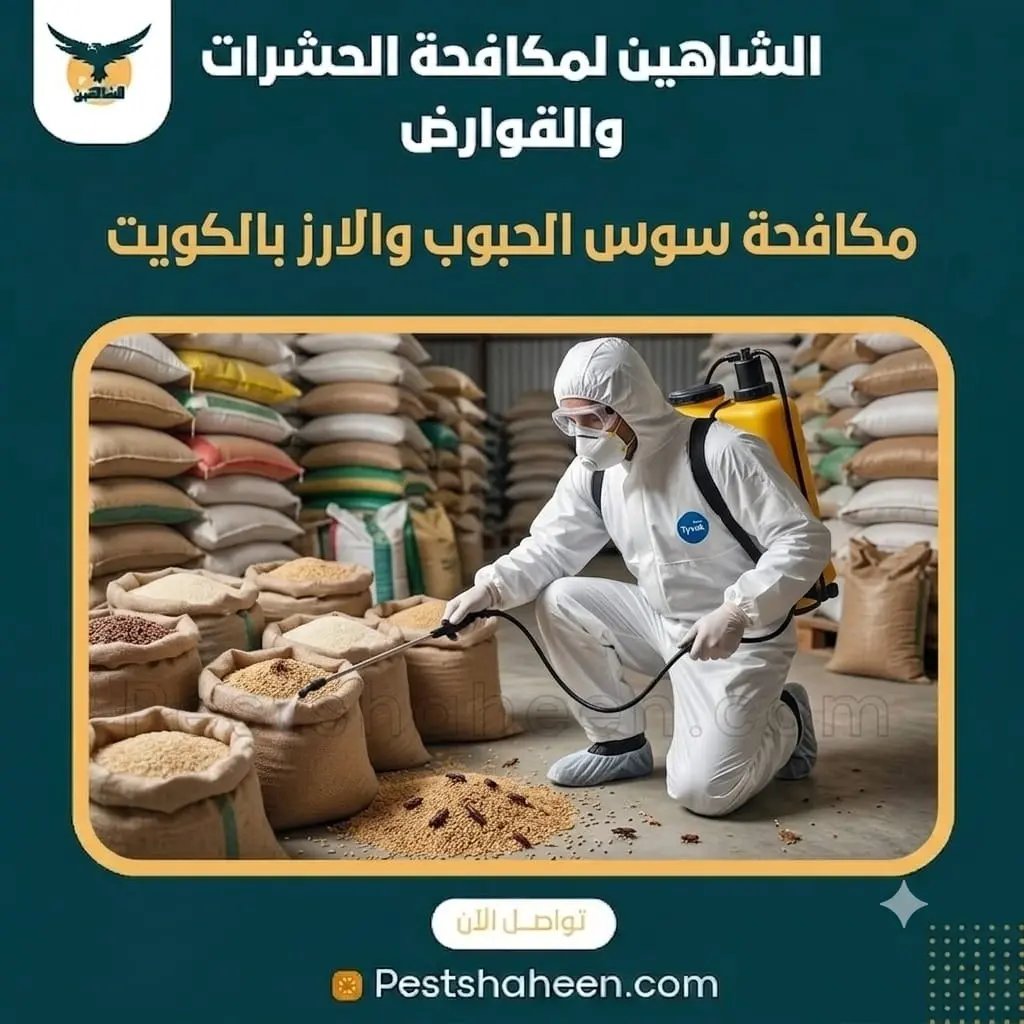
Finding grain weevils in the kitchen does not necessarily mean that the insects are living on the shelf itself. Many insects seen crawling across cupboard surfaces have already emerged from an infested food product and are moving around the storage area or searching for another suitable source. This is why the place where an insect is seen provides a useful starting point but does not always reveal the true source.
The inspection also includes products that homeowners may not immediately suspect, such as dried pulses, seeds, certain cereal products, and sometimes dry pet food or bird seed if these are stored near the kitchen. Depending on the species, stored-product pests may be associated with a surprisingly wide range of dry materials.
Older foods that have remained unused for a long time deserve particular attention. A forgotten package at the back of a shelf or in an upper cupboard can be more significant than a recently purchased product that is opened and used every day because extended storage gives the pest enough time to complete its life cycle without being noticed.
After the source is removed, the cupboard should be vacuumed carefully, particularly along cracks, corners, shelf joints, and places where grains or flour have spilled. Food debris left in hidden areas can continue to support some pantry pests, making thorough removal an important part of control.
At Al Shaheen, we do not stop at wiping the visible shelf. We look for individual grains behind drawers and old packages that have not been touched for months because these hidden areas are often where recurring infestations continue.
-
The location where a weevil is seen is used as the starting point for the inspection rather than being treated as proof that the infestation source is on the shelf surface itself
-
Old and forgotten food packages receive priority during inspection because they may contain a complete insect life cycle without anyone noticing for an extended period
-
Less obvious dry products such as seeds pulses and certain animal foods are inspected when they are stored near the affected area
-
Vacuuming reaches cracks corners and hidden spaces to remove spilled grains and food debris instead of relying only on wiping exposed shelf surfaces
Getting Rid of Rice Weevils
Successfully getting rid of rice weevils begins with making a clear decision about the infested package. If insects are confirmed inside the rice or there are signs showing the product itself is infested, the priority is to remove the source rather than attempt to save the food by manually sorting through it inside the kitchen.
How the package is removed from the home also matters. It is better to seal the infested product inside an appropriate bag before carrying it away so insects or contaminated grains do not fall along the route from the cupboard to the rubbish.
The storage area is then cleaned thoroughly and nearby shelves are inspected. If unaffected rice or other dry foods are being kept, they should be checked for signs of activity and then transferred to sealed containers rather than returned in open bags or weak cardboard packaging.
A common mistake is assuming that applying a strong disinfectant to the shelf will prevent weevils from returning. Cleaning the surface is useful for general hygiene, but disinfectant does not replace removal of the infestation source and spilled food material. If contaminated food remains in the cupboard, the problem can continue regardless of how clean the visible shelf appears.
At Al Shaheen, we organize the process from the inside out: first the infested product, then the cupboard, followed by the remaining packages and finally the new storage system.
-
The infested package is sealed before it is removed from the kitchen so insects and contaminated grains are not scattered through the home during disposal
-
Nearby products are inspected before they are returned to the cupboard because cleaning the storage space and then replacing an infested package simply restarts the problem
-
Unaffected dry foods are stored in tightly sealed glass metal or strong plastic containers after the infestation is controlled instead of being left in open packaging
-
Disinfectant or surface cleaner does not replace source removal because lasting control begins with disposing of infested food and removing residues that allow pantry pests to continue developing
Treating Stored Grain Insects
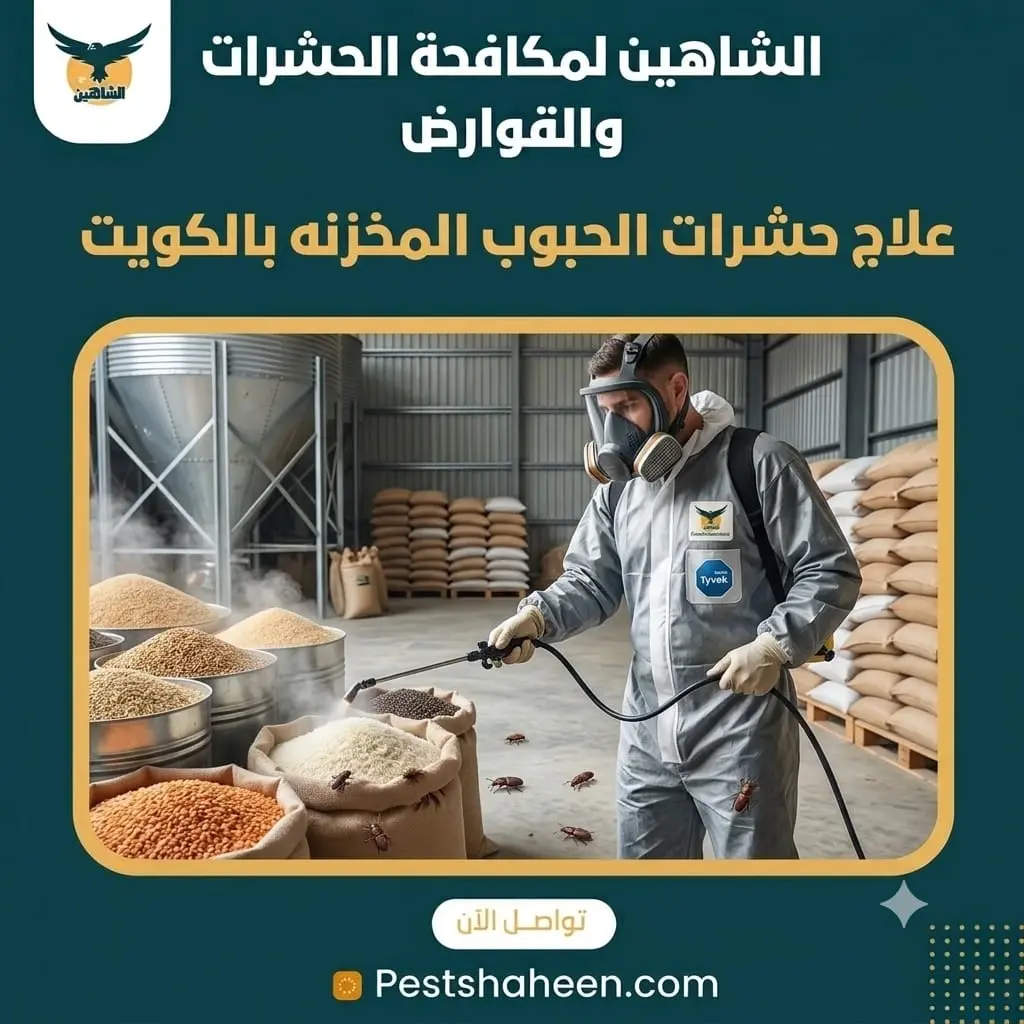
Treating stored grain insects requires determining whether the pest develops inside the grain itself or feeds externally on processed food because stored-product pests are not all the same. Some grain weevils spend part of their life cycle inside intact kernels, while other beetles are associated with milled or broken products, and still other pests may infest nuts, dried fruit, processed cereals, or related dry foods.
This difference changes how the source is investigated. When the suspected pest is associated with whole grains, inspection concentrates more heavily on rice, wheat, seeds, and similar products. If the pest appears more consistent with a flour beetle, the range of foods that needs attention changes.
The fundamental household response to a stored-food infestation is removing infested food, cleaning the storage area, and preventing insects from moving into new products. Pesticide application inside food cupboards is not considered the main solution because chemicals applied outside the package cannot affect insects developing within the food itself.
When activity is spread across several cupboards, the inspection can be expanded, but this does not mean every dry food product in the house automatically needs to be discarded. Each package is evaluated according to whether it is vulnerable to the particular pest and whether signs of infestation are present.
At Al Shaheen, we use the pest’s likely identity and behavior to narrow the search instead of simply emptying the whole kitchen, spraying every shelf, and waiting to see whether the problem returns.
-
The type of insect determines which products need priority inspection because a pest associated with whole grains may not share the same source as a flour beetle
-
Confirmed infested packages are discarded while other foods are assessed separately instead of throwing away the entire kitchen stock without inspection
-
The storage area is cleaned and food spills are removed because loose grain and flour can remain hidden sources even after the original package has been discarded
-
Pesticide is not treated as a substitute for locating contaminated food because insects developing inside a package remain protected from treatment applied outside it
Flour and Rice Insect Control
Effective flour and rice insect control requires avoiding the mistake of calling every pantry insect a weevil. Flour infestations may involve stored-product beetles with different behavior from rice weevils that are more closely associated with whole kernels. Correct identification helps determine where to look instead of treating a bag of flour and a bag of rice as identical environments.
Flour presents an additional challenge because very small insects or larvae can be difficult to notice within the product itself. Any obvious insects, abnormal contamination, or suspicious change inside the package means the food should no longer be treated as suitable for normal use.
When several open products are stored on the same shelf, they should be separated during inspection. Each package can then be checked individually away from unaffected food so contaminated material or insects are not accidentally spread across a clean surface.
Cleaning around flour packages is particularly important because spilled flour around bag edges or inside drawer corners can provide food for stored-product insects even after the original package has been removed.
After the infestation has been controlled, buying quantities that match the household’s normal rate of use is generally better than storing very large amounts for long periods. Using older products before newer purchases also reduces the chance that dry foods remain forgotten in a cupboard for years.
-
Flour and rice are inspected according to the likely pest rather than treating every stored-food insect as one species with one identical control plan
-
Open packages are examined separately from unaffected food so contaminated material or insects are not spread during the inspection
-
Flour residue inside drawers and around packages is vacuumed and cleaned because it can remain a food source after the main infested bag has been removed
-
Purchasing quantities that match actual household use and rotating stored food help reduce the amount of time dry products remain unmonitored inside the kitchen
Weevils and Pests in Dry Food
The term weevils in dry food covers a wider problem than rice and grains alone because kitchen cupboards may contain pests associated with cereals, pasta, certain nuts, seeds, dried fruit, spices, and other dry products depending on the species involved. If rice is inspected and is not the source, the investigation should therefore continue rather than assuming the infestation has disappeared.
Open products are usually checked first, followed by older items and foods stored in paper, cardboard, or packaging that is not tightly sealed. Some pantry insects may move through package folds or openings and travel from one suitable food source to another.
Another common mistake is forgetting products that are not intended for normal family meals, such as dry pet food or bird seed stored elsewhere in the home. These materials can support some stored-product pests and may explain why a kitchen is repeatedly cleaned without eliminating the infestation source.
Using tightly sealed containers after the problem has been identified makes pantry management much easier. It helps prevent free movement between foods and can keep a future infestation more localized if one package becomes affected.
At Al Shaheen, we expand the inspection logically from the suspected source toward other foods suitable for the pest rather than spraying one shelf and assuming that every pantry insect must have come from rice.
-
The inspection expands to other suitable dry foods when rice is not the source because stored-product pests can be associated with a wider range of foods than one product
-
Old opened and poorly sealed packages are inspected first because they are more likely to support unnoticed activity
-
Dry pet food bird seed and other non-cooking products are included when they are stored inside the home and could support the same pest
-
Tightly sealed containers separate food products and reduce the ability of one infestation to spread freely through the entire pantry stock
Pantry Insects in Food Cupboards
Seeing pantry insects in food cupboards causes some people to immediately spray the shelves before removing rice, flour, spices, and other foods. This is one of the most important mistakes to avoid. Food-storage areas require particular care, and any pesticide use must be specifically permitted for the intended location according to the product label while food, utensils, and food-contact items are protected from contamination.
The first practical step is to empty the affected shelf in an organized way and inspect every product. Unaffected items are kept away from the cleaning area, while infested packages are separated and disposed of appropriately.
The cupboard can then be vacuumed along joints, corners, shelf-support holes, and other small gaps because grains, larvae, or insects may remain in places that ordinary wiping does not reach. The vacuum contents should then be disposed of in a way that prevents collected insects from remaining in the home.
Storage containers and reusable food boxes can be cleaned and dried before being used again where appropriate. Any food accidentally exposed to pesticide should not be used in a way that conflicts with the safety instructions for that product.
At Al Shaheen, protecting food from contamination remains the priority because controlling a pantry insect should never create a larger food-safety problem.
-
Food cupboards are emptied and the contents inspected before any intervention so the infestation source can be identified instead of treating a storage area that is still full of food
-
Shelf joints cracks and small gaps are vacuumed because simply wiping the open surface does not remove grains and material hidden inside narrow spaces
-
Any pesticide used around food must be permitted for that location according to its label and is never applied directly to food or food-contact items
-
Food safety remains more important than killing a visible insect because inappropriate treatment can create a contamination problem more serious than the original pantry infestation
Stored Food Pest Control
Stored food pest control is often more about managing the household food supply than carrying out a traditional spraying service. When several pest species are present or an infestation keeps returning, purchasing and storage habits need to be reviewed alongside the currently affected package.
Buying very large bags because they appear more economical can become a financial loss if the food remains open or stored for months and gives insects enough time to develop. Quantities should ideally match the household’s rate of consumption, with older products used before newer purchases.
Inspection should begin even before the food reaches the pantry. Torn packages, containers with holes, or products showing unusual signs should be avoided when possible. Once dry foods reach the home, important products can be moved into tightly sealed containers rather than remaining for long periods in weak packaging.
After an infestation, keeping track of which products were affected can also be useful. If the same type of product or the same source is repeatedly associated with activity, the household may need to change purchasing or storage practices.
At Al Shaheen, we treat prevention as a simple system: sensible purchasing, stock rotation, quick inspection, prompt cleaning of spills, and sealed storage.
-
Buying quantities according to actual consumption reduces the amount of time dry foods remain stored long enough for pests to complete their life cycle unnoticed
-
Damaged torn or perforated packages are avoided at the time of purchase instead of bringing a suspicious product into the pantry and dealing with the infestation afterward
-
Using older products before newer ones prevents forgotten food from remaining at the back of cupboards and makes unusual changes easier to notice
-
Long-term control of stored-food pests depends on food management as much as on cleaning after an infestation has already occurred
Getting Rid of Grain Weevils in the Home
The goal of getting rid of grain weevils in the home is to eliminate the infestation source and prevent another source from remaining hidden rather than simply making the visible insects disappear. If an infested rice bag is removed but another contaminated grain product remains in a different storage area, the insects can appear again and make the homeowner believe the original problem has returned.
After a confirmed infestation is found, susceptible dry foods should therefore be inspected in all related storage locations. The kitchen is not always the only place involved. There may be a separate pantry, a shelf containing pet food, or boxes of reserve food stored elsewhere in the home.
Once inspection and cleaning are complete, unaffected products should be returned in sealed containers and arranged so their age and use are easy to monitor. An organized cupboard is much easier to inspect than one filled with stacked bags that have unknown purchase dates.
A small number of insects may still be noticed after the main source has been removed depending on the species and location, but continued activity at the same level suggests another food source may still exist and needs to be found. The correct response is not to restart random spraying before the stored food has been inspected again.
At Al Shaheen, we consider the infestation properly controlled when the source has been identified and removed, the remaining food has been checked, and the storage system has been improved to reduce future movement between packages.
-
All related dry-food storage areas are inspected so a second source outside the main kitchen does not continue sending insects back into the pantry
-
Unaffected foods are organized in sealed containers and stock is rotated so any future infestation becomes easier to identify quickly
-
Continued insect activity triggers another search for a hidden food source instead of repeating pesticide application in the same cupboard without understanding why insects remain
-
Stable control is achieved by breaking the pest’s connection with stored food through source removal thorough cleaning and prevention of movement between packages
Conclusion
Grain and rice weevil control in the home kitchen begins with the infested food, not with pesticide. Rice weevils and some grain pests can complete important life stages inside individual kernels, while other stored-product pests may develop in flour and a variety of dry foods. For that reason, accurate identification and source detection are more important than simply killing insects visible on the shelf.
At Al Shaheen, we begin with the suspicious package, then inspect related foods, separate infested products from unaffected ones, clean cracks and corners, and reorganize storage using tightly sealed containers. This approach reduces the chance of insects moving from one bag into another.
We also protect food-storage areas from unnecessary pesticide use. The foundation of pantry pest control is removing contaminated food and thoroughly cleaning the storage area. Applying pesticide around a cupboard provides limited value if the actual infested product remains inside.
Prevention after the infestation is straightforward but important: avoid storing more dry food than the household can use within a reasonable period, inspect packaging before purchase, clean spilled grains or flour promptly, and keep products that will remain in storage inside tightly sealed containers.
Frequently Asked Questions
Does finding weevils in rice mean I should throw away the entire bag?
If the rice itself is confirmed to be infested, it is better to treat the package as the source and dispose of it rather than removing the visible insects and continuing to use the remaining contents.
Can rice weevils actually develop inside individual grains?
Yes. Larvae of some grain and rice weevils develop inside whole kernels before the adult insects later emerge, which is why an infestation may not be visible from the outside of the package at first.
Are grain weevils caused by a dirty kitchen?
Not necessarily. The infestation may enter the home inside a food product that was already affected. However, spilled food, crumbs, and long storage periods can help pantry pests continue once they are present.
Should I spray pesticide inside the rice and flour cupboard?
Pesticide is not the primary solution for food cupboards, and no product should be used around food unless its label specifically allows that use. Removing the infested source and cleaning the cupboard are the most important control steps.
Can weevils move from one rice bag to another package?
Adult insects of some stored-product pests can leave an infested product and reach other suitable foods, which is why nearby packages should be inspected and unaffected products kept in sealed containers.
Which foods should I inspect besides rice?
Depending on the pest, inspection may include grains, pulses, seeds, flour, pasta, nuts, dried fruit, spices, and certain types of dry pet food.
Does cleaning the cupboard with bleach stop grain weevils from returning?
Cleaning is useful, but disinfectant alone does not prevent reinfestation if a contaminated food package or spilled grain remains hidden inside the cupboard.
How should I store rice after a pantry infestation?
Clean rice and other dry foods are best stored in tightly sealed containers made from glass, metal, or strong plastic, while avoiding long-term storage of quantities much larger than the household normally uses.
Why do insects appear again after I clean the shelf?
There may be another infested product in a different cupboard, an old package, dry pet food, or another stored material that was missed during the first inspection. All potential food sources should be checked again before assuming cleaning has failed.
How do I get rid of grain weevils in the home correctly?
Start by identifying the infested package, inspect nearby dry foods, dispose of contaminated products, vacuum cracks and corners thoroughly, and store unaffected foods in sealed containers instead of beginning with random pesticide spraying inside food cupboards.