Woodworm Control Company in Kuwait and Furniture Protection
Woodworm problems are often first noticed after small holes appear in a piece of furniture or fine wood dust begins collecting underneath it. However, not every hole means the infestation is still active, and not every type of wood damage is caused by the same insect. This is why choosing a woodworm control company in Kuwait and protecting furniture should begin with diagnosis before spraying. At Al Shaheen, we inspect the shape of the holes, the condition of the timber, any fresh wood residue, and the location of the affected item. We then determine whether activity is limited to one piece or extends to other wooden elements and select a treatment method according to the wood type, level of damage, and product instructions instead of spraying all furniture randomly or confusing wood-boring insects with termites.
Woodworm Control Company in Kuwait
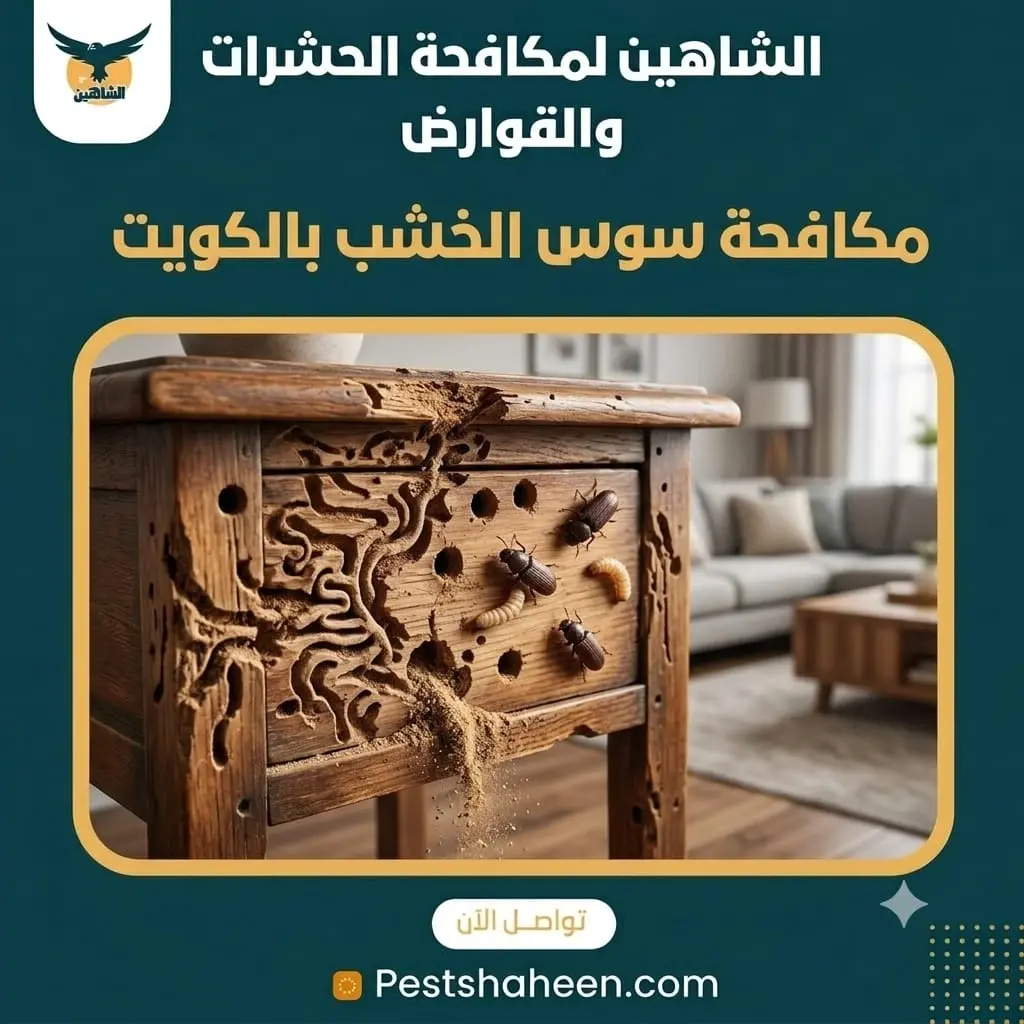
Choosing a woodworm control company in Kuwait requires more than finding a company that knows how to spray pesticide onto a wooden surface. The main challenge is that many people describe any small furniture holes as woodworm, even though the cause may be different wood-boring beetles, an old infestation that is no longer active, or damage associated with moisture and natural cracking. A professional company therefore begins by collecting evidence before deciding that treatment is necessary.
The inspection considers the shape, size, and distribution of the holes, the condition of their edges, and whether fresh powder or wood-boring residue is appearing beneath the furniture. The technician also asks about the age of the item, when it was purchased, whether it was moved from another property, and whether it was restored or repaired previously. This information can help identify whether an infestation may have entered the home inside used furniture or developed after a long period of storage.
It is also important to separate insect activity from the physical strength of the timber. An infestation may already have stopped while historical damage has left the wood weakened and in need of a carpenter or furniture restorer. Pest control treats the insect problem when one exists, but it does not restore lost structural strength.
At Al Shaheen, we explain clearly what the available evidence supports and what may only require monitoring. If the holes appear old and there is no fresh dust or recent activity, we do not exaggerate the situation by declaring the entire piece actively infested.
-
The company determines whether holes are connected to current activity or historical damage before recommending treatment because a hole alone does not prove an active infestation
-
The age purchase history and movement of the furniture are reviewed because some infestations enter homes through used items or timber that was previously stored elsewhere
-
The structural or cosmetic condition of the wood is assessed separately from pest activity because controlling the insect does not repair damage that has already occurred
-
A professional company documents suspicious areas and identifies priority items instead of treating every wooden piece in the home with the same method
Woodworm Control in Furniture
Effective woodworm control in furniture requires understanding that the infestation may be developing inside the timber rather than only on its visible surface. Some wood-boring beetles lay eggs in suitable cracks or timber, and after hatching, the larvae feed inside the wood for a period before the adult insect eventually emerges through an exit hole.
This means a piece of furniture can appear quiet from the outside while internal activity may still exist. At the same time, it would be inaccurate to assume that every item with holes still contains living larvae. This is why recent signs such as fresh wood dust, continuing changes, or newly appearing holes during monitoring are so important.
Furniture type also matters. A dense hardwood table is not the same as an old cabinet made from thinner timber or a decorative piece constructed from several materials. The treatment method and acceptable level of intervention vary according to the design and value of each piece.
One mistake some homeowners make is moving the suspicious item from one room to another or placing it beside other wooden furniture before understanding its condition. Where practical and without damaging the item, temporarily separating the suspected piece can make assessment easier.
At Al Shaheen, we treat each piece individually and decide whether it needs localized treatment, monitoring, or a broader intervention according to the evidence.
-
The furniture is assessed from every accessible side because internal activity may not always be visible from the front surface
-
Fresh wood dust beneath the item is treated as an important clue and is considered together with the holes rather than relying only on old damage
-
Valuable antique or heritage furniture requires a lower-intervention plan that protects the finish before any direct treatment is considered
-
Temporarily isolating a suspicious item may help assessment instead of moving it repeatedly between several rooms before knowing whether current activity exists
Woodworm Treatment in Kuwait
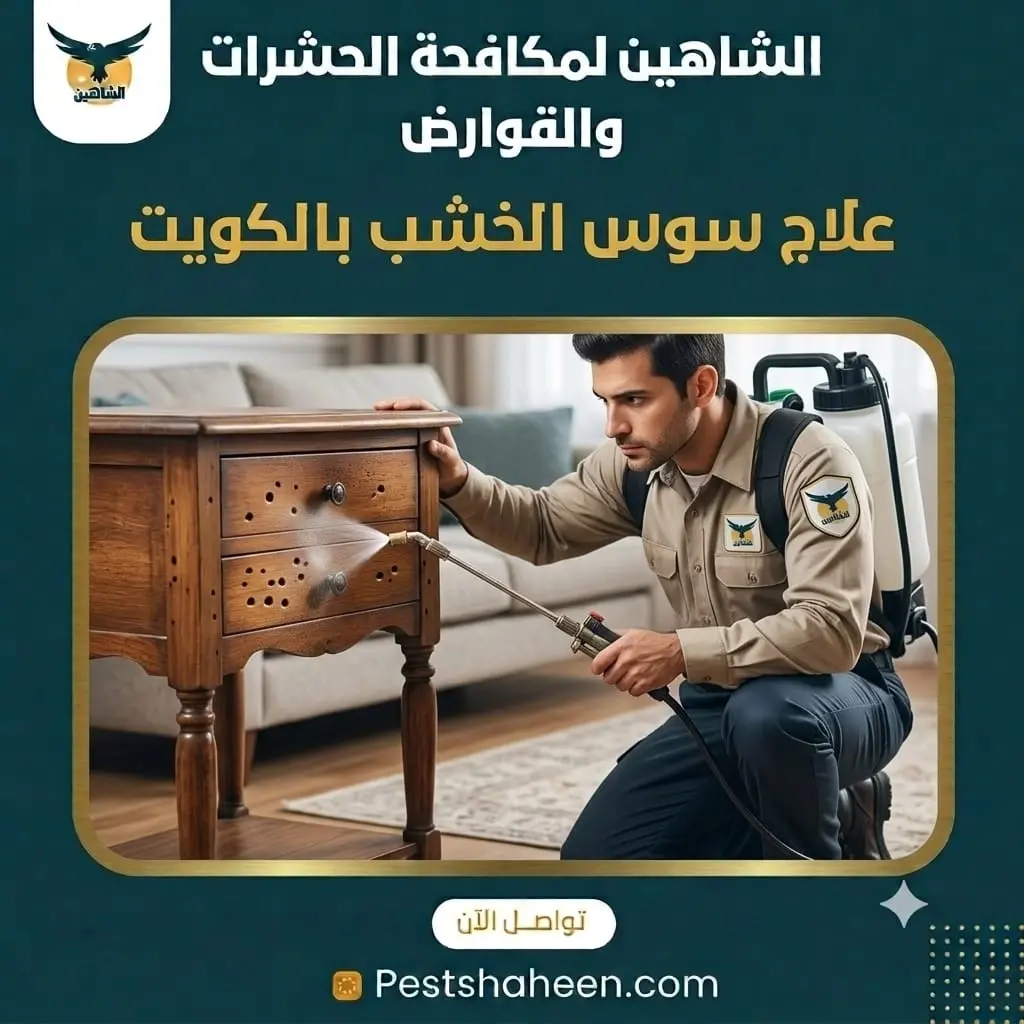
Woodworm treatment in Kuwait depends on the infestation type, location, and depth more than on the name of any particular pesticide. Some cases are limited to a small item and can be handled with a focused approach, while others appear in several wooden elements and require wider inspection to determine whether there is a common source.
Before treatment is selected, the thickness, finish, and coating of the wood are considered because varnished or painted timber behaves differently from unfinished wood when a product needs to penetrate or reach the affected area. Veneered surfaces and composite materials also require greater care to avoid damage.
When chemical treatment is appropriate, the selected product must be suitable for the intended timber use and applied according to its label, including the permitted method and dosage. Concentration should not be increased simply because the wood is thick or the infestation appears severe. Using more chemical does not automatically create a better result.
Moisture can also be part of the wider problem in some cases. It may make certain timber conditions more favorable to some wood-boring pests or create deterioration that complicates diagnosis. Correcting leaks or improving storage conditions can therefore be important alongside pest treatment.
At Al Shaheen, we define the objective clearly: stop active infestation where it exists, protect nearby unaffected timber when relevant, and reduce the chance of the life cycle continuing inside the same item.
-
Treatment is selected according to timber type infestation location and depth instead of using one product for every situation
-
Any pesticide must be appropriate for timber and the intended use and applied exactly according to its instructions without random mixing or excessive concentration
-
Moisture and storage problems are addressed when present because they can continue weakening the wood even after insect activity has been controlled
-
Treatment aims to control the current pest and reduce further spread rather than promise that previously damaged wood will return to its original condition
Woodworm Spraying in Kuwait
The phrase woodworm spraying in Kuwait is commonly searched, but surface spraying is not always a complete solution because part of the insect life cycle may remain inside the timber beyond the reach of the surface. The value of spraying depends on where the treatment reaches, the selected product, and the construction of the furniture.
If the item has a sealed finish or a thick layer of paint or varnish, absorption may be very different from unfinished timber. In that situation, simply applying a larger quantity does not mean the infestation has been treated properly. The limitations of the method need to be understood, and another technique may be more appropriate.
Spraying the surrounding floor, curtains, or nearby furniture is not automatically necessary either. Treatment should only be placed where the product permits and where it serves a clear role in the control plan.
Personal items, food areas, children, and pets also need to be protected during any application according to product instructions, and re-entry times should follow the specific product used.
At Al Shaheen, we do not measure the strength of woodworm treatment by pesticide smell or by how wet the furniture looks afterward. We measure it by the accuracy of the diagnosis and whether the selected method fits the affected material.
-
Surface spraying is used only when it has a clear purpose within the treatment plan and is not assumed to be a complete solution for every internal infestation
-
Timber finish affects application because painted or varnished surfaces do not interact with treatment materials in the same way as unfinished wood
-
Surrounding areas are not automatically sprayed unless there is a technical reason and the product instructions permit that use
-
Treatment quality depends on whether the method suits the item and its condition rather than on using the largest possible amount of pesticide
Wood Injection Against Woodworm
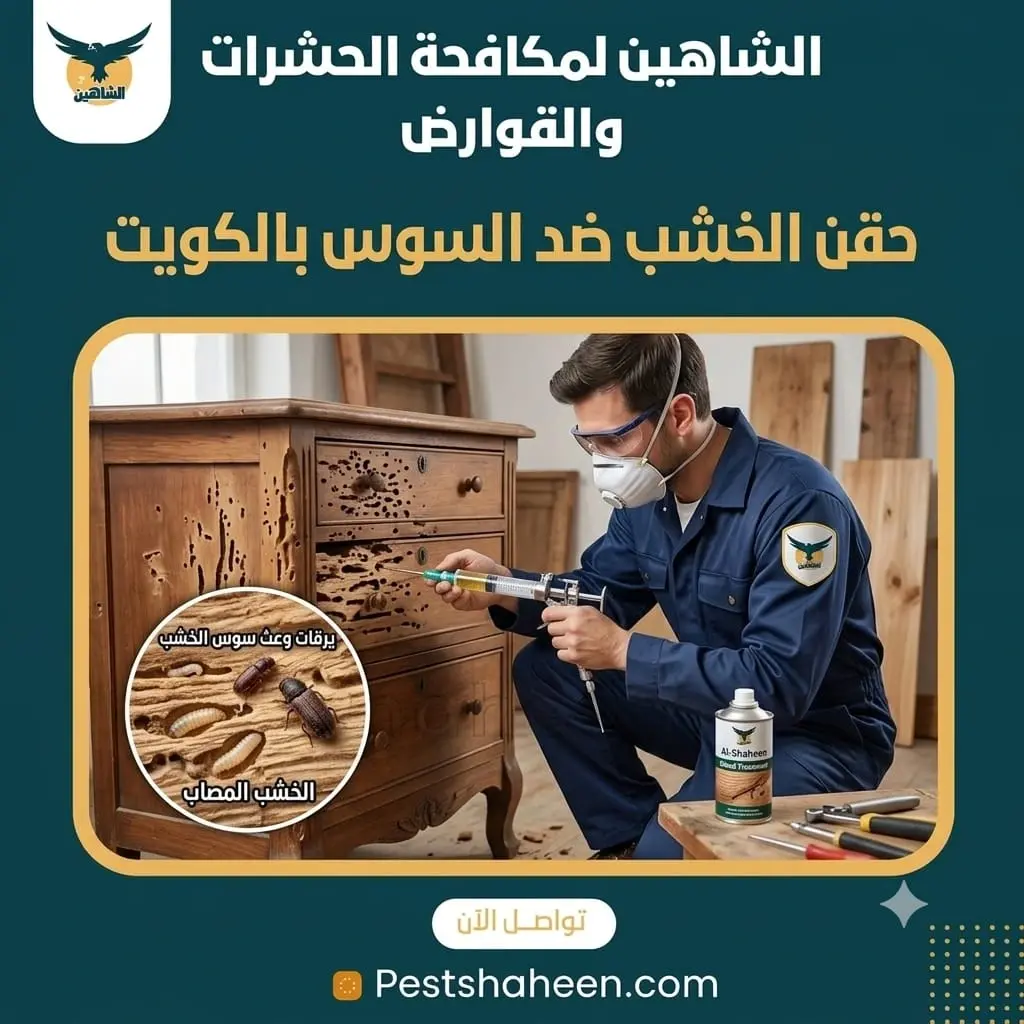
Wood injection against woodworm may be appropriate in certain cases when the objective is to reach internal galleries or specific areas linked to active infestation. However, not every item needs injection, and every old exit hole should not automatically become an injection point.
Before injection begins, the areas with stronger evidence of activity are identified. Using every historical hole can lead to unnecessary intervention and may damage the appearance of the furniture without improving treatment. Access points should be selected because they serve a specific purpose and suit the product being used.
Valuable furniture requires additional caution because every new opening can affect its cosmetic or collectible value. Existing access points or less visible locations may be preferable before any additional hole is created.
Injection also does not automatically mean every hidden area inside the timber has been treated. Product movement depends on the wood structure, timber density, and application method, so companies should avoid exaggerated claims about guaranteed internal coverage.
After treatment, any injection points that need cosmetic closure or restoration can be assessed separately according to the furniture type.
At Al Shaheen, we use injection when it has a defined objective rather than treating the number of holes as a sign of stronger service because unnecessary drilling can cause more harm than benefit.
-
Injection points are selected according to evidence of current activity instead of treating every old hole as an active route
-
Valuable carved or decorative furniture requires the fewest practical access points to protect its appearance and value
-
Injection performance depends on timber structure application technique and the selected product and should not be described as guaranteed access to every hidden area
-
Any cosmetic repair after injection is assessed separately because pest control and furniture restoration are two different services
Inspecting Woodworm in the Home
The purpose of inspecting woodworm in the home is to determine whether the problem is limited to one item or connected to several wooden elements. This distinction can completely change the scope of the service.
The technician usually begins with the item where the homeowner first noticed the holes and then reviews nearby furniture, doors, cabinets, or other wooden elements that share a similar age or source. If several pieces were purchased at the same time or came from the same supplier or previous property, that history becomes relevant.
Wood dust beneath one element is an important clue, but it needs to be confirmed as recent rather than leftover material from drilling, installation, restoration, or an older infestation. Cleaning the area and monitoring whether new material appears again can sometimes provide useful information.
Moisture or signs of leakage near timber are also checked because water-related deterioration can resemble certain insect damage or make timber weaker.
At Al Shaheen, we do not expand the diagnosis simply because the home contains a lot of wooden furniture. We move from the suspicious item toward logically related elements so the inspection remains focused and evidence-based.
-
The inspection starts with the affected item and then extends to nearby pieces or elements connected by age source or purchase history
-
Wood dust beneath timber is assessed to determine whether it is fresh or historical before being treated as evidence of ongoing activity
-
Moisture and leakage are considered because they can cause independent damage or change the condition of the timber
-
The inspection scope expands according to evidence rather than treating every wooden item in the home as equally suspicious
Woodworm Holes in Furniture
Woodworm holes in furniture are among the most noticeable signs, but they are also one of the most frequently overinterpreted. An exit hole usually indicates that an adult insect emerged from the timber after completing part of its life cycle. This tells us that activity occurred at some point, but it does not prove by itself that larvae are still active inside today.
The technician looks at the edges of the hole, its color compared with the surrounding surface, whether fresh wood dust is present, and whether additional holes appear after cleaning or monitoring. Old dusty holes are different from newly exposed openings accompanied by fresh debris.
The size and shape of the holes may also help narrow down the likely type of wood-boring beetle, but they should not be treated as a final diagnosis without considering the rest of the evidence.
One mistake is filling every hole with putty immediately before documenting the condition. Photographing and recording the holes first makes later comparison much easier if monitoring is needed.
At Al Shaheen, holes are treated as one part of the evidence rather than as a complete diagnosis and are always considered together with timber condition and other signs of activity.
-
A hole confirms that an insect emerged from the timber at some point but does not prove the infestation is still active today
-
Fresh wood dust or new openings appearing after cleaning provide stronger diagnostic value than the number of old holes alone
-
Hole size and shape help with assessment but are combined with other evidence before identifying the pest
-
Documenting holes before filling or refinishing them makes later comparison easier when the condition requires monitoring
Getting Rid of Woodworm in Furniture
Successfully getting rid of woodworm in furniture requires a plan that stops continued activity inside the affected item and reduces the possibility of the problem spreading to other suitable timber. The first step is confirming whether the infestation is still active and then choosing a treatment method that fits the material.
Affected furniture does not always need to be discarded. Many items can be treated and kept when damage is limited and the timber remains structurally sound. Replacement decisions should depend more on timber strength, item value, and repair cost than on the presence of holes alone.
If the wood has become severely weakened or has lost a significant amount of strength, it may still require repair by a carpenter or furniture restorer even after the insects have been controlled. A pest control company should never imply that pesticide can restore mechanical strength to damaged wood.
Cleaning around the item and examining nearby furniture can also form part of the plan when there is a reasonable possibility of spread. However, every piece in the room should not be discarded or treated without evidence.
At Al Shaheen, our goal is to preserve furniture whenever treatment and protection remain practical rather than rushing directly toward disposal.
-
Eliminating the pest does not automatically mean the furniture must be thrown away because many pieces remain suitable for treatment and continued use
-
Timber strength after damage is evaluated separately because pest control and structural repair are not the same service
-
Nearby furniture is checked when it has a logical connection to the infestation instead of being assumed to be affected automatically
-
The decision to keep or replace an item depends on damage severity value and repairability rather than the number of visible holes alone
Protecting Furniture from Woodworm

Protecting furniture from woodworm begins when a wooden item is purchased or introduced into the home, especially if it is secondhand or has been stored for a long period. Inspecting furniture before bringing it into indoor living areas can prevent an existing infestation from being introduced to the rest of the property.
Used furniture should be checked underneath, behind, and around hidden joints that may not appear in photographs. Old holes are not automatically a reason to reject the item, but their condition should be understood before placing the furniture beside other wooden pieces.
Storage conditions also matter. Leaving timber in damp or poorly ventilated areas can weaken the material and may make conditions more favorable for certain wood-boring pests or at least make it harder to distinguish insect damage from moisture deterioration.
Cleaning furniture and periodically watching for fresh dust or new openings is useful, especially with older or antique items. Constant daily inspection is unnecessary, but noticing changes early gives the owner a better chance to intervene before damage expands.
Pesticides should not be used routinely on every piece as a preventive habit without a reason. Any preventive application should be tied to an appropriate product and a genuine need.
-
Inspecting secondhand furniture before bringing it inside reduces the chance of introducing an infestation that was already present in the item
-
Dry storage and good ventilation help protect timber and reduce problems that can complicate diagnosis later
-
Monitoring fresh dust and new holes in older pieces allows earlier intervention before damage becomes more extensive
-
Prevention relies on inspection proper storage and correct response to new signs rather than random routine spraying of all wooden furniture
Woodworm Control Price
The woodworm control price depends on the number of affected items, their size, timber type, infestation extent, and the treatment method required. One chair with limited activity is very different from a large cabinet or a room containing several related wooden pieces.
Accessibility also affects pricing. Heavy fixed furniture, highly decorative pieces, or items that are difficult to inspect from all sides require more time than a simple freestanding item.
The treatment method makes a difference as well. Inspection and monitoring alone cost differently from localized spraying, injection, or a plan involving several items. Carpentry and furniture restoration are not automatically included in pest control pricing either.
The quotation should clearly explain which items are included, whether follow-up is part of the service, whether the price covers one treatment or several steps according to the plan, and whether cosmetic closure of access points is included or handled separately.
At Al Shaheen, we prefer pricing according to a clearly defined scope rather than using one general figure for every property because woodworm infestations can vary greatly from one item to another.
-
The number and size of affected items and the extent of activity influence cost more than the overall size of the home
-
Fixed delicate or complex furniture requires more time for inspection and treatment than simple accessible pieces
-
Carpentry or restoration work is separated from pest control when it requires a different specialist
-
A good quotation clearly identifies the items treatment steps and follow-up so the customer understands exactly what is included in the price
Conclusion
The best woodworm control company in Kuwait and furniture protection service is not the one that sees a hole and immediately starts spraying. It is the one that can distinguish between old damage and current activity and between wood-boring beetles, termites, and moisture-related deterioration.
At Al Shaheen, we begin with the actual evidence. We inspect the timber, review the furniture’s history, assess any wood dust present, and determine whether the problem is limited or more widespread. We then select monitoring, localized spraying, injection, or another suitable method according to the wood and the product being used.
We always separate pest elimination from timber repair. If the furniture has lost strength or suffered cosmetic damage, pest treatment can stop the insect cause, but it cannot restore the wood to its previous physical condition.
Protecting furniture after treatment depends on periodic observation, dry storage, careful inspection of secondhand items, and avoiding the immediate filling or refinishing of every hole before confirming whether activity has actually stopped.
Frequently Asked Questions
Do all holes in wood mean active woodworm?
No. Some holes are old and represent previous activity. Fresh wood dust, newly appearing holes, or other recent signs are considered before confirming an active infestation.
What is the difference between woodworm and termites?
Woodworm usually refers to wood-boring beetles and their larvae living inside timber and leaving exit holes. Termites have a different biology and colony structure and require a different inspection and treatment strategy.
Do I have to throw away infested furniture?
Not always. If damage is limited and the wood remains strong, the item may be treated and kept. Severely weakened timber may need repair or replacement.
Is spraying the surface of the wood enough?
Not in every case because part of the insect activity may be developing inside the timber. The treatment method depends on infestation location and timber type.
When is wood injection needed against woodworm?
Injection may be used when there is a clear need to reach internal areas associated with activity and when the product and technique are suitable for the item.
Is wood dust under furniture definite proof of woodworm?
Fresh recurring wood dust is an important sign, but it needs to be considered with the holes and timber condition because some residue may be old or related to other work.
Can woodworm spread from one piece of furniture to another?
Some wood-boring beetles can begin new life cycles in suitable timber. Nearby items may therefore be inspected when current activity is confirmed, but spread should not be assumed automatically.
Does moisture cause woodworm?
Moisture does not automatically create woodworm, but it can weaken timber, make some conditions more suitable for certain pests, and produce deterioration that can be confused with insect damage.
What determines the cost of woodworm control?
The number and size of affected items, timber type, infestation extent, accessibility, treatment method, and follow-up requirements all influence the price.
How do I choose a woodworm control company in Kuwait?
Choose a company that inspects holes, fresh wood dust, and timber condition before treatment, distinguishes old activity from current infestation, and explains whether the item needs spraying, injection, or monitoring instead of treating all furniture without diagnosis.