Professional Cat and Dog Flea Control Inside Kuwait Homes
Finding fleas on a cat or dog inside the home often means the problem is not limited to the animal itself. A large part of the flea life cycle may already be developing in the places where the pet rests, sleeps, and moves, including bedding, carpets, floor edges, and spaces beneath furniture. This is why cat and dog flea control inside Kuwait homes requires coordination between veterinary treatment for the animal and separate environmental treatment for the property. At Al Shaheen, we do not apply household pesticides to pets, and we do not treat environmental spraying as a substitute for veterinary care. We focus on identifying the pet’s main activity areas, cleaning them properly, and treating suitable locations according to product instructions so the infestation cycle can be disrupted instead of allowing fleas to keep reappearing after the cat or dog has been treated.
Cat Flea Control in Kuwait
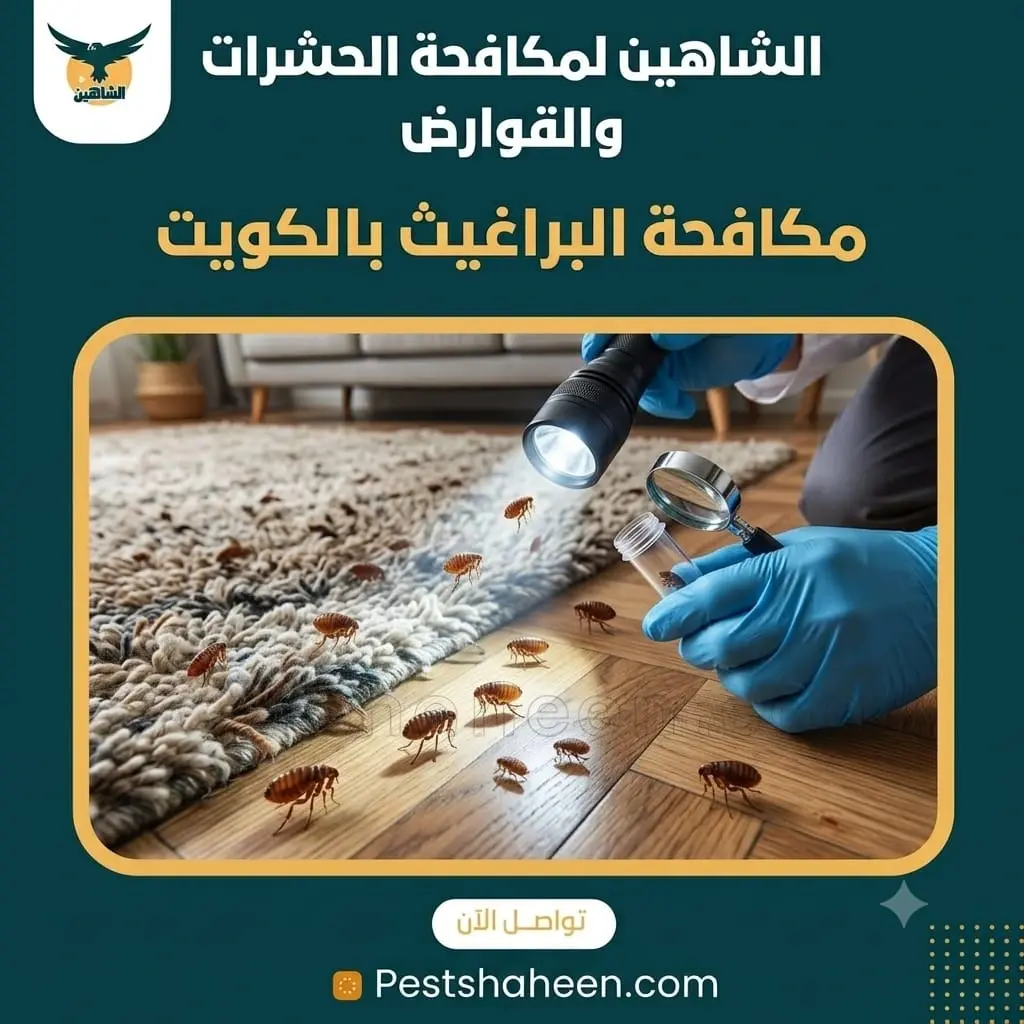
Effective cat flea control in Kuwait starts with understanding how the cat moves around the home before deciding which areas need attention. Cats often choose several different places to sleep and rest. During the same day, a cat may move between a sofa, bed, favorite chair, rug, or elevated resting area. This means the environmental part of the infestation is not always limited to the cat’s designated bed because flea eggs can fall in several places the animal uses repeatedly.
The first practical step is asking the owner about the cat’s normal routine. Where does it sleep most often? Does it enter bedrooms? Does it spend time on sofas? Does it have its own blanket? Does it change resting spots throughout the day? These details help create a practical map of the areas that deserve cleaning or assessment instead of treating the entire house with the same intensity.
It is also essential to separate treatment of the cat from treatment of the environment. An infested cat needs veterinary assessment and a product suitable for the animal according to its species, age, weight, and health condition. Household floor or environmental pesticides are not automatically suitable for application on an animal, even when the product is intended to control fleas in the home.
At Al Shaheen, we focus on the property while coordinating with the pet owner so veterinary treatment and environmental treatment take place in a compatible timeframe whenever possible. If the home is treated while the cat remains infested, adult fleas may continue feeding on the animal and maintaining the cycle. The opposite can also happen when the cat is treated but immature flea stages remain throughout the home and later develop into new adults.
-
The cat’s most frequently used areas are identified instead of assuming that its official bed is the only place connected to flea activity inside the property
-
Treatment of the cat should be handled through a veterinarian or with a veterinary product specifically intended for cats because household environmental pesticides should not be applied directly to the animal
-
Environmental treatment is coordinated with veterinary flea control so neither the pet nor the property remains an ongoing source that allows the infestation to continue
-
The treatment plan changes according to how freely the cat moves through the home because a cat that enters every room creates a different environmental pattern from a cat restricted to one area
Dog Flea Control in Kuwait
Dog flea control in Kuwait can involve different environmental considerations because dogs often move more frequently between indoor and outdoor spaces. Some dogs are taken outside several times a day, enter yards or gardens, or regularly travel in the family car. These habits create several possible environments that may need consideration when flea activity repeatedly returns.
The inspection begins with the places where the dog spends time after coming back inside. The entrance area, the dog’s bed, nearby carpets, and sofas the dog is allowed to use are all relevant locations. If the dog travels in the car frequently, vehicle seats or a blanket used during transport may also form part of the environment connected to the infestation and may need suitable cleaning according to their condition.
It is also important not to assume that every flea found on a dog originated inside the home. Exposure may have happened outdoors and the flea cycle may then have continued after the dog returned indoors. This is why the original exposure source and the environment where the infestation continues should be considered separately.
As with cats, treatment of the dog itself remains separate from household pest control. A veterinarian is the appropriate professional to recommend a flea treatment based on the dog’s age, weight, health, and individual needs.
At Al Shaheen, we focus on the areas where the dog actually spends time and only expand the treatment scope when there is evidence that flea activity has spread into additional parts of the property instead of automatically treating the whole house after a single sighting.
-
The dog’s movement between the home yard and vehicle is considered because the infestation cycle may be connected to more than one environment rather than only one room
-
Resting areas used after returning from outdoors receive particular attention because they can collect hair dust and material where flea stages may fall
-
Finding fleas on the dog does not prove the original source is inside the home which is why the place of exposure and the environment where the cycle continues are assessed separately
-
Veterinary treatment for the dog remains separate from household environmental treatment and each should use products intended for its specific purpose
Pet Fleas Inside the Home
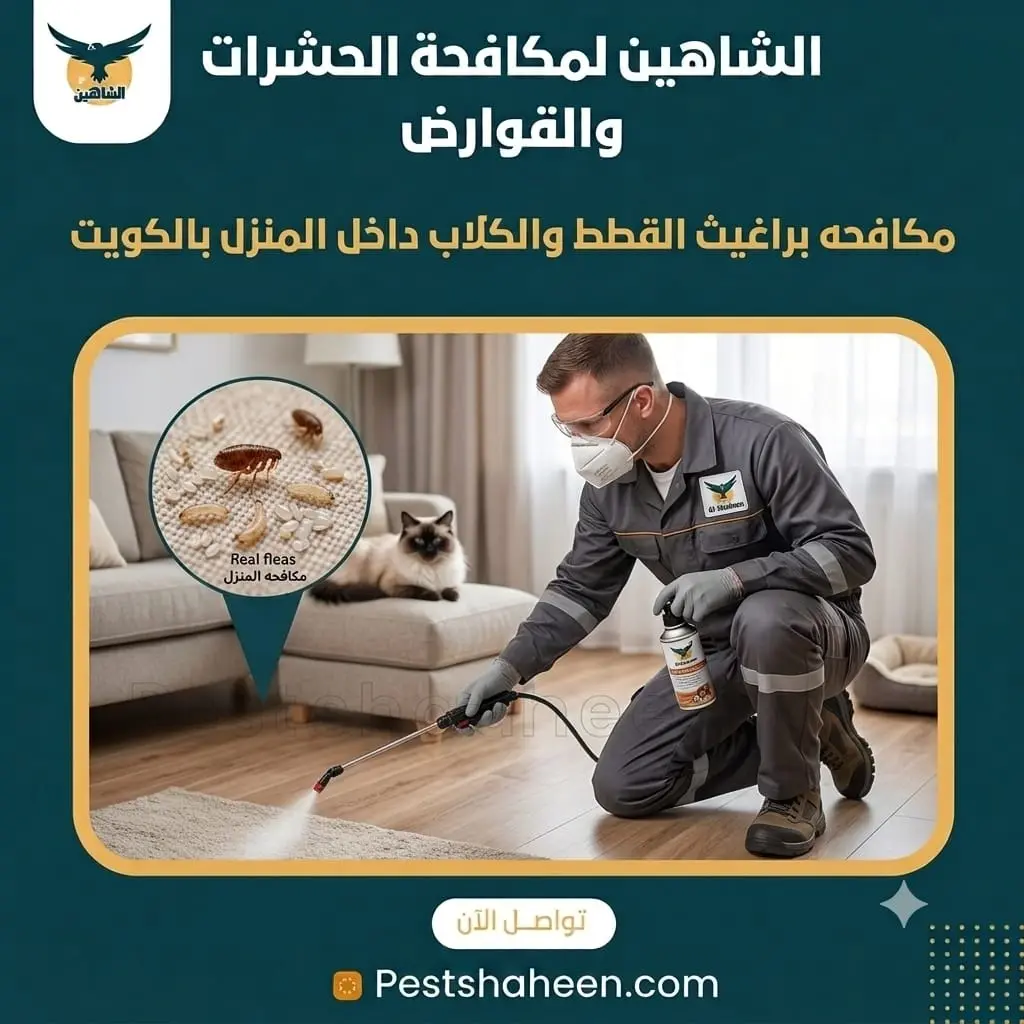
Finding pet fleas inside the home means the problem needs to be understood as an interaction between the animal and the surrounding environment rather than as one isolated infestation point. Adult fleas spend much of their life associated with a host, while eggs can fall from the animal and spread into the areas where it moves. Larvae then develop within the environment, and later stages can remain protected until conditions encourage new adult fleas to emerge.
This cycle explains why some pet owners treat their cat or dog and are surprised when fleas appear again later. Veterinary treatment may control fleas present on the animal, but immature stages may already have been present throughout the home before treatment started.
The infestation can also be much more concentrated than the owner expects. If the pet sleeps in one corner every night or spends several hours on the same sofa, those areas may deserve much higher priority than a room the pet rarely enters.
Family members may also notice bites in different places because newly emerged adult fleas may seek a host after leaving the environmental stage. This does not mean fleas necessarily prefer humans over animals, but it can indicate that flea activity is continuing inside the property.
At Al Shaheen, we use the pet’s movement patterns and resting areas to decide where environmental control should begin instead of applying identical treatment to every square meter of the home.
-
Flea activity is linked to the animal’s movement because eggs commonly fall in the places where the pet spends the most time
-
Treating the animal alone does not remove flea stages that have already entered the home environment which is why the property may need a separate treatment plan
-
Bites affecting household members can indicate newly emerging adult fleas from the environment rather than proving that the pet itself is the only current source
-
The environmental service scope is based on how heavily the pet uses each area rather than assuming every room has the same level of flea activity
Getting Rid of Cat Fleas in the House
Successfully getting rid of cat fleas in the house requires more than cleaning the cat’s sleeping area one time. Cats move quietly through many parts of the home and may choose warm or hidden resting places that owners do not immediately notice, including beneath beds, behind sofas, or on one particular chair the cat repeatedly uses.
A practical first step is to collect washable items associated with the cat, such as blankets, removable bedding, and covers, and clean them according to the care instructions for each fabric. Not every item can safely tolerate the same temperature or washing cycle, so one universal method should not be applied to all pet bedding.
Vacuuming then becomes part of the environmental plan, especially in the places the cat uses and around nearby furniture. The purpose is to reduce flea eggs, larvae, and organic material within fibers and small spaces. Vacuum contents should also be handled appropriately according to the type of vacuum so material collected from the infestation is not simply left within the home environment.
Chemical treatment, where needed, should only be applied to locations permitted by the selected product and after the cat has been removed from the treatment area according to the instructions. A household pesticide should not be applied to the cat’s body, and the cat should not be returned immediately to treated belongings or surfaces unless the product instructions allow it.
At Al Shaheen, we make sure the owner knows which items should be washed, which locations will be treated, and which areas should remain outside the spray zone so pesticide is not used randomly on every object in the room.
-
Blankets and washable items used by the cat are handled according to the care instructions for each fabric rather than applying one washing method to all materials
-
Cleaning focuses on the places the cat actually chooses for sleeping and hiding rather than only on the official bed provided by the owner
-
The cat remains outside treated areas until product instructions allow re-entry and household environmental pesticides are not applied to the animal or used on belongings contrary to the label
-
Successful flea control depends on combining veterinary treatment environmental cleaning and appropriate household treatment instead of carrying out each step separately without coordination
Getting Rid of Dog Fleas in the House
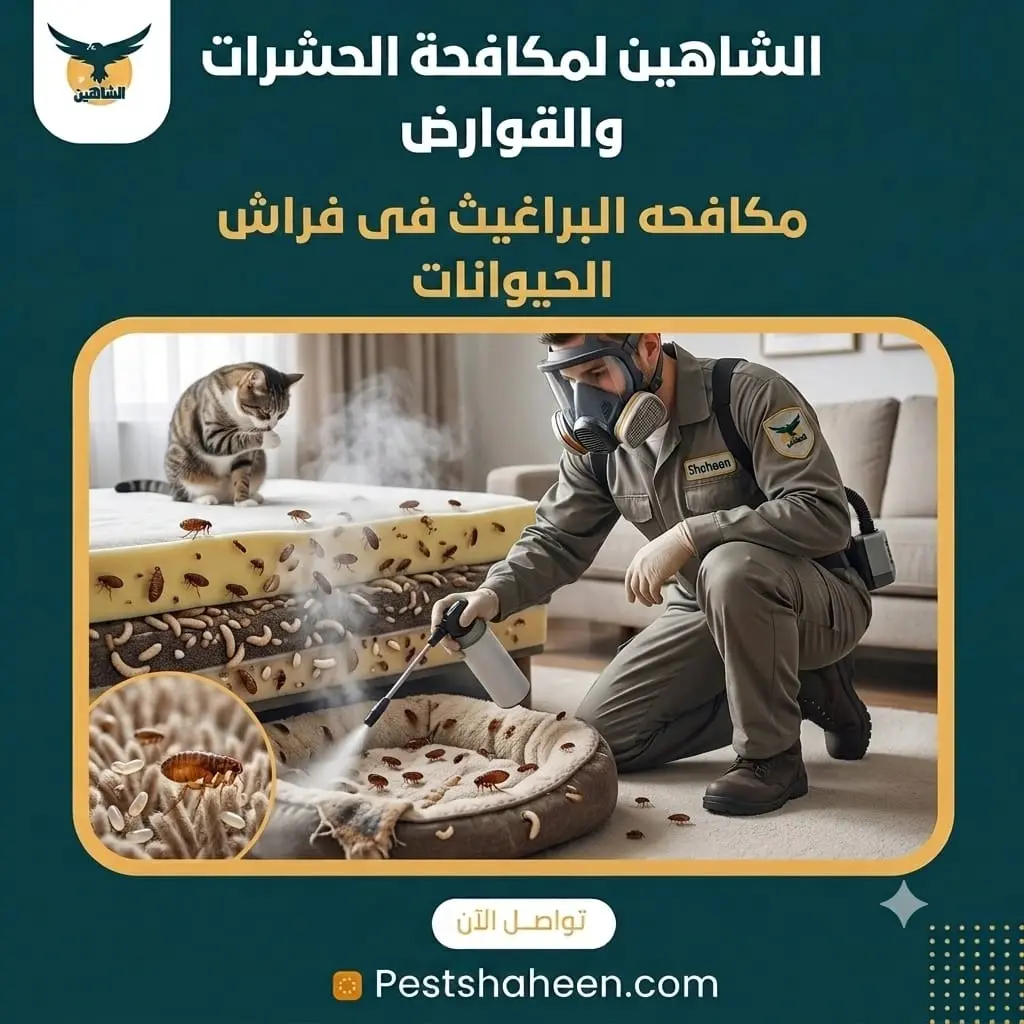
A plan for getting rid of dog fleas in the house needs to consider that dogs often spread hair, dust, and flea eggs across a wider range of locations because of their greater movement around the property. A dog may have one official bed but also spend time in the living room, hallway, entrance area, or next to doors. Focusing only on its bed can therefore leave other parts of the flea cycle untouched.
It is useful to map the dog’s normal route after it enters the home. Where does it stop first? Where are its paws cleaned? Where does it sleep? Is it allowed onto sofas or other furniture? These simple questions make environmental cleaning much more targeted.
Items the dog uses, such as blankets and washable seat covers, can be cleaned according to their care labels. Larger furnishings that cannot easily be washed need a different approach and should not automatically be sprayed with any product before confirming that it is suitable for the material.
If the dog regularly uses a yard or outdoor area and flea activity continues to return despite veterinary and household treatment, the external environment may need to be considered as a possible source. Repeated activity does not always mean the indoor treatment was weak.
At Al Shaheen, we focus on closing the infestation cycle as effectively as possible by linking the home to recurring exposure sources instead of repeatedly treating the same indoor room while ignoring how fleas may be entering again.
-
The dog’s normal route through the home is mapped so resting waiting and transition areas can be included in the cleaning plan instead of focusing only on the dog bed
-
Washable blankets and covers are handled according to their care requirements while larger upholstered items need separate assessment
-
Recurring flea activity after treating both the dog and the home may make outdoor areas or the yard an important part of the investigation rather than assuming the problem is entirely indoors
-
A strong treatment plan reduces the chance of repeated flea introduction into the home as well as addressing the stages already present inside the property
Spraying the House After a Cat Flea Infestation
Spraying the house after a cat flea infestation should not happen automatically just because a veterinarian confirms fleas on the cat. The first step is to determine whether environmental activity is actually present and which areas deserve treatment. If the cat has been infested for some time and regularly spends hours on carpets and furniture, the likelihood of immature flea stages being present in the environment is higher than in a case discovered very quickly.
Before household treatment begins, the area should be prepared by removing the cat, food bowls, toys, food, and other items that should not remain inside the application zone. The animal’s bedding should be handled according to whether it can be washed and according to product instructions if any suitable environmental treatment is being considered for it.
Any pesticide used inside the house needs to be intended for the environmental use involved and applied only to locations permitted by the product label. It should never be transferred to the cat simply because it targets the same pest. Products used on animals have different formulation and dosing requirements.
After application, ventilation, re-entry, and cleaning instructions should follow the label for the product being used. The cat should not return to treated areas before the allowed time.
At Al Shaheen, protecting the pet is treated as part of preparing the household service so environmental flea control remains clearly separate from veterinary treatment of the cat.
-
The need for environmental treatment is assessed from the duration of the infestation and the cat’s activity areas rather than automatically spraying the whole property after finding one flea
-
Food bowls toys pet belongings and food are removed or protected from the application area according to the treatment instructions
-
Household pesticide remains an environmental product and is not used on the cat because animal treatment requires a veterinary product specifically intended for that purpose
-
The cat returns to treated areas only according to the instructions for the specific product instead of relying on one fixed re-entry time for every flea treatment
Flea Control in Pet Bedding
Flea control in pet bedding is an important part of the overall plan because bedding collects hair and organic material and remains in a location where the animal spends long periods of time. This makes flea eggs that fall from the animal and larvae developing nearby more likely to occur in or around this area than in places the pet rarely uses.
If the bedding is washable, the care instructions provided by the manufacturer should be followed and an appropriate washing cycle should be selected according to the material. Not every pet bed can safely tolerate high temperatures, so one cleaning rule should not be applied to every item.
If the bedding is extremely old, damaged, difficult to clean, and heavily associated with the infestation, the owner may consider replacement instead of repeatedly trying to clean material that cannot be reached effectively throughout. However, throwing away the pet bed is not automatically necessary in every flea infestation.
The area beneath and around the bedding can be just as important as the bed itself because eggs may fall outside it and larvae may move away from light into nearby edges, gaps, or protected zones.
After cleaning, the bedding should not be returned immediately to an area still undergoing treatment until the instructions for the environmental plan allow it.
-
The pet bed and the area beneath it are treated as one environmental zone because flea development can extend beyond the edges of the fabric itself
-
Washing follows the care instructions for the material so bedding is not damaged by using unsuitable temperatures or cleaning methods
-
Replacing the pet bed is considered according to its condition and cleanability rather than being treated as a mandatory step in every infestation
-
Clean bedding is returned only when the surrounding area is ready according to the treatment plan so it is not immediately placed back into an unstable environment
Treating Carpet Fleas Caused by Pets
Treating carpet fleas caused by pets requires special attention because carpet provides fibers and small spaces where flea eggs can settle and larvae can move away from light. The problem is more likely to be concentrated when a cat or dog spends long periods resting or sleeping on the same carpet.
Vacuuming is especially useful in this situation because it reaches into the fibers and helps remove some eggs, larvae, and organic material. Greater attention should be given to carpet edges, areas under furniture, and places where the pet sleeps rather than simply passing quickly over the open center of the carpet.
Any pesticide considered for use on carpet must specifically allow application to that type of surface. A product suitable for ceramic or hard flooring should not automatically be used in the same way on carpet.
Removable rugs may need separate cleaning depending on their material, value, and care label. High-value or delicate rugs require even greater caution so flea control does not become a permanent problem for the fabric, color, or fibers.
At Al Shaheen, we first determine whether the carpet is genuinely part of the infestation or simply another surface in the room so chemical treatment is not applied without a reason.
-
Carpet edges pet sleeping areas and sections beneath furniture receive greater attention than the visible center of the carpet when those locations are more closely linked to flea activity
-
Any pesticide used on carpet must be suitable for textile application according to its instructions so fibers are not damaged and the product is not misused
-
Delicate or high-value rugs are handled according to their material rather than using the same approach applied to ordinary fitted carpet
-
The relationship between the carpet and the infestation is assessed before treatment because simply having carpet inside the home is not enough reason to spray it
Controlling the Pet Flea Life Cycle
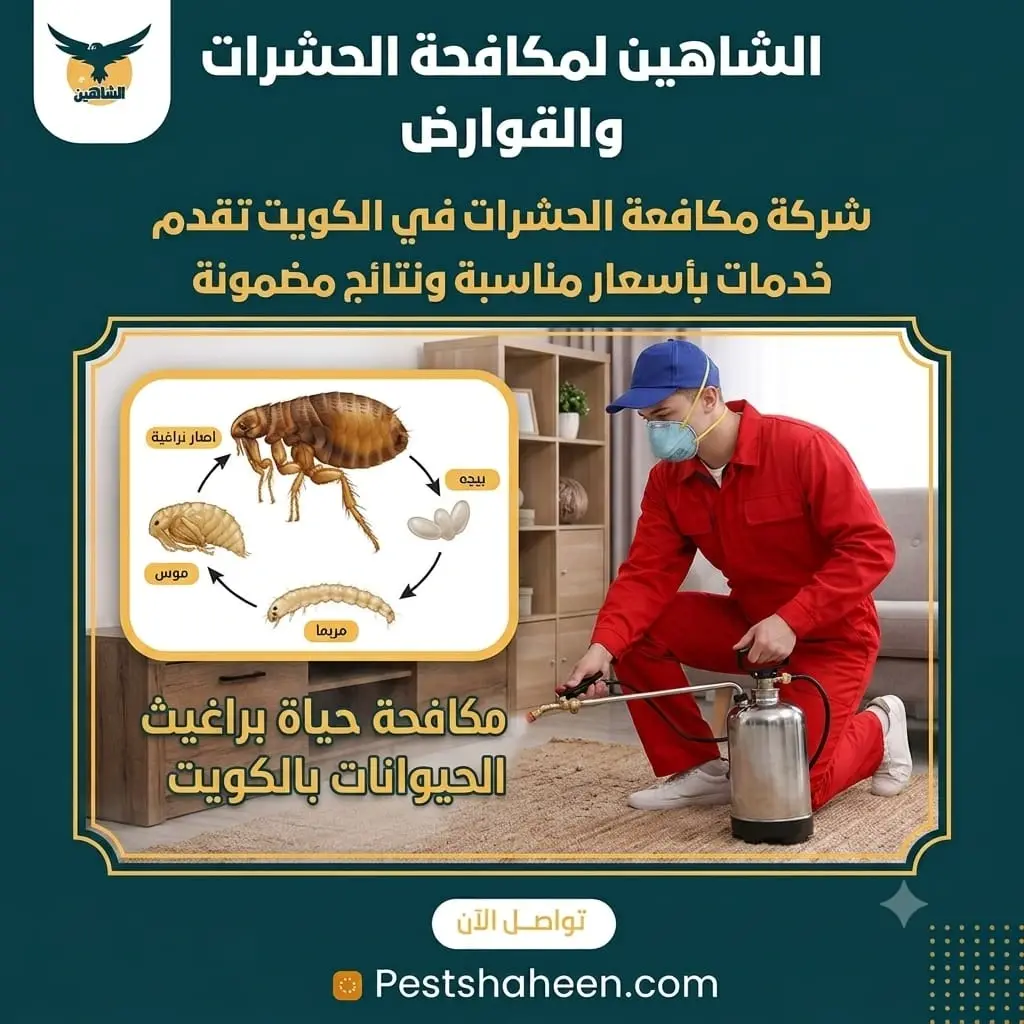
Successful control of the pet flea life cycle depends on understanding that the infestation passes through several stages and cannot be judged only by the number of adult fleas currently present on the animal. Eggs fall into the environment, larvae develop, pupae then form, and new adult fleas emerge later.
The pupal stage in particular can be more protected from some environmental interventions and may remain for a period before the adult emerges. This is why a customer may continue seeing new fleas even after both the animal and the home have been treated. The appearance of those fleas needs to be judged according to the overall direction of activity. Is the number decreasing? Is the time between sightings becoming longer? Are active areas becoming more limited?
Continuing veterinary treatment or prevention according to the veterinarian’s plan is important because newly emerging fleas from the environment may still attempt to feed on the animal. At the same time, household cleaning and environmental treatment reduce the number of stages that can develop later.
One mistake is stopping all efforts after fleas disappear for two or three days and assuming the cycle is over. The plan needs to continue according to professional guidance so successive life stages can be addressed appropriately.
At Al Shaheen, we focus on the household environment while the veterinarian manages treatment of the animal. This separation of responsibilities allows both sides of the infestation to be handled correctly.
-
Results are evaluated across the flea life cycle instead of judging the service only by whether fleas are present or absent during the first day or two
-
Continuing veterinary treatment or prevention according to professional instructions matters because new adult fleas may still emerge from the environment after household treatment begins
-
Cleaning and environmental control target flea stages outside the animal while veterinary care deals with fleas affecting the pet itself
-
A gradual decline in activity is more meaningful than expecting every life stage to disappear at exactly the same moment regardless of infestation severity
Pet Flea Control Company
Choosing a pet flea control company starts with finding a company that understands the limits of its professional role. A pest control company is responsible for the home environment, while diagnosis and treatment of the animal belong to veterinary care. Any company that recommends placing a household pesticide directly on a cat or dog when that product is not intended for animal use is confusing two different areas of responsibility.
A professional company asks what type of pet lives in the home, how many animals are present, where they sleep, how they move through the property, and whether veterinary flea treatment has already started. These details help the company plan the environmental service without trying to prescribe treatment for the pet.
It is also important to ask whether children or other animals are present because preparation, temporary removal, and re-entry need to follow the product instructions and the conditions of the property rather than one universal rule.
A strong company does not measure success by how much pesticide it uses. It measures success by accurately identifying pet-related activity areas, removing unnecessary treatment from the plan, and giving the owner practical instructions that can be followed between visits.
At Al Shaheen, we focus on coordination. The veterinarian treats the animal, we manage the home environment, and each professional stays within the appropriate role so the overall plan remains clearer and safer.
-
A specialized company clearly separates household environmental treatment from veterinary treatment instead of presenting both as one service
-
The company asks where pets sleep and move so the treatment scope reflects actual daily activity inside the home
-
The timing of pet removal and return depends on the product instructions and should not be reduced to one fixed duration for every property
-
The better company explains the purpose of each step and prevents unsafe pesticide use instead of relying on larger amounts of spray
Conclusion
Cat and dog flea control inside the home in Kuwait works best when the pet and the property are treated as two connected but separate parts of the same infestation. The cat or dog requires veterinary care using products intended for the animal, while the home needs environmental cleaning and treatment suited to the flooring, carpets, bedding, and areas the pet uses most.
At Al Shaheen, we begin with the pet’s movement around the property. We identify where it sleeps, where it rests, and which areas it uses most frequently, then define the cleaning and treatment scope instead of spraying the entire home without distinction.
We also focus on the flea life cycle because eggs, larvae, and pupae may remain in the environment even after the pet has already received veterinary treatment. This is why seeing some newly emerged adults does not automatically mean the plan has failed. The overall trend in flea activity needs to be monitored.
Most importantly, household pesticides should not be applied to pets. Treatment of the animal remains a separate veterinary responsibility, while the pest control company’s role is to reduce fleas and their immature stages within the environment where the animal lives.
Frequently Asked Questions
Is treating the cat or dog alone enough to get rid of fleas?
Not always. If fleas have been present for some time, eggs, larvae, and pupae may already be spread throughout the home environment, which means the property may also need appropriate cleaning and treatment.
Can I use household flea pesticide on my cat or dog?
An environmental pesticide should not be applied to an animal unless the specific product is approved and intended for that use and suitable professional guidance supports it. Treatment of the pet is different from treating the home.
Where do pet fleas usually accumulate inside the home?
Activity is often greater in places where the pet sleeps or rests, including bedding, carpets, furniture edges, spaces beneath sofas, and other low-traffic areas used repeatedly by the animal.
Do I need to spray the entire house if my cat has fleas?
Not necessarily. The cat’s movement areas and the environmental infestation scope should be assessed first before deciding whether treatment can remain localized or needs to include several rooms.
Does pet bedding always need to be thrown away?
No. If the bedding can be cleaned properly according to its care instructions, it may often be retained. Old, severely damaged, or difficult-to-clean bedding may require a different decision depending on its condition.
Do carpets cause flea infestations to continue?
Carpets do not cause the infestation by themselves, but they can provide suitable places for flea eggs and larvae, especially when the pet spends long periods resting on the same carpet.
Why do I still see fleas after treating my pet?
New adult fleas may emerge from stages that were already present in carpets, bedding, or other parts of the home before veterinary treatment began. This is why the household environment may need to be managed at the same time.
Should every pet in the household be treated?
If more than one animal lives in the home, it is best to discuss the situation with a veterinarian because the appropriate treatment for each pet depends on species, age, weight, and health condition.
Is vacuuming important when pets have fleas?
Yes. Vacuuming can help reduce some flea stages and organic material from carpets and floor edges, but the timing after any professional environmental treatment should follow the company’s and product’s instructions.
How do I choose a pet flea control company?
Choose a company that understands the difference between treating the home and treating the animal, asks about the pet’s movement, bedding, and carpets, explains home preparation and re-entry requirements, and never uses household pesticides on animals or treats every surface in exactly the same way.