Residential Flea Control Company in Kuwait for Homes
Finding fleas inside the home is frustrating because the problem is often much bigger than the number of insects you actually see jumping across the floor or carpet. A significant part of the flea life cycle can remain hidden within fibers, cracks, furniture, and quiet areas in the form of eggs, larvae, and pupae. This is why quickly spraying only the adult fleas may create temporary relief while activity returns again later. Choosing a residential flea control company in Kuwait should therefore depend on understanding the infestation cycle, identifying the most active areas, and preparing the home correctly before treatment. At Al Shaheen, we treat the entire home as an infestation environment and organize treatment, cleaning, and follow-up so the goal is not simply to kill visible fleas but to reduce the stages that allow the problem to continue.
Flea Control Company in Kuwait
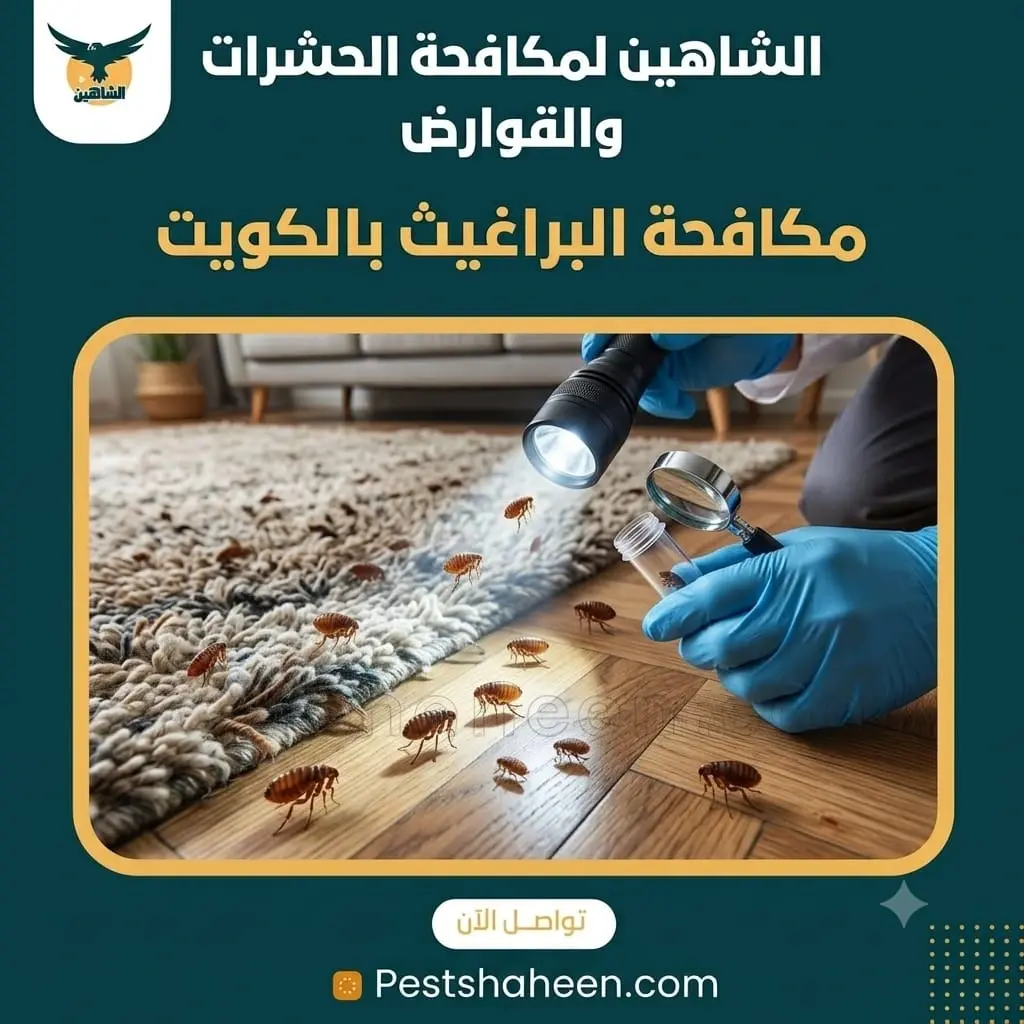
Choosing a flea control company in Kuwait should start with how well the company understands the nature of the infestation rather than how confidently it promises to spray the whole property with a strong pesticide. Fleas are different from many other household pests because a large percentage of the problem may exist in the surrounding environment in immature stages that are difficult to see. This is why a professional company asks where the activity first appeared, where bites are noticed most often, whether fleas are limited to one room or appear in several areas, and whether the home contains carpets, sofas, or frequently used sitting areas.
The inspection also helps estimate the severity of the infestation. A limited problem in one room is different from activity appearing in several sitting rooms, bedrooms, hallways, and other parts of the property. A home with mainly hard flooring is also different from a heavily carpeted home because the places where eggs, larvae, and other stages can develop are not the same.
One common mistake is expecting one strong spray to make the entire problem disappear immediately. Some flea stages are more protected within the environment and may continue developing after the initial treatment. Newly emerging adults can therefore appear later, which is why the treatment plan should be based on the complete life cycle instead of only on the fleas that are visible at the time of service.
At Al Shaheen, we explain before treatment what needs to be prepared, which areas will be included, and what the customer may reasonably expect afterward so any later activity is not automatically misunderstood.
-
Flea activity is assessed throughout the home before the service scope is defined so a limited one-room problem is not treated in the same way as a widespread infestation across several areas
-
Flooring and furnishing types are considered because carpets sofas and soft materials create different conditions from hard floors when it comes to flea eggs larvae and concealed stages
-
The flea life cycle is explained to the customer so newly emerging fleas after treatment are understood as potentially coming from stages already present before the service rather than being treated automatically as proof that the entire treatment failed
-
A professional company develops a preparation treatment and follow-up plan for the property instead of relying on the idea that the strongest possible single spray will solve every infestation
Flea Control in the Home
Effective flea control in the home requires treating the property as a network of areas where different stages of the flea life cycle may develop. Adult fleas are the easiest stage to notice because they jump and may cause bites, but flea eggs can fall into the environment while larvae can move into protected areas before developing into later stages.
For this reason, treatment should not focus only on the place where an adult flea is seen. A bedroom or living room where the customer notices the problem may be the starting point for inspection, but attention should also be given to carpet edges, spaces beneath furniture, and quieter sections that are not disturbed or cleaned as frequently.
Cleaning plays an important role, but it should not be treated as a complete replacement for professional treatment when a clear infestation is present. Vacuuming can help remove some material from carpet fibers and disturb environments where immature stages may remain, but it needs to form part of an organized program rather than being performed intensely for one day and then stopped.
Preparing the home before treatment also matters. Clutter on the floor, piles of clothes, or heavily covered areas can make it difficult to reach the locations that matter most. The objective is not to throw away household belongings but to clear the relevant treatment zones according to the instructions provided.
-
The property is treated as a series of flea activity zones instead of trying to chase and kill each visible adult flea individually
-
Vacuuming forms part of the management plan because it can reduce material and immature stages within fibers but it does not replace treatment of an active infestation by itself
-
Floor areas are cleared of unnecessary clutter before service so cleaning and treatment can reach places that may support flea development
-
Frequently used areas are compared with quieter zones because flea activity is rarely distributed evenly throughout every room in the home
Flea Spraying for Homes

The purpose of flea spraying for homes is not to cover every surface with pesticide. The goal is to treat appropriate areas according to the selected product, its instructions, and the actual infestation pattern. Broad spraying without a defined treatment plan may increase the amount of pesticide used without adding real value, especially if large areas have little connection to flea activity or the flea life cycle.
Before application, the treatment area is prepared according to the company’s instructions. Food, personal belongings, and items that do not need to remain within the treatment zone should be removed or protected depending on the location. The technician can then focus on floors, edges, furnishings, or other areas where treatment is appropriate and where the product label permits use.
Not every fabric or surface should be handled in the same way. Some furnishings may require specialized cleaning or a different approach, while certain surfaces may not need pesticide application at all. Spraying sofas, beds, carpets, and hard flooring with the same material without assessment is not a professional strategy.
Customers also need to know when the area can be used again and when cleaning should resume after treatment. These instructions depend on the specific product. Cleaning some treated zones too early may reduce the intended effect, while failing to clean surfaces when appropriate can also create problems.
-
Spray application is directed toward areas that support the flea control plan instead of spreading pesticide across every surface in the home without a clear reason
-
Surface and furnishing types affect treatment decisions because a product suitable for one floor surface may not be suitable for fabrics beds or upholstered furniture in the same way
-
Re-entry and cleaning instructions depend on the product being used and should not be replaced by one fixed time rule for every flea treatment
-
Spray quality is measured by correct location selection and compliance with product instructions rather than by strong odor or how wet the floors appear after application
Flea Spraying Company in Kuwait
Customers often search for a flea spraying company in Kuwait after trying household sprays several times without achieving a stable result. The issue is not always that the product itself was weak. In many cases, do-it-yourself spraying focuses mainly on adult fleas visible at that moment while the rest of the life cycle remains unmanaged.
A professional company first asks what products have already been used, when they were applied, and which rooms were treated. This information matters because repeated use of several products within a short period can make the situation harder to evaluate and may change how activity appears.
A specialized company also does not simply repeat the customer’s previous spraying on a larger scale. Instead, the technician determines which areas genuinely need treatment, which zones require deeper cleaning, and which locations need monitoring rather than unnecessary additional chemical application.
Some properties may also require more than one stage depending on infestation severity and how the flea life cycle progresses. This does not mean every infestation automatically requires a fixed number of visits. It means the treatment plan should respond to results rather than treating the first visit as the end of the problem regardless of what happens afterward.
At Al Shaheen, we place strong emphasis on clear instructions before and after treatment because a large part of successful flea management depends on avoiding random cleaning or additional household spraying that can interfere with the treatment plan.
-
Products used by the customer before professional treatment are reviewed so the new plan is not created without understanding what has already been applied in the home
-
A specialized company adjusts the approach when the situation requires it instead of repeating the same treatment in the same places without evaluating the result
-
The number of visits is not treated as one fixed number for every property because infestation severity and emergence of new flea stages differ between homes
-
Customers receive clear instructions to prevent them from mixing several sprays cleaners and household products over treated areas in ways that make the result harder to evaluate
Flea Control Price in Kuwait
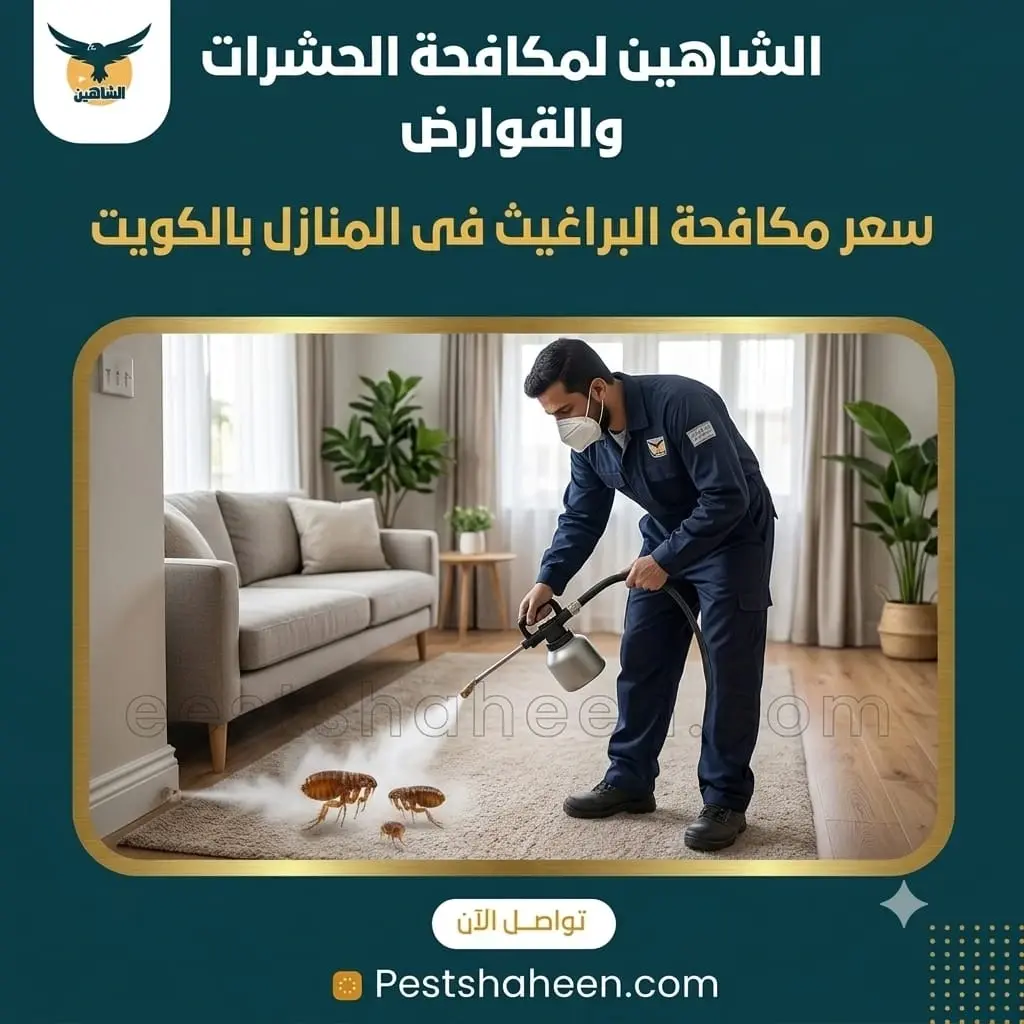
The flea control price in Kuwait depends more on the scope of the infestation, property size, and number of areas requiring treatment than on the number of fleas the customer can actually see. A home with activity limited to one room is different from a property where fleas appear in several bedrooms, sitting areas, corridors, and other sections.
Furnishing and flooring types can also change the amount of work required. Large carpets and heavily furnished rooms take more time to inspect and prepare than open spaces with mostly hard flooring. The condition of the property and the amount of clutter on floor areas can also affect the preparation and treatment time.
Customers should also know whether the quoted price covers one visit only or whether follow-up is included according to the agreement. Professional upholstery cleaning or specialist fabric treatment is not automatically part of a pest control service, so the quotation should clearly define what is included.
A very low price is not necessarily better if the company simply passes through the property, sprays visible surfaces, and leaves without a plan. At the same time, a higher price alone is not proof of quality. A better comparison looks at inspection, treatment scope, preparation instructions, and follow-up.
At Al Shaheen, we aim to connect pricing with the actual condition of the home so the customer understands what the service includes rather than receiving a general figure with no explanation.
-
Property size and the number of flea activity zones influence pricing because treating one room is different from managing an infestation spread throughout several areas
-
Heavy carpeting and extensive furnishings can increase the amount of preparation and inspection required before treatment
-
The quotation should clearly explain whether follow-up or an additional visit is included so customers can compare services fairly
-
The better price is the one connected to a defined treatment plan and clear service scope instead of simply being the lowest figure without explaining what will actually be done
Getting Rid of Fleas in the House
Successfully getting rid of fleas in the house usually requires combining several steps because killing adult fleas alone does not always break the infestation cycle. Part of the problem may remain in the environment as eggs, larvae, or pupae, which is why stronger results depend on reducing several life stages rather than focusing on only one.
Regular vacuuming is one useful tool because it can help remove part of the egg population and organic material that larvae may use. Vacuuming can also disturb some protected stages and encourage emergence, making later stages more exposed to the treatment plan. However, the timing of vacuuming after professional treatment should follow the company’s and product’s instructions so treated zones are not cleaned too early.
Washable bedding and fabrics can also be handled according to their care instructions, while larger items that cannot be washed easily may require a different approach. They should not simply be sprayed with any household product without checking whether that product is suitable for the material.
It is also important to prevent new sources from repeatedly introducing fleas into the property. If activity is connected to an external source or shared area, that source needs to be considered where possible because cleaning one room will not prevent recurrence if the source remains active.
-
Effective flea elimination addresses the complete life cycle instead of treating the death of visible adult fleas as the end of the infestation
-
Vacuuming is integrated into an organized plan and its timing after treatment follows product instructions so treated areas are not disturbed too early
-
Washable fabrics are handled according to their care requirements while larger furnishings require a different approach instead of random pesticide application
-
Any source that repeatedly brings fleas back into the home needs separate attention because treating only the indoor environment cannot stop recurrence while the source remains active
Treating a Flea Infestation in the Home

Treating a flea infestation in the home is different from dealing with one or two fleas in a single area. A true infestation usually means activity is appearing across several locations or that bites and flea sightings continue despite repeated cleaning and household spraying.
In these cases, the property needs to be divided into levels of activity. Areas where fleas are repeatedly seen receive higher priority, while surrounding zones are assessed according to their connection with those locations. Rooms with no signs should not automatically receive the same treatment intensity simply because they are part of the same house.
With wider infestations, cleaning and follow-up also need to be organized over time instead of trying to do everything in one day. Fleas emerging after the first treatment may come from stages that were already present in the environment beforehand. This means the result should be judged by the direction of the activity. Is the number of fleas decreasing? Are sightings becoming limited to fewer areas? Are bites becoming less frequent?
One common mistake is changing the treatment plan every day. One day the customer uses a spray, the next day a powder, and then a strong cleaner is applied everywhere. Constant changes make it much harder to evaluate what is working and may interfere with certain treatments.
At Al Shaheen, we organize infestation control into clear steps and review progress according to the severity of the problem instead of responding to every new flea sighting with a completely different method.
-
The home is divided according to activity intensity so the most affected areas receive priority rather than treating every room with the same level of intervention
-
Newly appearing fleas after treatment are evaluated within the life cycle and the overall trend in activity instead of automatically being treated as a completely new infestation
-
Cleaning and treatment procedures are kept consistent long enough to evaluate them instead of changing products and methods every day
-
Successful infestation treatment is reflected by gradual reduction and a smaller number of active areas rather than expecting complete disappearance immediately after the first treatment
Flea Egg Control
Flea egg control is important because flea eggs do not necessarily remain attached to the adult flea. They can fall into the surrounding environment and settle between carpet fibers, along furniture edges, or in areas where dust and organic material collect. This means killing the adult flea you see does not mean the eggs already present in the property have disappeared.
Flea eggs cannot be managed as if they were adult insects moving around and making direct contact with treatment. This is why environmental management and regular cleaning have an important role in reducing the life cycle. Vacuuming can help collect some eggs and also remove organic material that flea larvae may later use.
It is also unrealistic to try to locate every individual flea egg by sight because of its size and the locations where it may settle. A more practical strategy is to focus on the areas where eggs are most likely to accumulate based on flea activity and how those spaces are used.
A common mistake is assuming that a light infestation must contain very few eggs simply because none are visible. In reality, customers usually see only the adult fleas while other stages remain concealed.
At Al Shaheen, we explain this part of the flea life cycle because understanding it helps customers avoid judging the service too quickly and makes it clearer why cleaning and follow-up are essential parts of the treatment plan.
-
Flea control targets the environments where eggs are most likely to be present instead of attempting to locate every individual egg within carpets and furnishings
-
Vacuuming can help reduce eggs and remove material needed by developing larvae which makes it a practical part of life-cycle management
-
Failing to see flea eggs does not mean the home is free from them because most eggs are distributed in small concealed locations
-
Flea egg control focuses on reducing the chances of the life cycle continuing rather than simply applying a stronger spray across every surface in the property
Floor Spraying Against Fleas

Floor spraying against fleas can be useful when floors and edges form part of the active infestation area, but treatment needs to reflect the type of surface. Ceramic and marble floors are not the same as carpet or fitted flooring, and every surface has different cleaning and treatment requirements.
Edges, spaces under furniture, and locations where dust accumulates can sometimes be more relevant than the center of an exposed floor that is cleaned every day. For this reason, covering a large open surface does not automatically provide stronger flea control than focused treatment of areas connected to flea development.
With carpeted floors, the technician also needs to determine whether the selected product is suitable for textile application and how the carpet should be managed after treatment. It is not appropriate to assume that a pesticide intended for hard floors should be applied to carpet in exactly the same way.
Toys, personal belongings, food, and other sensitive items should be removed or protected from the treatment area according to the instructions. Residents, children, and animals should only return to the area according to the guidance for the product being used.
At Al Shaheen, we identify the flooring type before treatment and explain to the customer what should be cleaned, what should remain undisturbed, and when the area can return to normal use.
-
Floor edges spaces beneath furniture and low-traffic areas may receive greater priority than the open center of the room when those locations are more relevant to the infestation
-
Carpets and fitted flooring are treated according to product suitability for textiles rather than using the same approach applied to ceramic or marble floors
-
Personal items toys and food are removed or protected from the treatment zone according to the conditions of the property
-
Re-entry and cleaning instructions after spraying depend on the specific product and should not be replaced by one fixed rule for every flea control service
Flea Control Technician in Kuwait
The role of a flea control technician in Kuwait starts with understanding the infestation before operating any spraying equipment. The technician needs to know where fleas are being seen most often, when activity appears stronger, what types of flooring and furnishings are present, and which products have already been used before the visit.
Experience also shows in determining whether the infestation is localized or widespread. A customer may say that the whole house is infested, but after asking detailed questions it may become clear that activity is concentrated mainly in one sitting room and the nearby corridor. The opposite can also happen, where the customer notices fleas in one room but additional evidence suggests more than one area needs assessment.
The technician also provides preparation instructions that fit the property instead of giving one identical checklist to every customer. A heavily carpeted home needs different preparation from a property with mostly open hard floors.
Another important part of the technician’s role is explaining what can be considered normal after treatment and what should prompt contact with the company. A small amount of declining activity after a short period may fit the flea life cycle, while persistent activity at the same intensity for an extended period may require reassessment.
At Al Shaheen, the technician’s job is not limited to applying treatment. We want the customer to understand the plan so they do not immediately apply household sprays over treated areas or clean in a way that interferes with the service.
-
The technician collects information about flea distribution before treatment so priority areas can be identified instead of assuming every room is affected equally
-
Home preparation instructions are adjusted according to flooring furnishings and infestation scope rather than being one memorized checklist for all properties
-
The difference between gradually declining new flea emergence and continuing heavy activity is explained so the customer knows when follow-up may be necessary
-
A specialized technician helps the customer maintain the treatment plan after service instead of leaving them to return to random household products that make results more difficult to evaluate
Conclusion
Choosing a residential flea control company in Kuwait for homes should be based on understanding that the problem is not limited to the adult fleas you can see. The flea life cycle includes concealed stages within the environment, which is why stronger control combines identification of active zones, appropriate treatment, organized cleaning, and follow-up according to infestation severity.
At Al Shaheen, we do not treat every home with one identical program. We determine whether the activity is localized or widespread, review carpets, furnishings, and flooring, and explain what the customer needs to prepare and what can reasonably be expected after treatment.
We also distinguish between flea control inside the home and treatment of an animal if one is involved. Veterinary treatment is a separate field, and household environmental pesticides should not be applied to animals unless the specific product is intended for that use and professional guidance supports it.
Good results can be gradual, particularly when immature flea stages are already present inside the property at the time of treatment. What matters is that overall activity decreases, flea sightings become more limited, and the customer avoids changing the treatment strategy every day with a different product.
Frequently Asked Questions
Why do fleas return after the house has been sprayed?
New adult fleas may emerge from eggs, larvae, or pupae that were already present in the environment before treatment. For this reason, seeing some fleas afterward does not automatically mean the entire treatment failed.
Is one flea treatment enough for the house?
It depends on infestation severity, the life cycle present inside the property, and the treatment plan. Some cases are limited, while others may require follow-up or additional steps depending on the result.
Does vacuuming help get rid of fleas?
Yes. Vacuuming can help remove some flea eggs, larvae, and material within carpets and edges, but the timing after professional treatment should follow the company’s and product’s instructions.
Do I need to spray the entire house if fleas appear in one room?
Not always. Nearby areas should be assessed and the infestation scope defined first because expanding treatment without evidence is not necessarily better than accurately treating the active zones.
Can fleas live in carpets?
Carpets can provide suitable environments for several flea life stages, particularly between fibers and in low-traffic areas. This is why carpets may need to be included in the inspection and cleaning plan depending on the infestation.
Is spraying the floors enough to eliminate fleas?
Not necessarily. The infestation may involve furnishings, edges, concealed areas, and several life stages, so the treatment plan should consider the wider home environment.
What determines the cost of flea control in Kuwait?
Property size, number of active zones, flooring type, amount of carpeting and furnishings, treatment scope, and follow-up requirements can all affect the final price.
Can I use household flea spray after the company treatment?
It is better not to add another product without checking with the company because some sprays or cleaners may interfere with the treatment or make the result more difficult to evaluate.
Does treating the home replace flea treatment for an animal?
No. If an animal is affected, appropriate veterinary treatment is separate from treating the home environment. Household environmental pesticides should not be used on animals unless they are specifically intended for that purpose and used according to suitable professional guidance.
How do I choose a flea control technician in Kuwait?
Choose a technician who asks about activity locations, flooring, furnishings, and products used before the visit and explains home preparation and follow-up instead of immediately starting to spray without assessing the infestation.