Professional Pest Control Company for Schools in Kuwait
Schools require a different approach to pest control because the environment includes classrooms, corridors, restrooms, storage rooms, cafeterias, and outdoor areas used every day by students and staff. For that reason, choosing a pest control company for schools in Kuwait should not depend on quick spraying alone. The process should begin with inspecting the site, identifying the actual source of the problem, choosing suitable treatment timing away from students, and following the instructions for any products used before reopening treated areas. Cockroaches may be associated with cafeterias or drains, ants may appear in classrooms because of small food residues, and rodents may enter through storage areas or external openings. An accurate plan connects each pest with its source and coordinates pest control with cleaning and maintenance instead of using the same treatment throughout the entire school.
Pest Control Company for Schools in Kuwait
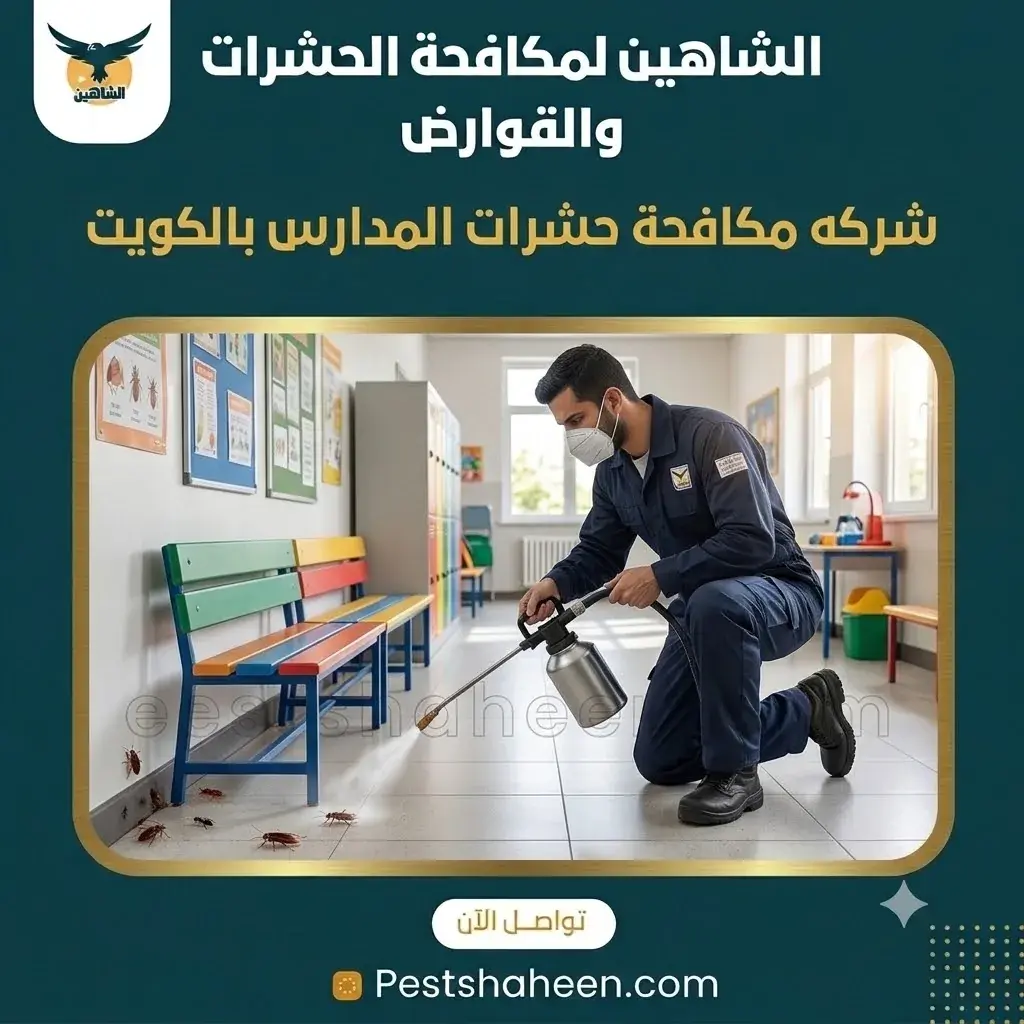
Choosing a pest control company for schools in Kuwait requires looking first at how the company handles a school environment rather than focusing only on the idea of spraying. A school is not one building with the same use throughout. It includes different areas such as classrooms, laboratories, offices, restrooms, cafeterias, storage rooms, yards, and waste collection areas, and each section may have different conditions that allow insects or rodents to appear.
A suitable company should begin by identifying the locations where pest reports have been recorded and when the activity usually appears. If cockroaches are seen after the school day around the cafeteria, the inspection will be different from a situation where ants appear every morning inside one particular classroom. If rodents are reported around an external storage room, priority should be given to tracing entry points and openings rather than spraying classrooms or corridors.
It is also important to understand the school schedule before carrying out any treatment. The presence of students and teachers means that any procedure requiring an area to be vacated must be scheduled appropriately and carried out according to the product instructions and required re-entry interval. Simply spraying after the school day ends does not automatically mean the area is ready for use shortly afterward without checking the instructions for the material used.
In a practical situation, repeated cockroach reports may come from a classroom located close to a restroom. Instead of spraying the entire classroom, the water lines, edges, and the area between the two spaces should be inspected because the source may actually be outside the classroom itself.
You can contact Shaheen Pest Control to inquire about services for schools in Kuwait and explain the number of buildings, the areas where pests have appeared, and the nature of the problem before defining the appropriate service scope.
• A suitable school pest control company begins by dividing the site into classrooms and facilities and cafeteria and storage areas and yards so the source of each problem can be identified according to how the area is used instead of applying the same treatment throughout the building
• Service timing inside schools should match the school schedule and the instructions for the products used because the end of the school day alone is not enough to determine when a treated area can be used again
• Recording where and when a pest report occurs helps connect insect activity with an actual source such as the cafeteria or restroom or storage room and reduces the need to treat areas where no activity has been reported
Pest Control in Schools in Kuwait
Pest control in schools in Kuwait is more effective when it begins with prevention and inspection before a large infestation develops. The daily movement of students, school bags, learning materials, food, and cleaning activities means that the original pest source may be simple but repeated every day. Food crumbs under desks, waste left too long, or a small leak under a sink may provide suitable conditions for certain pests even when the school appears generally clean.
Classrooms require a different inspection approach from cafeterias. Inside classrooms, attention should be given to food residues, corners, storage cabinets, and areas that are not moved or cleaned easily. In the cafeteria, priority should shift toward food residues, storage areas, drains, and spaces behind equipment. Restrooms require particular attention to drains, moisture, and leaks.
Outdoor areas are also connected to the building. Insects and rodents may approach the school from waste areas, gardens, or utility openings and then enter through doors or corridors. A plan that focuses only on indoor spaces may therefore ignore an ongoing source outside.
One mistake is responding to every pest report with immediate spraying. If ants appear near a window, their route should be traced to determine whether they are entering through a specific gap. If cockroaches appear around a drain, the source should be addressed and the area cleaned rather than spraying only the visible surface.
In larger schools, a simple record showing the location, date, and action taken for each report can be very useful. Over time, it becomes easier to identify whether the problem is linked to a specific area, season, or recurring activity instead of relying on memory.
• Effective school pest control combines cleaning and maintenance and monitoring with treatment because insects returning from the same leak or opening will not be controlled permanently by repeated spraying alone
• Classrooms and cafeterias and restrooms and outdoor areas require different inspection plans because every area has its own attraction sources and entry routes even when they are all part of the same building
• Maintaining a record of pest reports helps school management identify areas where activity repeatedly occurs and review the source instead of treating every sighting as an entirely separate new problem
Insect Spraying in Schools in Kuwait
Insect spraying in schools in Kuwait requires careful decision-making because schools contain large numbers of students and employees and include surfaces, furniture, and equipment that are touched constantly throughout the day. For that reason, spraying should not be an automatic response to every insect problem. It should be one part of the control plan when inspection confirms that a particular area requires suitable treatment.
Before spraying, the target area should be clearly identified and materials that require protection should be removed or covered according to the location and the instructions for the product being used. Inside classrooms, desks, books, and learning materials should not be treated in the same way as a crack behind a cabinet or an edge that is not directly touched during daily use. In cafeterias, even greater attention is required to protect food, utensils, and preparation surfaces from unintended exposure.
Treatment timing is extremely important. Some schools may prefer to carry out pest control during holidays or after school hours, but the important point is not the name of the time period. What matters is following ventilation requirements, waiting periods, cleaning procedures, and all other instructions related to the treatment before students return.
One mistake is increasing the amount of pesticide when the problem continues. If insects return after more than one treatment, the source should be inspected again and leaks, openings, waste, and storage practices should be reviewed rather than simply repeating the same procedure.
For example, cockroaches may continue appearing every week near the cafeteria entrance despite previous spraying. In this situation, the areas behind refrigerators, drains, waste route, and door condition should be inspected because the problem may be an ongoing attraction or entry point rather than insufficient pesticide.
• School spraying should be directed only toward locations where inspection confirms a real need while furniture and equipment and food areas are protected from unnecessary exposure instead of applying pesticides generally throughout classrooms and facilities
• The treatment time should be determined by the product instructions and required re-entry period rather than simply by the end of the school day or beginning of a holiday so the area is returned to use in an organized and appropriate way
• Continuing pest activity after treatment requires another review of the source and openings and moisture and waste and storage conditions because increasing pesticide use without identifying the cause does not solve the underlying problem
Cockroach Control in Schools
Cockroach control in schools requires identifying where the problem begins before considering spraying because cockroaches may appear inside a classroom while the actual source is a nearby restroom, drain, utility room, or cafeteria. Finding one insect in a classroom is not enough to prove that the infestation started there, which makes route tracing more important than treating only the location where the insect was seen.
Inside cafeterias, inspection should include areas behind refrigerators, beneath sinks, around drains, dry storage sections, and the waste removal route. When complaints come from classrooms, attention should shift toward cabinets, corners, gaps beneath doors, and areas close to water services or walls shared with school facilities.
The time when cockroaches appear also provides useful information. If insects are usually seen after the school day or early in the morning, it may be useful to inspect quieter areas during those periods instead of relying on one inspection while students and staff are moving through the building.
One mistake is for a cleaner to see a cockroach and immediately spray an aerosol product inside the classroom or around desks. This does not identify the source and may unnecessarily expose frequently touched surfaces to a product they do not need. The better approach is to record the location and carry out a targeted inspection before treating the appropriate points.
For example, activity may repeatedly appear in a classroom close to a cleaning room. In that situation, the cleaning supply area, water sources, moisture, and gaps between the two rooms should be inspected because treating the classroom alone may reduce activity temporarily without stopping the source.
• Finding cockroaches inside a classroom does not automatically mean the infestation started there and nearby restrooms and utility rooms and drains and surrounding areas should be inspected before the treatment scope is defined
• Monitoring when cockroaches appear helps identify areas that deserve inspection after the building becomes quiet and may reveal activity that is not visible during busy school hours
• Direct spraying around student desks is not the first solution and attention should instead be given to cracks and sources and concealed areas after the real activity location has been identified
Ant Control in Classrooms
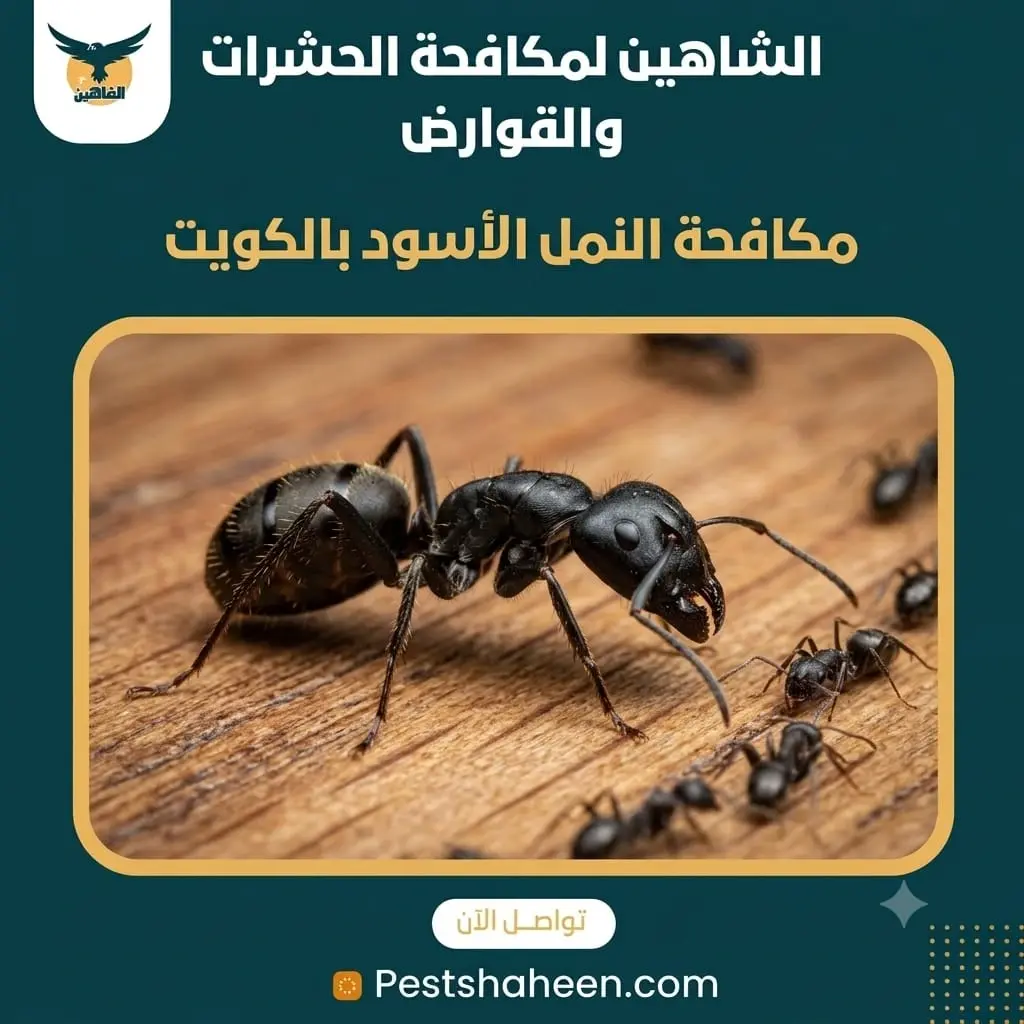
Ant control in classrooms requires route tracing because a small group of ants around a window or drawer does not mean the source of the problem is located at that exact point. Ants often move along visible trails, so observing the direction they are coming from before cleaning the trail or applying treatment can provide useful information about the entry point.
Inside schools, ants may be attracted by small food residues inside drawers, waste bins, sweet drinks, or crumbs left under desks. For that reason, the first step should be to remove the attraction source and clean the area before checking cracks, edges, and other locations used by ants to enter.
If the trail begins from a window or external door, the joints and edges should be checked from both inside and outside. If ants appear from a utility opening or near a sink, attention should shift toward nearby gaps and moisture.
One mistake is wiping away an ant trail every time without noting where the ants are coming from. Cleaning is important, but if it is the only action taken, it may remove the visible sign temporarily while ants return along the same route a few hours later.
In a classroom where ant activity repeatedly appears near a side cabinet, the cause may be a forgotten piece of food or a gap behind the cabinet. Moving the cabinet and inspecting the area may provide a more accurate answer than spraying the entire classroom.
If ants appear in several adjacent classrooms, the shared wall or corridor should be inspected instead of treating each classroom as a separate infestation. This reduces repeated treatment and helps determine whether one route extends through several rooms.
• Before cleaning an ant trail the direction of movement should be observed so the entry point or attraction source can be identified instead of removing the visible evidence and starting the investigation again every time
• Small food residues inside drawers and beneath desks may be enough to maintain ant activity which makes detailed cleaning part of the control plan rather than only something carried out after spraying
• Ant activity in adjacent classrooms should lead to inspection of the shared wall or corridor because the problem may be connected to one route rather than separate infestations in every classroom
Rodent Control in School Buildings
Rodent control in school buildings requires greater care because the site is used daily by students and staff. Monitoring devices and traps therefore need to be selected and positioned carefully and should not be placed along normal walking routes or in locations accessible to children.
Inspection usually begins around the building perimeter, school fence, waste areas, external storage rooms, and service doors. Any internal signs such as droppings, gnaw marks, or damaged packaging are then traced to determine whether rodents entered from outside or whether activity is concentrated in one internal location.
If droppings are found inside a storage room or rarely used area, they should be handled using an appropriate cleaning procedure and should not be dry swept or removed with an ordinary vacuum cleaner. Nearby packages and equipment should then be inspected while openings around walls and doors are reviewed.
One mistake is focusing only on traps. If there is a gap beneath a door, an opening around pipes, or an attraction source close to the waste area, the opportunity for entry remains even after some rodents have been removed.
Old cartons or unused equipment stored for long periods may also create areas that receive little inspection. Organizing storage rooms and maintaining visible aisles makes new signs easier to detect.
In a practical situation, droppings may repeatedly appear near the same storage room door every week. In that case, inspecting the lower door gap, nearby perimeter, and outside area is more important than simply increasing the number of traps inside the room.
• Rodent control in schools begins with the building perimeter and waste areas and storage rooms and doors so the entry point can be identified before control devices are placed inside the building
• Traps and monitoring points should be positioned in carefully selected locations away from student access and normal walking routes so they achieve their purpose without creating another risk inside the school
• Continued rodent signs after trapping means entrances and attraction sources require another review because preventing entry is the most important part of long-term control
Pest Control in School Yards
Pest control in school yards requires understanding that the yard is part of the school environment rather than a completely separate outdoor area. Gardens, seating areas, fence edges, waste locations, and drains may all become attraction sources or entry points for insects moving toward the building.
If flying insects are the problem, lighting, standing water, vegetation, and waste areas should be examined before spraying is considered. If crawling insects appear close to the building, cracks, edges, and doors connecting the yard to internal corridors should be checked.
Any water that remains after yard cleaning or irrigation also deserves attention because long-lasting standing water may create unsuitable conditions and increase certain types of insect activity. In this case, the solution may involve improving drainage and removing the source rather than applying pesticide.
Student play areas and benches also require particular care. Treatment should not be applied indiscriminately over surfaces that are touched or used every day. Instead, the specific locations requiring intervention should be identified according to the pest type and the product instructions.
In schools with trees or planting beds close to windows, seasonal insect activity may increase around the building. In this case, adjusting attraction factors and monitoring openings may be more useful than turning every external insect sighting into comprehensive yard spraying.
Outdoor waste areas should also be included in the inspection plan because accumulated waste or delayed removal can attract insects and bring them closer to school entrances.
• School yards require inspection of drains and irrigation areas and waste locations and perimeter fencing because outdoor pest activity may begin at these points before moving into corridors and classrooms
• Standing water requires correction of the cause and improvement of drainage rather than dependence on spraying alone because continued moisture may allow the problem to return
• Student play areas and seating surfaces should be protected from unnecessary treatment and pest control should be directed only to actual activity points according to the pest type and location
Spraying Schools During Holidays in Kuwait
Spraying schools during holidays in Kuwait can provide a better opportunity for some inspection and treatment work because the building is less crowded and areas that are difficult to access during normal school days can be examined more easily. However, the holiday itself is not a reason to spray every classroom and facility comprehensively when there is no actual need.
The available time should first be used for deeper inspection. Furniture may be moved when necessary so cabinets, corners, utility rooms, storage areas, cafeterias, and spaces that are normally difficult to access during school days can be examined. The areas that genuinely require treatment can then be identified.
School holidays are also an opportunity to repair openings, leaks, and door problems recorded during the term. If spraying is carried out while the same underlying causes remain, the problem may return after classes begin even if pest activity disappeared during the holiday.
Any treatment still needs to follow the product instructions, required re-entry interval, ventilation requirements, and cleaning procedures. Having several days available for the work may make scheduling easier, but it does not remove the need to follow the required instructions.
For example, a school may have repeated reports from a supply storage room throughout the term. During the holiday, part of the room can be cleared, corners inspected, unused cartons removed, an opening behind a shelf repaired, and the required points treated. This approach is more effective than simply spraying the room while leaving the same clutter in place.
The holiday period can also be used to review school yards, waste areas, external doors, and monitoring plans before students return instead of waiting for the first complaint after the school year resumes.
• School holidays provide a suitable time for deeper inspection and access to storage rooms and corners and locations that are difficult to manage while students are present but spraying should still be based on actual need
• Repairing openings and leaks and organizing storage areas during holidays reduces the likelihood of pests returning after school resumes more effectively than depending on spraying alone
• Before reopening the school all instructions for the products used and ventilation and cleaning requirements and re-entry periods should be followed instead of assuming that the length of the holiday alone is sufficient
Pest Control Prices for Schools
Pest control prices for schools vary according to school size, the number of buildings, classrooms and facilities, pest type, infestation extent, and the type of service required. A small school with a limited cafeteria problem is different from a large school complex containing several buildings, outdoor yards, storage rooms, and multiple facilities.
The type of service also makes a difference. A single visit to deal with one specific report is different from a monitoring contract covering classrooms, cafeterias, restrooms, storage areas, and outdoor yards. The presence of rodents or several insect types may also expand the inspection and monitoring scope.
Building condition is another factor. A school with clear corridors, organized storage, and easy access to service areas is different from a site with clutter or closed areas that require preparation before inspection.
When requesting a quotation, it is better to provide the number of buildings, classrooms, service areas, cafeteria sections, storage rooms, yards, and the nature of the current problem. If activity is concentrated in one department, mention this because the evaluation will be more accurate than requesting a price based only on total school area.
You should also ask whether the quotation includes follow-up, reports, and additional visits or whether every report outside the scheduled appointment is charged separately. This is particularly important when the school is considering a long-term contract.
A single fixed price should not be applied to every school because the work scope changes significantly according to site size, pest problem, and required service timing.
• Service cost depends on school area and number of buildings and facilities and pest type and infestation scope so pricing requires information about the entire site rather than classroom numbers alone
• A useful quotation should explain whether classrooms and cafeteria areas and storage rooms and yards and follow-up are included so offers can be compared using the same service scope
• A school requiring additional visits or special scheduling during holidays may have a different service scope from a school requiring limited treatment for one specific problem
Pest Control Contracts for Private Schools
Pest control contracts for private schools are useful when management needs organized monitoring throughout the year rather than waiting for insects or rodents to appear and then requesting a separate visit. A good contract gives the school a clear record of observations, recurring areas, and recommendations that cleaning or maintenance teams need to implement.
The contract scope should be written clearly. It should state whether classrooms, cafeterias, offices, restrooms, storage rooms, outdoor yards, and waste areas are included or whether the agreement covers only specific locations. The more precise the description is, the easier it becomes for management to understand what is included and what needs separate arrangements.
Pest categories should also be defined. A school may need monitoring for cockroaches, ants, rodents, and flying insects, which is different from a contract limited to only one type.
It is important to define how reports between scheduled visits are handled. If activity appears inside a classroom or storage room before the next appointment, management should have a clear process for reporting and assessing the situation instead of simply waiting.
Reports also provide real value. A report showing the location, type of sign, action taken, and recommendation helps management follow up on whether a leak has been repaired, an opening has been sealed, or storage practices have been changed before the next visit.
The contract should not remain unchanged without review. If pest activity increases during a certain period, a new building opens, or the cafeteria location changes, the monitoring plan should be updated according to how the school is actually being used.
You can contact Shaheen Pest Control to inquire about a pest control contract for private schools in Kuwait and explain the number of buildings, facilities, and areas that require monitoring before defining the contract scope.
• A private school contract should clearly identify the classrooms and facilities and yards and storage rooms included so coverage is understood and sensitive locations are not unintentionally left outside routine monitoring
• Pest reports between scheduled visits need a clear procedure because activity inside a classroom or student facility should be assessed rather than left until the next routine appointment
• Routine reports help school management follow cleaning and maintenance recommendations and show whether the same problem continues in one location or whether pest activity is actually decreasing over time
Conclusion
A pest control company for schools in Kuwait should treat the school as an environment containing children, staff, and different types of facilities rather than simply as a building that needs spraying. Inspection, source identification, treatment timing, and protection of daily-use areas are all more important than carrying out general treatment without a clear reason.
Cockroaches require review of cafeterias, drains, and moisture sources, while ants require route tracing and food-source control, and rodents require inspection of entry points and the external perimeter. Outdoor yards, school holidays, and routine contracts can all become part of the plan according to the actual needs of the school.
You can contact Shaheen Pest Control to inquire about services for schools in Kuwait and explain the number of buildings, facilities, and the current problem. The stronger plan is one that reduces attraction sources, closes entry points, monitors locations where activity has appeared, and uses treatment only in the appropriate place and at the appropriate time.
Frequently Asked Questions
Does seeing one insect inside a classroom mean the entire school needs spraying?
No. It is better to identify the insect type, where it appeared, and inspect the nearby area because the source may be outside the classroom or connected to an opening or nearby facility.
Can a school be sprayed while students are present?
Any treatment should be evaluated according to the product, location, and use instructions. Procedures that require people to stay away from the area should be scheduled at a suitable time when students are not present.
Are school holidays the best time for pest control?
Holidays can provide a good opportunity for inspection, treatment, and repairs, but spraying should still be based on actual need and the instructions for the products being used rather than simply because the school is empty.
Why do cockroaches keep appearing in the cafeteria?
Possible causes include food residues, drains, moisture, gaps behind equipment, or the waste route, which is why the source should be inspected before spraying is repeated.
How should ants inside a classroom be handled?
Their trail should be followed to identify the entry point while food residues and attraction sources are removed and the actual source is treated instead of spraying the entire classroom.
What is the first step when rodent droppings are found at school?
The location should be recorded, the droppings handled with an appropriate cleaning procedure, and entry points, openings, external areas, and nearby materials showing gnawing or contamination should be inspected.
Should outdoor school yards be included in the pest control plan?
Yes. Drains, waste areas, gardens, and perimeter fencing may become starting points for pest activity before it moves indoors.
How much does pest control for schools cost?
There is no fixed price because cost depends on school size, number of buildings and facilities, pest types, infestation scope, number of visits, and the services included.
Are pest control contracts suitable for private schools?
Yes, when the school needs organized monitoring because a contract helps record reports, monitor recurring areas, and follow cleaning and maintenance recommendations throughout the year.
What is the most important step for preventing pests from returning to a school?
The strongest results come from combining cleaning, removal of food residues, repairing leaks, sealing openings, organizing waste, and routine inspection instead of relying on spraying alone.
 Contact Us on WhatsApp