Pest Control for Clinics and Medical Centers in Kuwait
Clinics and medical centers in Kuwait require a different pest control approach from ordinary commercial buildings because patient movement is continuous and the facility may include examination rooms, sterilization areas, small storage rooms, restrooms, equipment, and waiting areas that need to remain organized and ready for use. For that reason, pest control for clinics and medical centers in Kuwait should begin with inspecting the source of the activity, identifying the affected room, and understanding how the space is used before choosing any treatment. Cockroaches may be linked to a drain or utility room, while some insects may enter through an external door or with cartons containing supplies. The right plan reduces unnecessary treatment, schedules work away from patient appointments, and connects pest control with cleaning, maintenance, and sealing entry points instead of depending on spraying alone.
Pest Control for Clinics in Kuwait
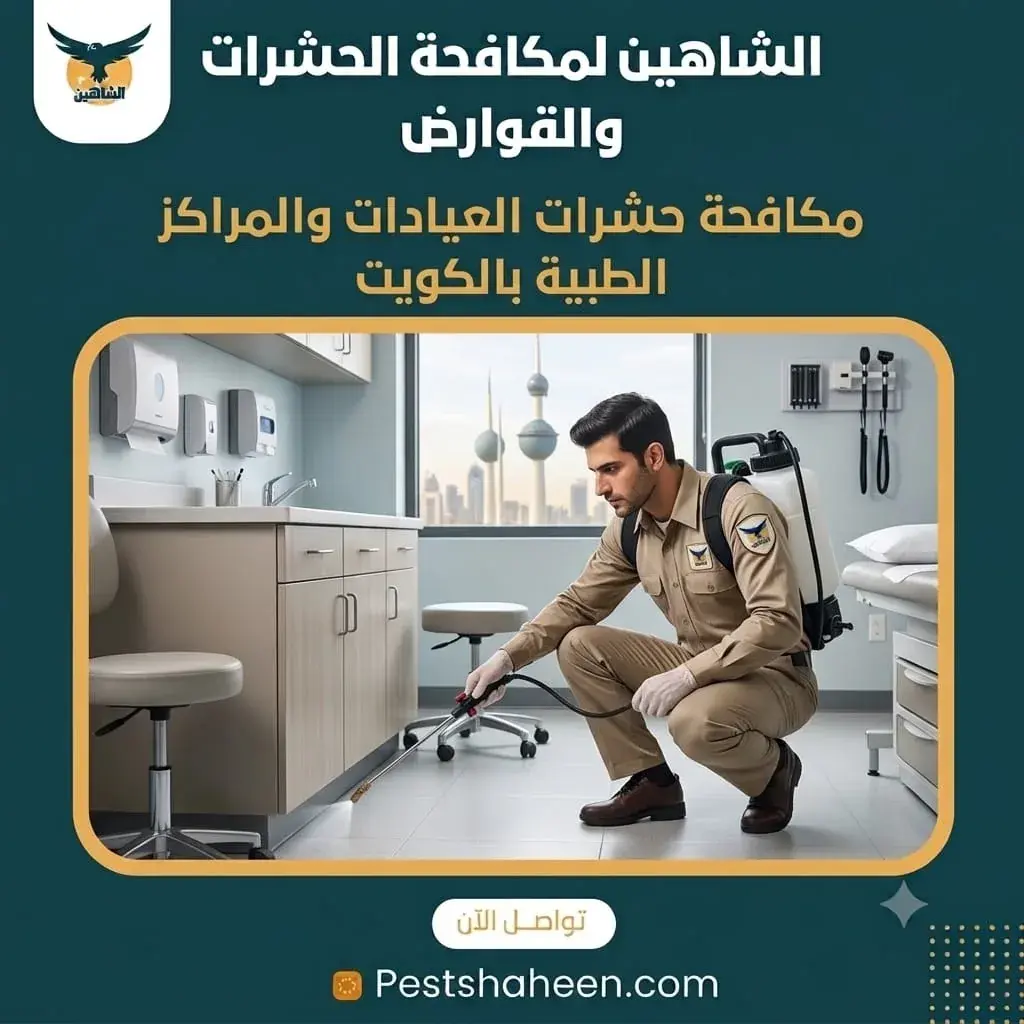
Pest control for clinics in Kuwait should begin by identifying exactly where the problem has appeared because clinics are different from large facilities. The area may be smaller, but it can include closely connected examination rooms, short corridors, a reception area, a supply room, a restroom, and a cleaning area, and each point may have a different reason for pest activity.
If an insect appears inside an examination room, it should not automatically be assumed that the source is inside that room. The activity may come from a gap around utility lines, a nearby restroom, or beneath a door leading to a service corridor. Recording where and when the insect was seen may therefore provide more useful information than immediately spraying the floor.
Waiting rooms also need a different type of observation. Frequent patient entry, repeated opening of the external door, and the movement of bags and materials can allow insects to enter accidentally from outside. In this situation, treating the entire clinic may not make sense if the issue is connected to one entrance or a clearly identified entry point.
Small storage rooms should also be inspected around cartons, shelves, and rear spaces because packages that remain in place for long periods may conceal activity that is not obvious during normal working hours. Organizing materials so the floor and walls remain visible makes early signs easier to detect.
In a practical example, a clinic may repeatedly notice small cockroaches near a sink at the end of a corridor. Instead of spraying examination rooms, the drain, moisture, and openings around pipes should be inspected because the problem in this case is more likely connected to a utility source than to the examination rooms themselves.
• Clinic pest control begins by identifying where and when the activity appears and how the room is used so the inspection focuses on the real source rather than applying general treatment throughout the entire space
• Examination rooms and waiting areas and storage rooms and restrooms require different inspection methods because the reasons pests appear in these locations are not the same even when the rooms are close together
• Repeated pest activity near the same point requires another review of moisture or openings or storage conditions instead of repeatedly spraying the same location without correcting the cause
Pest Control Company for Medical Centers
Choosing a pest control company for medical centers requires attention to organization and working methods rather than price alone because a medical center often includes several specialties, multiple rooms, and consecutive patient appointments throughout the day. A suitable company should understand how to inspect the facility without unnecessarily interrupting operations and which areas require coordination before access.
The correct starting point is to collect information about the center. How many examination rooms are there? Is there a laboratory, sterilization room, supply storage area, treatment room, or more than one entrance? These details matter because insects appearing in a carton storage room require a different response from activity found near equipment or a drain.
It is also important that the company does not treat spraying as the first action in every situation. If the problem is linked to a gap around pipes, that observation should be referred to maintenance. If the cause is stacked packaging in a storage room, the area should be reorganized. If insects are entering through an exterior door, the closure and edges should be reviewed before considering broad indoor treatment.
The company should also explain what preparation is required before the visit. Some rooms may need equipment moved, supplies protected, or treatment scheduled after patient appointments have ended. Any treatment involving pest control products should follow the product instructions and the required re-entry period for the area.
In medical centers with more than one floor or multiple clinics, documentation becomes important because management needs to know where activity appeared, what action was taken, and whether a particular department received a recommendation. A simple statement saying that spraying was completed does not provide a clear picture of the problem.
You can contact Shaheen Pest Control to inquire about services for medical centers in Kuwait and explain the number of clinics, rooms, pest report location, and nature of the activity before the service scope is defined.
• A suitable medical center pest control company asks about rooms and specialties and storage areas and entrances before treatment so inspection points can be identified instead of treating the entire facility in the same way
• Coordination with center management is important because some rooms may require preparation or special scheduling away from patient appointments before any treatment is carried out
• Documentation after each visit allows management to understand the activity location and action taken and required recommendation and prevents treatment from being repeated without knowing whether the underlying cause has been corrected
Insect Spraying in Private Clinics in Kuwait
Insect spraying in private clinics in Kuwait should be a carefully planned and targeted step because clinics contain surfaces, equipment, and supplies used every day while patients enter and leave on closely scheduled appointments. For that reason, general spraying throughout every room is not an appropriate response simply because one insect appeared in a corridor or restroom.
Before any treatment, the location and type of activity should be identified. If cockroaches appear beneath a sink, the drain, leaks, and surrounding edges should be inspected first. If small insects appear near a window, the frame and external openings should be reviewed. If the activity is inside a storage room, cartons and shelves should be moved and inspected rather than spraying examination rooms where there are no signs of activity.
Areas containing equipment or supplies require greater attention. Equipment openings or internal components should not be sprayed indiscriminately because any issue around a device or utility connection may require coordination with maintenance or the person responsible for the equipment. Supplies and surfaces that need to remain clean should also be protected from unnecessary exposure.
Treatment timing is also important. Carrying out work outside patient appointment times may be more suitable when the treatment method requires the area to be vacant, but re-entry should still depend on the product instructions, waiting period, and any required ventilation or cleaning rather than simply on the disappearance of odor.
One mistake is repeating the same spray every week because insects continue returning. Continued activity usually means that an underlying cause remains, such as moisture, a door problem, a drain, or storage conditions that require correction. A stronger solution removes the cause and uses targeted treatment only where necessary.
• Clinic spraying should be directed only toward the location where activity has been confirmed after inspection and should not automatically be extended to examination rooms and corridors without an actual need
• Medical equipment and supplies and clinical surfaces need protection from unnecessary treatment and any activity close to equipment should be handled through appropriate coordination
• Pest activity returning after more than one treatment indicates that the underlying cause such as drainage or openings or storage practices needs another review instead of simply increasing pesticide use each time
Cockroach Control in Medical Clinics
Cockroach control in medical clinics requires tracing the source before carrying out treatment because a cockroach may appear in a corridor or examination room while the real source is a drain, a gap around utilities, a cleaning room, or a nearby storage area. The first step should therefore be to record where the insect was seen and when it appeared and connect that information to the nearest source of moisture or utilities.
If activity is close to a restroom or sink, drains, edges, gaps around pipes, and any minor leaks that may provide continuous moisture should be inspected. If cockroaches are appearing inside a supply room, cartons, shelving, rear corners, and locations that are rarely disturbed should be examined.
The time when cockroaches appear also provides useful information. If sightings usually occur after patient appointments have ended or early in the morning, this can help the technician inspect the area when activity is easier to observe and movement inside the clinic is lower.
One mistake is spraying the entire corridor or examination room after seeing one cockroach. This does not address the source and may cause insects to move into another location. A better approach is to direct treatment toward areas that inspection confirms are connected with activity.
For example, cockroaches may repeatedly appear near a small cabinet beside a sink. In this situation, the rear of the cabinet, moisture, and gaps around the connections should be inspected instead of spraying the entire room. If a small leak is discovered, repairing it becomes an essential part of the solution.
• Cockroach activity inside a clinic should lead to inspection of drains and water areas and storage rooms and utility gaps before assuming that the examination room itself is the source
• The time when cockroach activity appears helps identify locations that deserve quieter and more detailed inspection especially when sightings repeatedly happen after appointments end or at the beginning of the day
• Cockroach control becomes more effective when leaks are repaired and openings are sealed and storage is organized while treatment is limited to points where actual activity has been confirmed
Pest Control in Dental Centers

Pest control in dental centers requires particular attention because the facility contains treatment chairs, equipment, water and air lines, cabinets, sinks, and sterilization areas, and all these elements create points that need careful inspection. The goal is not to spray the center but to identify the source of pest activity without exposing devices or instruments to unsuitable treatment.
If insects appear close to a dental chair, the floor, edges, water sources, and surrounding gaps should be inspected rather than applying pesticide inside equipment openings. Any access to internal device components or technical lines should be coordinated with qualified maintenance because dental equipment should not be treated like ordinary cracks or wall voids.
The sterilization room also needs a different inspection approach. Moisture, drains, storage areas, and spaces behind cabinets should be reviewed. In the reception area, attention should shift toward doors, windows, and possible entry sources for flying or crawling insects.
Medical tools and materials should be protected from unnecessary treatment. If one specific point requires treatment, the area should be prepared according to the instructions and any materials that need protection should be moved or covered.
In a realistic example, small insects may occasionally appear near a sink in a side room. Instead of spraying the treatment room, the drain and openings behind the sink should be reviewed because the source may be associated with utility connections.
A dental center with several treatment rooms can also benefit from recording pest reports according to room number or exact location so activity can be compared if it appears again.
• Pest control in dental centers requires inspection of utility lines and moisture sources and edges around equipment without indiscriminate spraying inside equipment openings or near instruments used for treatment
• Sterilization rooms and reception areas and treatment rooms should not be handled in the same way because each location has different attraction and entry factors and needs inspection based on its actual use
• Recording the room number and exact sighting location helps identify whether activity is connected to a fixed source such as a drain or utility line instead of treating every report as a new and unrelated problem
Pest Control in Physiotherapy Centers
Pest control in physiotherapy centers is different because these facilities may include treatment rooms, therapy beds, equipment, movement areas, changing rooms, and storage locations for towels and supplies. These details mean inspection should focus on surfaces frequently used by patients and concealed locations behind furniture and equipment.
If crawling insects appear inside a treatment room, edges, spaces beneath beds, and areas behind storage units should be inspected before broad spraying is considered. If activity is near a changing room or restroom, moisture, drains, and surrounding openings should be reviewed.
Towels and textile supplies also need organized storage. Keeping them in clean, dry locations away from the floor makes inspection easier and reduces concealed areas. If unusual signs appear inside one storage unit, the affected section should be isolated and inspected instead of treating the entire room without a reason.
Electrical equipment should not be sprayed internally. If an insect appears near a device, the surrounding area and space beneath the equipment should be inspected and any external cause addressed in coordination with maintenance when necessary.
One mistake is allowing the spaces behind beds and equipment units to remain uncleaned for long periods. These locations may accumulate dust or debris and conceal minor activity before it becomes obvious.
In a center containing several treatment rooms, recording reports by room and pest type can help show whether the issue is linked to one particular area or moving between sections.
• Treatment rooms require inspection beneath beds and behind equipment and storage units because these locations receive less movement and may conceal activity that is not obvious during normal daily use
• Towels and textile supplies should be stored in an organized way and away from the floor so monitoring remains easier and closed areas that are difficult to inspect are reduced
• Any pest activity near therapeutic equipment should be handled around the outside of the device and through maintenance coordination when necessary and pesticide should not be applied indiscriminately inside the equipment
Spraying Clinics Outside Patient Appointment Hours

Spraying clinics outside patient appointment hours can be a suitable option when treatment requires the area to be vacated, but it does not mean that every treatment carried out after closing is automatically appropriate or that the clinic can reopen the next morning without reviewing the instructions. The product type, application method, and required re-entry period determine when the area can return to normal use.
Before treatment, only the rooms that genuinely require intervention should be identified. If the activity is limited to a restroom or small storage room, there is no reason to spray every examination room and corridor. Reducing the treatment area makes preparation easier and limits unnecessary exposure.
Each room should also be prepared according to its function. Medical supplies, clinical tools, and sensitive surfaces should be moved or protected according to the instructions. After treatment, any required ventilation or cleaning should be completed before patient appointments begin again.
One mistake is choosing a late-night time for treatment and reopening the clinic in the morning simply because the odor has disappeared. Odor is not a reliable measure of readiness because the required period depends on the product instructions and method of use.
In a practical example, the problem may be inside a small storage room behind reception. Instead of spraying the entire center after hours, the storage room and surrounding area can be inspected, cartons reviewed, the door checked, and treatment applied only where appropriate.
Working outside patient hours also allows furniture to be moved and concealed corners to be inspected more easily, but the purpose should remain targeted inspection and treatment rather than comprehensive spraying.
• Spraying a clinic after appointment hours is useful when the treatment requires the area to be vacant but it must still follow the re-entry period and instructions for the product used
• Identifying only the target rooms reduces the treatment scope and protects examination rooms and corridors where no pest activity has been found from unnecessary exposure
• The disappearance of odor does not automatically mean the clinic is ready for patients so ventilation and cleaning requirements and the required waiting period should always be followed
Pest Inspection in Medical Examination Rooms
Pest inspection in medical examination rooms needs to be accurate and organized because the room may contain an examination bed, drawers, cabinets, equipment, and possibly a sink or utility lines passing through the wall. Pest activity may be very limited but hidden behind furniture or along an edge that is difficult to notice during working hours.
Inspection begins with floors, edges, areas beneath the examination bed, behind cabinets, and around pipes or any source of water. If the room contains a window or is close to an external door, the frame and surrounding edges should be reviewed to determine whether the insect entered from outside.
Drawers containing supplies do not need spraying. If activity appears close to them, the contents should be removed, the unit inspected inside and outside, and the area cleaned appropriately before any treatment decision is made.
Knowing when the insect was seen is also important. If a staff member notices activity after the end of the day or early in the morning, that information should be recorded because timing can help the technician determine whether the source is connected to quiet periods or a particular utility condition.
One mistake is focusing only on the center of the floor. Some insects may use wall gaps or utility penetrations and appear from a very small opening, so inspection should include surrounding structures rather than only the place where the pest was first noticed.
If activity repeatedly appears inside the same room, previous reports should be compared to determine whether a fixed source remains unresolved, such as a gap around a pipe or crack behind a cabinet.
• Examination room inspection should include edges and areas beneath furniture and around utilities and windows because insects may emerge from concealed points rather than from the middle of the room
• Drawers and medical supplies should be inspected and cleaned when necessary and should not be sprayed indiscriminately simply because an insect appeared nearby
• Recording the time and exact location of the sighting helps connect activity to a possible source and makes the next inspection more accurate than using a general description such as insects were found in the room
Cost of Pest Control for Clinics in Kuwait
The cost of pest control for clinics in Kuwait varies according to the size of the facility, number of rooms, pest type, extent of activity, and the kind of service required. A small clinic with a limited problem near one restroom is different from a medical center containing several rooms, a storage area, waiting areas, and repeated activity in more than one location.
The nature of the problem also affects the price. Treating ants at one limited point is different from monitoring recurring cockroach activity or inspecting several floors or dealing with multiple pest types within the same facility.
Ease of access also affects the work scope. A well-organized clinic with clear rooms is easier to inspect than a site containing cluttered storage or heavily packed areas that require preparation before edges and floors can be reached.
When requesting a quotation, it is better to explain the number of rooms, facilities, storage areas, restrooms, where the problem appeared, and whether the activity is recurring or has been seen only once. This information helps make the quotation closer to the real condition of the site.
You should also ask whether the price includes follow-up or only one visit. Some cases require another inspection after a period of time to confirm that activity has stopped or the underlying cause has been addressed.
A fixed price should not be applied to every clinic because each location differs in layout, use, and infestation type. Quotations should be compared according to the actual service scope rather than price alone.
• Service cost depends on the number of rooms and pest type and activity level and ease of access to affected locations so accurate clinic details are important before pricing
• An offer that includes inspection and follow-up and recommendations is different from a limited visit treating one point so the included scope should be understood before prices are compared
• A small clinic is not necessarily cheaper when pest activity repeatedly appears in several areas while a larger medical center may have a problem limited to one clear source
Pest Control Contracts for Medical Complexes
Pest control contracts for medical complexes are suitable for facilities containing several clinics or specialties that need one coordinated monitoring system instead of allowing every department to respond independently whenever a problem appears. A medical complex may contain dental clinics, physiotherapy rooms, general clinics, laboratories, storage areas, and reception zones, so the contract should be flexible enough to reflect the different uses of each section.
The first step in the contract is to define a map of the covered areas, the number of floors, clinics, and facilities included in the service. A clear process for receiving pest reports should then be established, along with one responsible contact person who communicates with the pest control company instead of receiving separate requests from several departments.
The contract should also define which pest types are included, how many visits are scheduled, and how urgent cases or reports between appointments are handled. Clarity on these points prevents disagreement after service begins.
One of the major advantages of a contract is that reports can bring observations from all departments together. If the same type of pest appears in two neighboring clinics, the source may be shared, such as a utility corridor or service opening, and this relationship may not be obvious if every clinic handles the issue separately.
The contract also helps follow maintenance recommendations. If activity repeatedly appears because of a door problem, leak, or particular opening, this can be recorded and reviewed during the next visit instead of starting the investigation from the beginning each time.
You can contact Shaheen Pest Control to inquire about a pest control contract for medical complexes in Kuwait and explain the number of clinics, floors, facilities, and areas where activity has repeatedly appeared before the service scope is defined.
• A medical complex contract brings clinics and storage areas and corridors and facilities into one monitoring plan so relationships between pest reports can be identified instead of treating each department separately
• Assigning one responsible contact person inside the complex makes scheduling and reporting and follow-up recommendations easier and reduces conflicting information between departments
• Combined reports can reveal whether activity is connected to a shared source between several clinics such as a utility line or service corridor and help correct the problem more accurately and on a wider scale
Conclusion
Pest control for clinics and medical centers in Kuwait requires careful inspection and targeted intervention that protects normal operations and avoids unnecessary general treatment. Every room inside the facility has a different use, so examination rooms, dental centers, physiotherapy areas, and storage rooms each need an inspection approach suited to their actual function.
Cockroaches require inspection of drains, moisture, and openings, while insects appearing near equipment require examination of the surrounding area in coordination with maintenance without spraying inside devices. Carrying out treatment outside patient appointment hours can be useful when product instructions and required re-entry periods are followed correctly.
You can contact Shaheen Pest Control to inquire about a service or pest control contract for medical complexes in Kuwait and explain the number of rooms, facilities, and nature of the problem so an appropriate service scope can be based on inspection and follow-up rather than general solutions.
Frequently Asked Questions
Does seeing one insect inside an examination room mean the entire room needs spraying?
No. The edges, utility lines, and nearby areas should be inspected first because the source may be a restroom, opening, or nearby service area.
Can a clinic be sprayed while patients are present?
If the treatment method requires the area to be vacant, work should be scheduled outside patient appointment hours according to the product instructions and application method.
Why do cockroaches keep returning inside clinics?
Possible causes include drains, leaks, moisture, gaps around pipes, or poorly organized storage, which is why the source should be inspected before spraying is repeated.
Do dental centers need a different pest control approach?
Yes. Dental centers contain equipment, utility lines, sterilization areas, and sinks, and equipment openings should not be sprayed indiscriminately.
How are physiotherapy rooms inspected for pests?
Inspection should include areas beneath treatment beds, behind equipment, storage units, changing areas, and drains according to the center layout and the type of activity reported.
Does spraying after patient hours mean the clinic is ready the next morning?
Not necessarily. Re-entry depends on the product instructions, required waiting period, and any ventilation or cleaning requirements.
How much does pest control for clinics cost in Kuwait?
There is no fixed price because the cost depends on the number of rooms, pest type, activity level, number of visits, and required service scope.
Is a pest control contract suitable for medical complexes?
Yes, especially when the complex contains several clinics because the contract helps standardize pest reports, follow-up, and documentation between departments.
Should medical equipment be sprayed if insects appear around it?
Equipment should not be sprayed internally and any activity nearby should be handled by inspecting the surrounding area and coordinating with maintenance when necessary.
What is the most important step for preventing pests from returning to a clinic?
The most important step is identifying the real source and correcting moisture, openings, storage problems, and recurring pest reports instead of relying on spraying alone.
 Contact Us on WhatsApp