Professional Pest Control Company for Offices in Kuwait
Offices require a different pest control approach from homes or warehouses because the problem may begin in the staff kitchen, restroom, storage room, or utility lines and then suddenly appear around desks and meeting rooms. For that reason, a pest control company for offices in Kuwait should not begin with random spraying but with inspecting the workplace, identifying where activity appears, when it repeats, and what the possible source may be. Cockroaches can be associated with moisture and food residues, while ants often follow food sources, and other insects may enter through doors, windows, or incoming cartons. A practical plan addresses the cause, chooses a suitable treatment time away from employees, protects equipment and documents, and reduces the need for repeated treatment without a clear result.
Pest Control Company for Offices in Kuwait
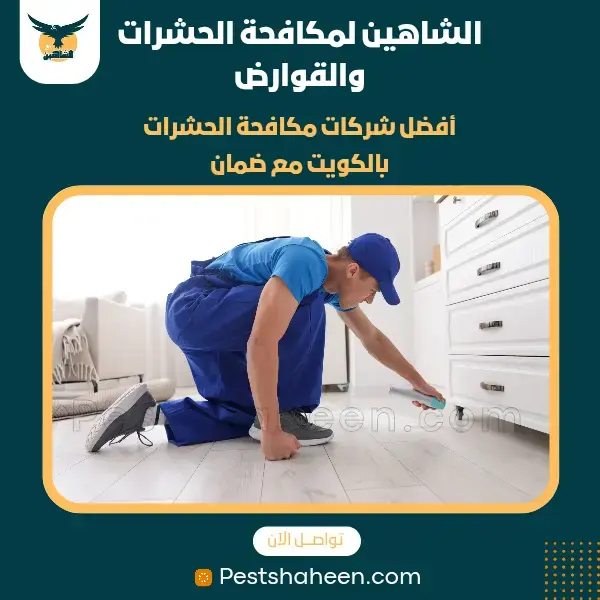
Choosing a pest control company for offices in Kuwait should depend primarily on how the company deals with the workplace environment rather than simply on how quickly it can arrive and spray. An office contains computers, printers, files, furniture, and areas that employees use every day, so any treatment should begin by identifying the problem without unnecessarily exposing these items to pesticide applications they do not need.
The first step is to determine where the insects have appeared. If reports are coming from the staff kitchen, the inspection should cover the sink area, refrigerator, cabinets, waste bin, and hidden spaces behind units. If activity appears around desks far from food areas, attention should shift toward utility openings, wall edges, stored boxes, or any route insects may be using to reach the area.
The timing of activity is also important. An office that notices cockroaches after working hours may benefit from an inspection when the workplace is quiet because some signs are easier to identify without employee movement. If ants appear every morning around the same window, tracing their route is more useful than spraying the entire room.
In a realistic possible situation, a company may repeatedly notice small insects near a coffee machine despite daily floor cleaning. The inspection should include the space underneath and behind the unit, the water source, and nearby waste rather than spreading pesticide around employee desks.
A company working in an organized way should also explain what needs to be prepared before treatment and which areas may need to remain temporarily unused according to the instructions for the product being applied.
You can contact Shaheen Pest Control to inquire about office pest control services in Kuwait and explain the office size, number of rooms, and location of the problem before the service scope is defined.
• A suitable office pest control company begins by identifying the source of activity in kitchens and restrooms and storage rooms and work areas so the real cause can be addressed instead of carrying out general spraying throughout the office
• Equipment and files and office furniture should be protected from unnecessary treatment and any intervention should be directed toward locations where inspection confirms actual pest activity
• Recording where insects appear and when they are seen provides a clearer picture of the problem and helps determine an appropriate treatment method instead of relying on a general description such as insects are present in the office
Pest Control for Offices in Kuwait
Pest control for offices in Kuwait becomes more effective when the daily causes of pest activity are addressed before repeated spraying is considered. Most offices contain small points that can become attraction sources such as food left inside drawers, beverage cups, a waste bin near the kitchen, a minor leak beneath a sink, or cartons stored for long periods inside a storage room.
Inspection should therefore be connected to the way the office is actually used. Employee work areas containing desks and devices need a different inspection approach from a break room or kitchen. Workspaces require attention to drawers, corners, and spaces behind storage units, while food areas need closer monitoring of food residues, water, and waste.
Office doors and shared corridors also play a role. If the office is located inside a tower or commercial complex, some insects may enter from utility areas, shared corridors, or incoming deliveries and cartons instead of the infestation beginning inside the company itself.
One mistake is turning every report into a spraying operation. If ants appear inside one drawer, the drawer should first be emptied and cleaned while checking for a food source and tracing the movement route. If an insect appears near a service door, edges and gaps should be inspected before the treatment area is expanded.
In a large office, it can be useful to maintain a simple record showing the department, location, and date of each report. If the same area records activity every week, the cause can be investigated more deeply rather than treating every occurrence as a separate new problem.
• Successful office pest control depends on removing food and moisture sources and organizing storage along with continued inspection because repeated conditions can allow pest activity to return even after treatment
• The different use of employee rooms and kitchens and storage areas means that every location needs inspection appropriate to its function instead of applying one identical procedure throughout the company premises
• Tracking reports by department and date reveals areas where pest activity repeatedly appears and helps determine whether the problem is connected to a fixed source or new entry from outside
Insect Spraying in Administrative Offices
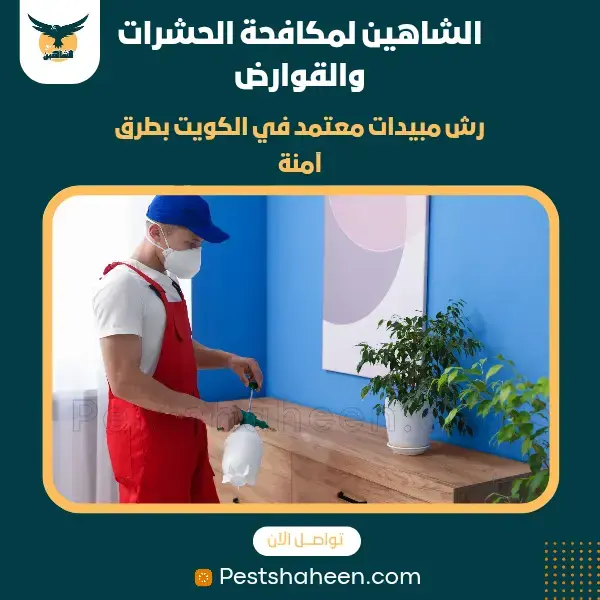
Insect spraying in administrative offices should be a targeted step rather than an automatic response to every pest report because offices contain frequently touched surfaces, electrical equipment, documents, and meeting areas that need to remain ready for normal use. Before spraying, the pest type, activity location, and possible cause should be identified so treatment is not expanded beyond what is actually required.
If activity is located behind a cabinet or along the edge of a utility room, there is no reason to spray desks, chairs, or the center of the office. If the problem appears close to electrical equipment, the surrounding area should be inspected without introducing liquids or pesticides into device openings or electrical connections because those components may require appropriate coordination with maintenance.
Timing is also important. Carrying out treatment after working hours may reduce employee presence during the service, but this alone does not determine when the office can be used again. Re-entry time and any ventilation or cleaning requirements depend on the instructions for the product and how it was applied.
One mistake is increasing the amount of pesticide when insects return. Continuing activity often means that a source remains unresolved, such as a leak, opening, food residue, or hidden storage area. In this situation, another inspection is more useful than repeating the same spraying procedure.
For example, cockroaches may appear at night near the printing room. Before spraying the room, stored cartons, edges, the nearby corridor, and possible moisture sources should be checked because the problem may be connected to an adjacent area rather than to the printers themselves.
• Spraying in administrative offices should be limited to locations that genuinely require treatment after inspection so desks and equipment and daily-use spaces are not exposed to unnecessary applications
• Electrical devices and printers and power panels should not have liquids or pesticides sprayed into their openings and any activity around them should be handled from the surrounding area and coordinated with maintenance when necessary
• Pest activity returning after spraying requires another review of openings and moisture and storage and food residues because repeating the same treatment without removing the source allows the problem to return
Pesticide Spraying Company for Offices in Kuwait
Choosing a pesticide spraying company for offices in Kuwait should not be based on the idea that a company using more pesticide provides a better service because effective pest control begins with knowing where treatment is actually needed. In many offices, the problem may be limited to a small kitchen, storage room, or utility point while the rest of the workplace shows no activity requiring treatment.
Before any pesticide is applied, the pest type, movement location, and possible source should be identified. If activity occurs along wall edges or behind a cabinet, targeted treatment may be appropriate. If the problem is linked to moisture or an opening, correcting the cause should take priority because pesticide alone cannot prevent pests from returning through the same route.
The large amount of electronic equipment found in offices also requires a more careful approach. Liquids should not be sprayed into computers, printers, or electrical panels. If insects appear near a device, the floor, wall, and space behind it should be inspected, while any necessary internal access should be coordinated with the appropriate specialist.
Paper files and cartons also require attention. Some archive rooms remain undisturbed for long periods, making inspection behind boxes and shelving important before the treatment method is selected.
Before service begins, the office should receive clear instructions about preparation, how long an area should remain unused if the product requires this, and any ventilation or cleaning requirements after application.
You can contact Shaheen Pest Control and explain the problem location and the type of office so it can be determined whether the situation requires targeted spraying or another procedure instead of beginning with broad treatment without diagnosis.
• A suitable pesticide spraying company for offices first identifies locations that genuinely need treatment and does not turn one insect sighting into a reason to spray every room and corridor without necessity
• The large number of devices and files inside offices requires a targeted method that protects equipment and documents from unnecessary exposure and prevents liquids from being applied inside electrical openings
• Understanding the source of the problem before pesticide use helps select a more precise intervention because correcting an entry point or minor leak may be more important than repeating spraying in the same location
Cockroach Control in Company Offices
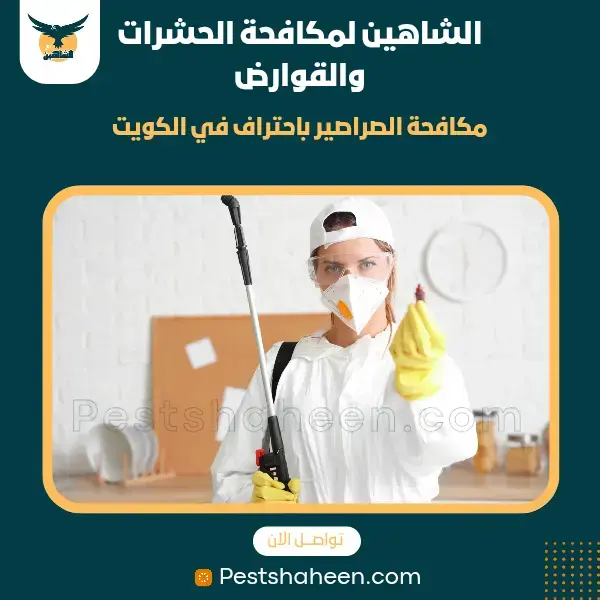
Cockroach control in company offices begins with locations that provide food, water, or hiding places because cockroaches seen around employee desks may actually be coming from an internal kitchen, restroom, or shared utility area. Seeing a cockroach in one location tells you where it appeared but does not necessarily prove that the infestation began there.
The staff kitchen is one of the first areas that deserves inspection, especially behind the refrigerator, beneath the sink, around the coffee machine, inside lower cabinets, and near the waste bin. A small leak that is easy to overlook or beverage residues around equipment can become a continuing attraction source.
If the problem appears inside an office far from the kitchen, wall edges, utility openings, cartons, and furniture that is rarely moved should be inspected. In commercial towers, some routes may be connected to shared services between several units, which means treating only the visible location may not always be enough.
The time of sightings is also useful. If cockroaches mainly appear after employees leave, the area can be inspected near the end of the working day to look for activity in quieter places instead of waiting for insects to appear during busy hours.
One common mistake is leaving food inside drawers or waste bins until the next day even when only a small amount is present. Removing these attraction sources makes technical pest control measures more effective.
If cockroaches repeatedly appear along the same wall after treatment, the other side of the wall or the nearest utility area should be reviewed instead of continuing to treat the same visible surface every time.
• Cockroach control in company offices requires connecting sighting locations with kitchens and restrooms and utility rooms because the place where a cockroach appears is not necessarily the source of the infestation
• Cleaning the coffee machine area and spaces beneath refrigerators and removing food waste daily reduces attraction sources that repeat every day even when the rest of the office appears clean and organized
• Repeated cockroach activity along the same wall or near the same utility opening requires inspection of the surrounding route and neighboring areas instead of applying treatment only to the visible point again
Ant Control in Administrative Offices
Ant control in administrative offices differs from cockroach management because ants often reveal a visible route that can help identify the entry point or food source. For this reason, it is useful to observe the direction of movement before completely cleaning the trail or applying treatment so valuable information about the source is not lost.
Inside an office, activity may begin because of something very small such as spilled sugar near the coffee machine, a piece of candy inside an employee drawer, or food residue beneath a meeting table. A room can appear clean overall while one hidden point is enough to maintain ant movement every day.
If ants are entering along the edge of a window or beneath a door, the route should be followed inside and outside while joints and gaps are reviewed. If they emerge around a utility penetration inside the wall, attention can be focused on that specific area without spraying the entire office.
One mistake is removing visible ants every morning without checking where they are coming from or where they are going. This may create the temporary impression that the problem is gone, but activity returns because the original source has not changed.
In shared offices, ants may appear around several workstations because employees eat meals in different locations. In this case, organizing food consumption and daily cleaning becomes an important part of the plan alongside any technical treatment.
For example, an ant trail may begin at a meeting-room window and move every day toward a side table used for refreshments. The solution begins with removing the attraction source and inspecting the window and route rather than spraying the carpet or the entire room.
• Tracing the direction of ants before cleaning the trail helps identify whether the entry point is a window or door or utility opening and preserves the information that leads to the actual source
• Drawers and meeting tables and beverage machines require review because they may contain small residues that continue attracting ants even when the rest of the office is cleaned
• Ant control becomes more accurate when food sources are removed and the appropriate route is sealed and targeted treatment is used instead of applying pesticide broadly throughout employee work areas
Pest Control in Company Headquarters

Pest control in company headquarters requires a wider view than treating a single office because headquarters may include several departments, meeting rooms, reception areas, a kitchen, archives, small storage rooms, and utility spaces across more than one floor. Activity appearing in one department may be connected to a shared route between different areas of the building, so the plan should link reports rather than treating them separately.
One useful first step in large headquarters is recording each report by department, location, and date. If the same pest type appears in two neighboring departments during the same period, it makes sense to inspect the shared area between them rather than carry out two separate treatments without comparison.
Reception areas have different conditions from employee offices because doors open frequently and some insects may enter from outside. Archive rooms need inspection of cartons and spaces behind shelves, while kitchens require monitoring of food, moisture, and waste.
Companies that frequently receive office supplies or promotional shipments should also inspect damaged cartons and avoid leaving packaging for long periods inside storage rooms or corridors.
One mistake is allowing every department to request pest control separately without one responsible person collecting the information. This can result in the same source being treated from two different directions without identifying the connection between the reports.
In a multi-floor headquarters, a simple map of areas with repeated activity can be useful for showing whether the problem is connected to one floor, utility room, or vertical service route.
• Large company headquarters benefit from collecting pest reports by department and floor and date because comparing activity across locations may reveal a shared source that would not be visible if every report were handled separately
• Reception areas and archives and kitchens and work areas do not require the same inspection method because entry sources and attraction factors and storage conditions differ clearly between these spaces
• Assigning one responsible person to follow pest reports within the company reduces conflicting information and helps connect maintenance and cleaning recommendations with service results more accurately
Spraying Offices After Working Hours
Spraying offices after working hours can be suitable in certain situations because it reduces employee presence during treatment and allows access to locations that may be difficult to inspect during normal daily activity. However, choosing a time after work does not mean every office needs comprehensive spraying and does not mean the workplace automatically becomes ready as soon as employees arrive the next morning.
Before treatment begins, the target rooms or points should be identified. If activity is limited to the kitchen, the kitchen and areas connected to the problem can be handled instead of spraying every department. This approach reduces the treatment area and makes site preparation easier.
Equipment, files, and office materials should be protected according to the type of treatment and the product instructions. Liquids should not be sprayed into computers, printers, or electrical sockets because these require different handling and any internal device problem should be left to appropriate specialists.
After treatment, any required re-entry period, ventilation, or cleaning should be followed according to the product used. The disappearance of odor is not enough to determine that an area is ready for use.
After-hours access also provides a good opportunity to inspect concealed locations. Waste bins or storage units can be moved and areas behind small refrigerators can be examined without interrupting employees, and this may reveal the real cause before wider treatment is needed.
Management should also inform employees if a particular area needs to remain closed or requires special arrangements before the next working day so it is not used before the appropriate time.
• Carrying out service after working hours reduces interference with employee movement but does not remove the need to follow product instructions and the required re-entry period before the area is used again
• Using after-hours access to inspect behind furniture and equipment may reveal the source of activity and reduce the need to spray large areas where no actual pest problem exists
• Preparing the office before treatment includes protecting equipment and files and surfaces according to the application method instead of leaving all workplace contents unnecessarily exposed
Pest Control Prices for Offices in Kuwait
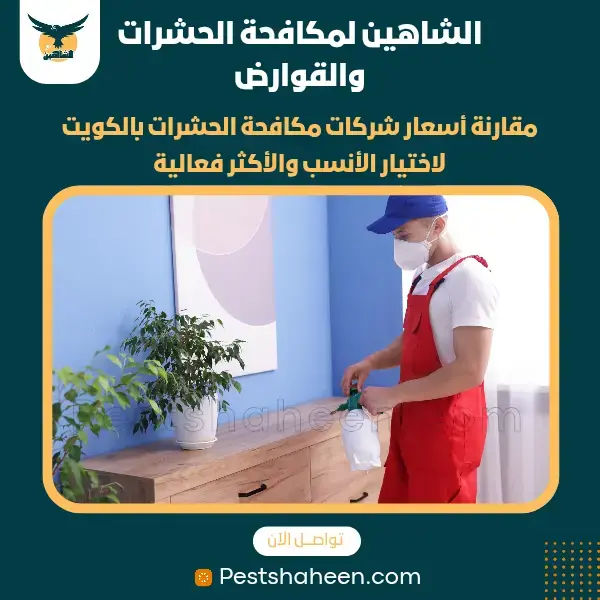
Pest control prices for offices in Kuwait cannot be reduced to one fixed figure because a small office with a limited ant problem is completely different from a large company headquarters with several departments, a kitchen, storage rooms, and recurring cockroach activity. Better pricing should reflect the actual amount of work required rather than the service name alone.
Important factors include the size of the site, number of rooms, pest type, activity location, and how often the problem returns. Having more than one floor or separate utility areas may also expand the inspection scope compared with an open office contained within one space.
The type of service also makes a difference. A single visit to address a limited problem is different from a monitoring program for an entire headquarters or a contract covering several departments. If the quotation includes a review visit, reports, or follow-up when activity returns, this should be clear when prices are compared.
Access to affected locations also influences the work scope. An organized storage room is easier to inspect than an archive filled with tightly packed cartons that need rearranging before walls and floor edges can be reached.
When requesting a quotation, it is better to explain the office size, number of rooms, whether there is a kitchen or storage room, where insects have appeared, the pest type if known, and how often the activity has repeated. Accurate information reduces the chance of receiving a general price that does not match the actual situation.
The cheapest offer should not automatically be considered the best without understanding what it includes. A low price may cover only one visit while another offer may include a wider inspection and follow-up of the source.
• Office pest control pricing is affected by the size of the premises and number of rooms and pest type and recurrence level and ease of access so accurately describing the site helps produce a quotation closer to the real service need
• Prices should be compared according to service scope and number of visits and follow-up and included areas rather than the final figure alone because every offer may cover a different level of work
• A small office with repeated activity at several points may require more work than a larger workplace with one clear source so floor area alone does not determine the cost
Conclusion
A pest control company for offices in Kuwait should begin by understanding how the workplace is used and identifying the source of activity before deciding whether spraying is needed. Kitchens, storage rooms, open offices, archive areas, and entrances all differ in the reasons pests appear, which means they should not all be handled with one identical plan.
Cockroaches require inspection of moisture, drains, and food areas, while ants require trail tracing and identification of attraction sources. Large company headquarters also benefit from recording reports and linking them to different departments. Carrying out treatment after working hours can make the service easier, but it should still follow product instructions, site preparation requirements, and the required re-entry period.
You can contact Shaheen Pest Control to inquire about pest control services for offices or company headquarters in Kuwait and explain the site size, number of rooms, and nature of the problem so the service scope can be based on inspection and targeted treatment rather than general spraying.
Frequently Asked Questions
Does seeing one insect in the office mean the entire workplace needs spraying?
No. It is better to identify the pest type, where it appeared, and inspect the surrounding area because the problem may be connected to one specific point such as a kitchen, opening, or moisture source.
Where do insects most commonly appear inside offices?
Staff kitchens, restrooms, storage rooms, door edges, and openings around utility lines are among the locations that deserve inspection when repeated pest activity is reported.
Can offices be sprayed while employees are present?
If the treatment method requires the area to be vacant, the service should be scheduled outside working hours while following the product instructions and required re-entry period.
Should computers and printers be sprayed if insects appear around them?
Liquids or pesticides should not be sprayed indiscriminately inside device openings. The surrounding area should be inspected and maintenance should be involved if the problem is suspected to be inside the equipment itself.
How should cockroaches in an office kitchen be handled?
Drains, sinks, refrigerators, cabinets, food residues, and waste areas should be inspected before treatment is directed toward locations connected with the activity instead of spraying the entire kitchen without identifying the source.
What is the best way to control ants in an office?
The ant trail should be followed to identify the entry point while food sources are removed and the area is cleaned before the route or source is treated as required.
Does spraying after working hours mean the office will be ready the next morning?
Not necessarily. Re-entry depends on the instructions for the product used and any ventilation or cleaning requirements rather than simply on the fact that the night has passed.
How much does office pest control cost in Kuwait?
There is no fixed price because the cost depends on office size, number of rooms, pest type, infestation extent, number of visits, and the required service scope.
Does a large company headquarters need a different plan from a small office?
Yes. A large headquarters may contain several departments, entrances, kitchens, and storage rooms and may require pest reports to be linked across areas instead of treating each department separately.
What is the most important step for preventing pests from returning to offices?
The most important step is removing food and moisture sources, organizing storage, sealing entry points, and monitoring locations where activity repeatedly appears instead of relying on spraying alone.
 Contact Us on WhatsApp