Kuwait Home Pest Control with Professional Infestation Inspection
Seeing an insect inside your home does not always mean the problem can be solved with one quick spray and nothing more, because what family members notice is often only one visible part of a larger infestation. You may see a cockroach in the kitchen while the actual source is hidden inside a gap behind the cabinets, ants may appear near the sink while the colony trail starts from a distant opening, and the insect causing discomfort to the household may even be completely different from the pest that was treated during a previous service. That is why home pest control in Kuwait at Al Shaheen begins with inspecting the type of infestation, understanding where pest activity is concentrated, identifying the conditions that allow the pest to survive, and then selecting the treatment method that suits the home instead of using one standard program for every case.
Home Pest Control in Kuwait
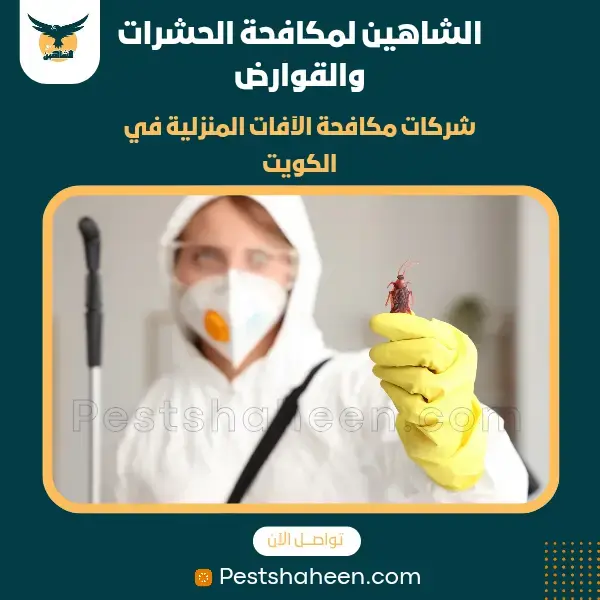
Successful home pest control in Kuwait starts with diagnosing the problem before thinking about how much pesticide should be used or how large an area needs to be treated, because homes differ in layout, moisture sources, pest entry points, food availability, and hiding places. During a visit to a home experiencing insect activity in the kitchen, for example, it is not enough for the technician to see the insect and spray the area where it appeared. A professional inspection follows the signs of activity around kitchen units, beneath the sink, behind appliances, near utility openings, and around drainage points to determine whether the infestation is limited to one location or has spread to other parts of the property. The same principle applies to villas and ground-floor homes where there is usually greater interaction between indoor spaces and external areas such as yards, gardens, exterior doors, utility rooms, and service spaces.
The difference between professional pest management and temporary spraying becomes clear when the reason behind the infestation is properly understood. Exposed food residue, a small leak, cartons stored for a long period, or a gap near water lines may all contribute to the continuation of pest activity even after pesticide treatment has been completed. For that reason, at Al Shaheen we do not treat the property simply as an area that needs spraying. We look at it as a group of connected spaces, each with its own environmental conditions and possible pest pressures that need to be evaluated correctly.
The goal is not only to reduce the insects that are visible today. The more important objective is to understand why they appeared, how they are moving through the property, where they may be hiding, and what needs to change so that the results of pest control are more stable and less dependent on repeated spraying without a new diagnosis.
-
The home pest control program begins by identifying the insect, its activity areas, and the signs of spread before choosing a treatment so the service is based on a clear cause rather than a quick reaction to what is visible
-
Kitchens, bathrooms, storage areas, utility spaces, and exterior entry points are evaluated according to the structure of the property because each area may provide a different source of food, moisture, or shelter
-
The inspection determines whether the infestation is limited to one location or has spread to several rooms because this information changes the treatment scope and the way follow-up should be handled
-
Long-term results depend on addressing the conditions that support the infestation alongside direct pest treatment so that the underlying cause does not remain active after the service
Pest Control Company for Homes in Kuwait
Choosing a pest control company for homes in Kuwait should be based on how the company works rather than on advertising slogans. Any company can claim that it uses the strongest products or provides the fastest service, but what truly matters is its ability to diagnose the infestation and create a treatment plan that the homeowner can clearly understand. Before treatment begins, the customer should be asked about the type of insects they have noticed, where they appear, when activity becomes stronger, whether the infestation is recent or recurring, and whether pest control or spraying has already been carried out in the property. This information gives the technician an initial map of the problem and helps make the on-site inspection more focused instead of starting without any context or assuming that every pest problem requires the same response.
At Al Shaheen, the purpose of the inspection is to make sure the treatment decision is based on the actual condition of the home. If pest activity is limited to one kitchen, the plan should be different from a property where insects appear in kitchens, bathrooms, and storage areas. If the source is likely to be external, the treatment priorities will be different from an infestation clearly established inside wall voids, cabinetry, or interior service spaces. The presence of children, pets, or rooms that need to remain in regular use should also be considered when organizing preparation instructions and treatment methods.
A strong company does not leave the customer wondering what was done. The homeowner should know where activity was found, which treatment was selected, why that method was chosen, what steps are required after the service, and which signs should be monitored during the following period.
Most importantly, diagnosis should not become a sales tactic. If the inspection shows that the problem is limited, there is no reason to sell the customer a larger program than necessary. If it reveals a widespread infestation, that should be explained from the beginning instead of giving unrealistic promises that do not reflect the true condition of the property.
-
A specialized company asks questions and performs an inspection before choosing a treatment because the infestation history, activity location, and property type all affect the most appropriate control plan
-
The work scope should be explained so the customer knows which areas will be treated, which areas require monitoring, and what preparation is needed before the team arrives
-
A limited infestation is not handled in the same way as a widespread one, which is why inspection should be part of determining service size rather than relying only on the total floor area
-
A professional company provides clear post-treatment guidance because the success of pest control also depends on how residents support the treatment plan after the technician leaves
Home Insect Spraying in Kuwait
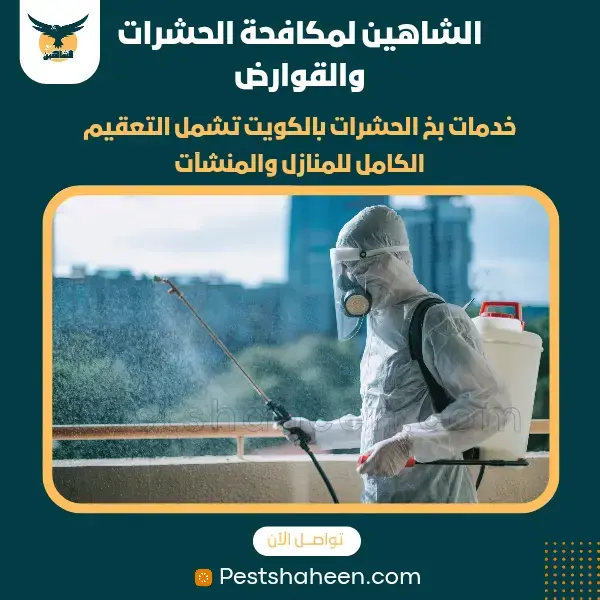
Home insect spraying in Kuwait becomes more effective when spraying is treated as one tool within a carefully planned program rather than as an automatic action that starts the moment the technician enters the property. In some situations, liquid treatment may be appropriate for specific areas, while in other cases baits, gels, monitoring traps, or targeted crack and crevice treatments may be more suitable depending on the pest species and the nature of the infestation. Using the same spraying method in every home may create a visible short-term effect, but it may fail to solve the underlying problem if the main activity is concentrated inside a hidden space that the product did not reach or if the pest requires a completely different control approach.
In kitchens, for example, professional treatment should focus on movement routes, hidden gaps, utility penetrations, and areas around appliances rather than unnecessarily spraying food-contact surfaces. In bedrooms, priorities may be completely different if the suspected pest hides close to furniture, mattresses, or structural cracks. In villas and houses with yards or gardens, the technician may need to link internal activity with external entry sources rather than treating indoor rooms separately from the surrounding environment.
The timing of treatment and the way the home is prepared also affect the success of the service. Spraying household products shortly before the technician arrives may change pest movement and make the original activity pattern more difficult to identify. In other cases, residents may move belongings from an infested area into another room and unintentionally spread the problem.
For this reason, at Al Shaheen we focus on understanding the purpose of every application. The goal is not for the customer to see a large volume of spray and assume that the service is strong. The goal is for every treated location to have a clear reason based on the results of the inspection.
-
Treatment areas are chosen after pest activity has been identified rather than distributing pesticide randomly throughout the property without considering how different rooms are used
-
The product and application method vary according to the pest species and the location of activity so liquid spraying should not be treated as a universal solution for every household infestation
-
Food, utensils, and everyday household items should be protected and the required areas should be prepared according to service instructions so treatment can be carried out in an organized manner
-
Treatment quality should be judged by how pest activity changes after the service rather than by the smell of the pesticide or the amount of liquid used during the visit
Pest Inspection Inside the Home
A pest inspection inside the home is the stage where a general complaint such as “there are insects in my house” is turned into useful information that can guide an effective treatment decision. The technician does not only look for a live insect moving in front of them. They search for signs of activity, patterns of spread, and the environmental conditions that may be supporting the infestation. These signs may include evidence around cracks, shed skins, droppings, old or dead insects, egg-related evidence, regular movement paths, damp areas, or organic material that may attract pests.
The inspection usually begins at the location where the customer first noticed the problem and then expands logically to connected areas. If the complaint is related to the kitchen, the technician should inspect beneath storage units, around the sink, behind appliances, and near pipes and openings. If the issue appears in a bathroom, attention should be given to water sources, gaps, drains, and service openings. Storage rooms require a different approach that may include checking cartons, undisturbed corners, and belongings that have remained untouched for long periods.
It is also important to distinguish between an accidental pest sighting and an established infestation. One insect entering through an open door should not automatically be treated the same way as repeated activity or signs of reproduction across several parts of the property. This is where professional experience matters because the correct decision can prevent the customer from paying for a larger treatment than necessary or, on the other hand, from underestimating a developing infestation.
At Al Shaheen, inspection is a decision-making tool and not simply a routine step before spraying. If we do not know where the activity is and why it exists, even a highly effective product can be applied in the wrong place.
-
Inspection focuses on real evidence inside the property such as activity points, movement patterns, and supporting environmental conditions instead of relying only on a general description of the insect
-
The technician moves from the place where the insect was noticed toward the most likely source areas so the service does not remain limited to the location where the customer happened to see the pest
-
Inspection helps determine the severity of the infestation and whether it requires localized treatment, a wider treatment scope, or follow-up after the initial visit
-
Inspection findings should lead to practical recommendations so the customer knows which issues may need cleaning, repair, organization, moisture control, or sealing after pest treatment
Home Pesticide Spraying Company
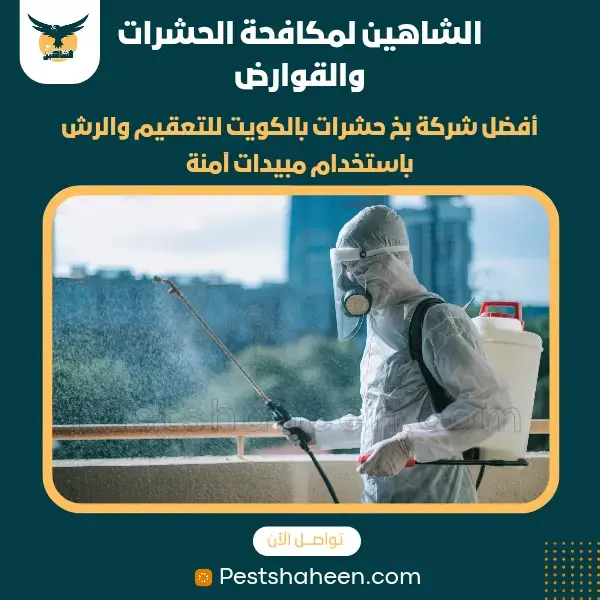
Searching for a home pesticide spraying company does not mean that the best option is the company that uses the strongest product or the largest amount of pesticide. In professional pest management, real effectiveness comes from selecting the correct product for the pest and the location and applying it according to the recommended method. Increasing the amount of pesticide is not a shortcut to better results and may not even be necessary when part of the problem can be reduced by removing an attractant, sealing an opening, or using a different control method.
A home includes sensitive areas that require organized treatment, such as kitchens, children’s rooms, food storage areas, and spaces used by pets. For that reason, the treatment scope should be defined before work begins, and surfaces should be prepared according to their use. A dining table should not be treated in the same way as a crack behind a cabinet, and a bedroom should not be handled in the same way as a utility room because the purpose and exposure conditions of each space are different.
Working with a professional company also means that the customer understands what type of treatment is being performed, which precautions are required, and when treated areas can return to normal use according to the product instructions and service plan.
At Al Shaheen, the objective is not to flood the property with pesticide. The objective is to reach the pest while minimizing unnecessary application and achieving the most accurate distribution possible based on the inspection results.
-
Application methods are selected according to the infestation location and the way the area is used so treatment remains targeted instead of spreading products in spaces that do not require intervention
-
Preparation instructions for food, utensils, personal items, and other household belongings should be explained before treatment so work areas are properly prepared
-
A pest control program may combine more than one treatment method if the infestation requires it rather than relying on spraying alone in every situation
-
Company quality is demonstrated by its ability to explain why a specific treatment method was selected instead of relying on general claims about pesticide strength without technical justification
Home Pest Control Price
The home pest control price is influenced by the pest species, infestation level, property type, and the scope of treatment required rather than by one fixed amount that applies to every home. A small apartment with a complicated infestation affecting several areas may require more detailed work than a larger property where the problem is limited to one entrance or a single location. That is why professional pricing should begin with understanding the condition so the customer knows what is included in the service and whether additional follow-up may be necessary.
The pest species is a major factor because treatment methods are not equal in terms of preparation, inspection time, materials, or follow-up requirements. Activity across several rooms or the presence of an external source that requires perimeter treatment is different from a limited indoor problem. Factors such as multiple floors, large storage areas, gardens, basements, or utility rooms can also affect the amount of inspection and work required.
The correct way to compare prices is not simply to ask which company is cheaper. Ask what the price includes, whether the service includes an inspection before treatment, whether all areas linked to the infestation will be covered, and whether reassessment is available if activity continues according to the service terms.
At Al Shaheen, we prefer that the customer understands the reason behind the price rather than receiving an attractive number and later discovering that the work scope is smaller than what the property actually needs.
-
The price varies according to the pest species because each pest requires a different inspection method, treatment approach, and preparation process
-
Infestation severity and the number of active rooms or areas can affect the work scope more than the total property size alone
-
The exact service scope and any included follow-up should be understood before comparing two quotations so the comparison is fair and a lower price is not simply the result of an incomplete service
-
A detailed inspection reduces the likelihood of paying repeatedly for unsuitable spraying because the plan begins with identifying the real problem before treatment starts
Best Pest Control Company for Homes
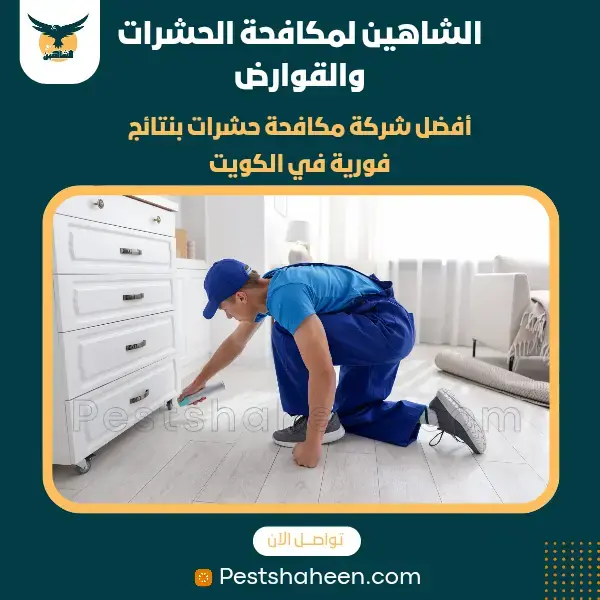
When a customer searches for the best pest control company for homes, they are usually not just looking for a well-known name. They are looking for a service they can trust and a result that does not leave them facing the same infestation every few weeks. For that reason, quality should not be measured by the number of promises in an advertisement but by several signs the customer can evaluate from the first contact.
The first sign is the type of questions the company asks before booking. If the only response is to ask for the size of the home and immediately recommend spraying everything, the diagnosis process is weak. A specialized company should ask about the pest species, where it appears, how often the problem occurs, and whether previous treatments have been carried out because these details can change the entire treatment plan.
The second sign is whether an inspection is performed before deciding on a large treatment scope. Not every home requires the same treatment, and not every pest sighting means there is a serious infestation. The third sign is transparency after the inspection, where the technician explains what was found, what will be treated, and what the customer needs to do.
At Al Shaheen, we build the idea of quality around the strength of the process rather than simply describing ourselves as “the best.” The customer can judge the service through organization, diagnosis, clarity of the plan, and the way their individual property is handled.
-
Choose a company that connects treatment decisions to inspection results because a program designed for the actual condition is more effective than one standard service used for every customer
-
Ask about preparation and post-treatment instructions because a company that understands its treatment plan should also be able to explain it clearly before work begins
-
Be cautious with absolute promises of complete elimination in one visit because some infestations require monitoring or follow-up depending on pest biology and infestation severity
-
Compare the full value of the service including inspection, diagnosis, and treatment scope rather than choosing the lowest-priced offer without understanding what it actually includes
Home Pest Control Technician
The success of a home pest control technician begins with their ability to observe and interpret signs before using treatment equipment. A professional technician listens to the customer’s description but does not rely on it alone because people often use different names for insects, and some pest species may be confused with others that look similar or appear in similar locations.
During the inspection, the technician connects the signs inside the property with the home environment and identifies where activity increases and which conditions may support it. For example, the technician may notice that activity is concentrated close to a moisture source, follows a certain utility route, or moves through service openings that allow pests to travel between areas that the homeowner did not realize were connected.
Experience also appears in knowing what does not need to be sprayed. Not every corner of the house requires treatment, and in some situations avoiding unnecessary application can be a more professional decision than using pesticide without a clear reason.
Communication remains another essential part of the technician’s role. When the work is finished, the technician should be able to explain what was discovered, what was applied, and what the customer should monitor after the service.
-
The technician relies on real indicators inside the property to identify the source of activity rather than making a decision based only on a photo or a short description of the insect
-
Treatment points are selected according to movement routes and likely hiding places so intervention is concentrated in areas directly connected to the infestation
-
A skilled technician understands when spraying is appropriate and when the case requires another treatment method or an additional preventive measure
-
The customer should receive specific instructions related to the actual infestation so they know how to protect the treatment result and avoid actions that may interfere with the pest control plan
Getting Rid of Household Insects in Kuwait
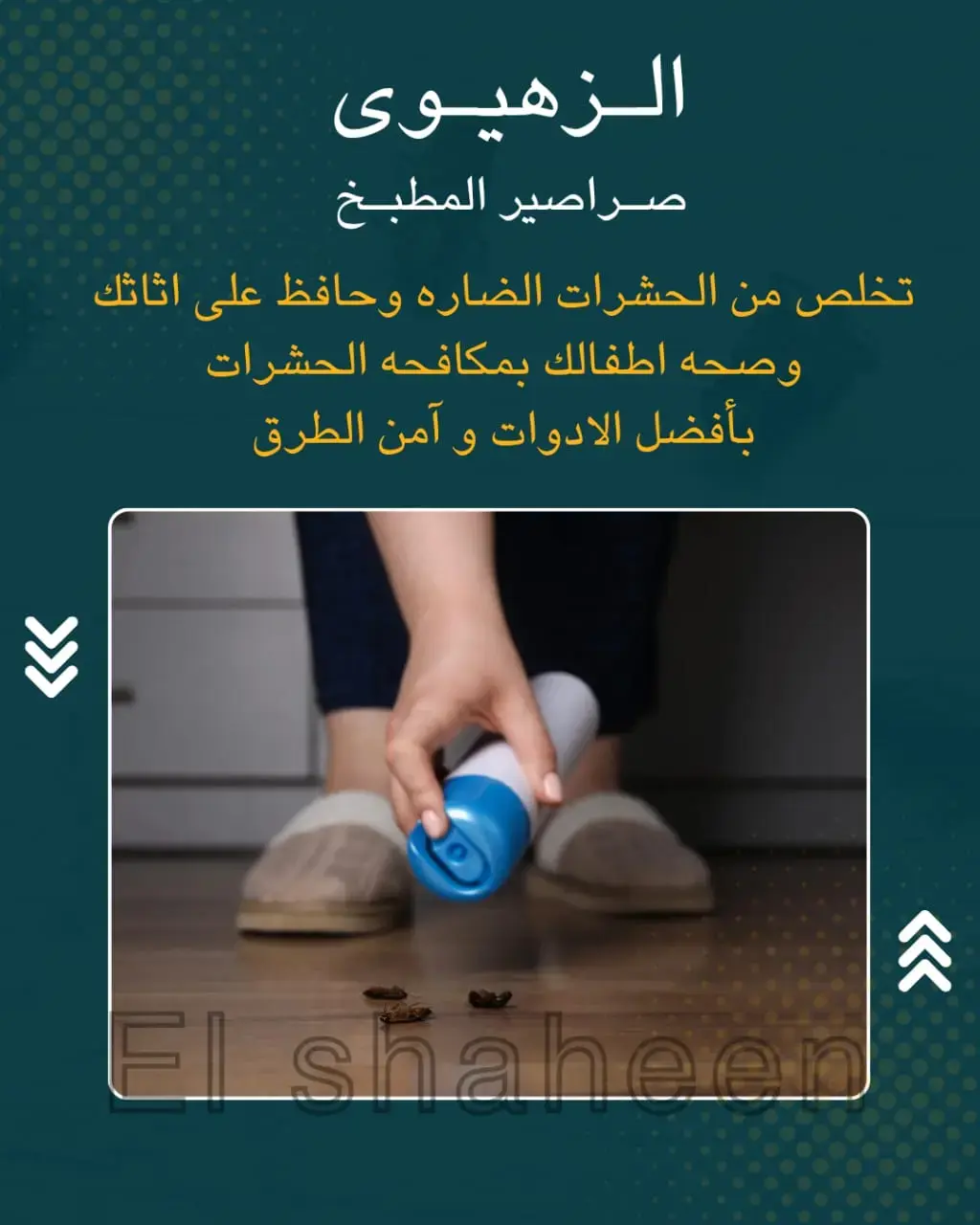
Getting rid of household insects in Kuwait means controlling the infestation and addressing the conditions that allow it to continue rather than simply making visible insects disappear immediately after spraying. Some pests remain hidden for periods of time, some have much lower visible activity than their actual population, and some repeatedly enter the home from outside even if there is no established colony inside the property.
For that reason, one of the first important questions is whether the pest is reproducing inside the home or entering from an external source. If the problem comes from outside, sealing entry points and treating movement routes may become an essential part of the solution. If reproduction is occurring indoors, finding hiding areas and identifying access to food and water becomes more important.
After treatment, monitoring begins. This does not mean that the homeowner needs to count every insect throughout the day, but they should notice whether the number has decreased, whether activity has shifted to another location, and whether pests continue to appear in the same area. This information becomes valuable when follow-up is required because it shows whether the treatment plan is moving in the right direction or whether an active source still needs to be addressed.
-
A distinction is made between insects entering the property occasionally from outside and an established indoor infestation so the correct pest control approach can be selected
-
Reducing access to food and water, repairing leaks, and improving storage practices can make the environment less suitable for the continued activity of many household pests
-
Sealing gaps and entry points becomes especially important when inspection shows that part of the infestation is linked to pest movement from outside or between connected parts of the building
-
Monitoring activity after treatment provides a more reliable measure of performance than making a quick judgment during the first few hours following the service
Household Pest Management in Kuwait
The concept of household pest management in Kuwait is broader than simply spraying insects because it treats the infestation as a system that includes the pest, the environment, attractants, entry routes, and hiding places. When these elements are considered together, it becomes possible to build a more accurate pest control program that reduces dependence on repeated pesticide applications and gives every step a clear purpose.
A program may begin by reducing access to food or water, then sealing a visible opening, then applying targeted treatment in specific areas, and finally monitoring the result. In another home, the priorities may be completely different because the infestation is coming from a yard, a utility room, or belongings that were recently brought into the property.
This flexibility is important because pests do not all behave in the same way, and homes are not identical even when they have similar floor areas. There is no single treatment formula that can be applied to every property.
At Al Shaheen, we approach pest management as a sequence of diagnosis, decision, treatment, and evaluation. This order is what makes the service closer to professional pest management than to a traditional spraying visit.
-
The program begins by understanding the pest species, infestation level, and supporting conditions so treatment priorities can be identified before selecting a control method
-
Prevention, attractant reduction, entry-point sealing, and targeted treatment are combined when needed rather than treating chemical products as the only part of the service
-
The treatment plan changes from one property to another according to room usage, home design, and possible external infestation sources
-
Post-treatment evaluation helps measure the reduction in activity and determine whether one specific area needs further intervention instead of repeating the entire program without a clear reason
Conclusion
Choosing home pest control in Kuwait with infestation inspection means the decision does not begin with pesticide. It begins with understanding the problem itself. A property experiencing pest activity needs someone who can determine where the infestation is moving, what its likely source is, whether the problem is established indoors or linked to external entry points, which areas actually require treatment, and which locations may only need preventive action.
At Al Shaheen, we focus on this approach because the customer does not need a spraying service that looks powerful for one day and then sends them searching for another company shortly afterward. What the customer really needs is a service built around clear diagnosis and steps they can understand and monitor. Accurate inspection provides better information, an experienced technician turns that information into a suitable plan, precise application focuses treatment where it is needed, and post-service instructions help prevent the property from providing pests with the same conditions that supported the infestation in the first place.
If you notice insects inside your home, do not wait until the activity becomes widespread and do not choose a treatment based only on the appearance of the insect. Start by inspecting the infestation, identify its source and severity, and then choose the pest control approach that best matches what the property actually needs.
Frequently Asked Questions
Is an infestation inspection necessary before spraying the home?
Yes. An inspection helps identify the pest species, activity areas, infestation level, and the food, moisture, shelter, or entry conditions that may be supporting the problem. Based on this information, the technician can decide whether the property needs localized spraying, gel, bait, entry-point treatment, or a combination of several steps within one pest management program.
How can I tell whether I have a real infestation or just one insect that entered accidentally?
Repeated sightings in the same area, seeing more than one insect, finding droppings, shed skins, egg-related evidence, or noticing activity at particular times can all indicate a problem that deserves inspection. However, the final judgment should be based on an evaluation of the property because seeing one insect does not always mean there is a widespread infestation.
Does the whole house need to be sprayed if insects appear in the kitchen?
Not necessarily. The treatment scope should be determined after identifying the infestation source and level of spread. In many cases, focused treatment in selected areas can be more effective than spraying rooms where no activity exists, while genuinely widespread infestations may require a broader treatment plan depending on the inspection findings.
What information should I give the pest control company before the technician arrives?
It is helpful to explain when the problem started, what type of insect you have seen if you know it, where it appears, when activity seems to increase, whether the property has been treated before, whether the problem is limited to one room or appears in several areas, and whether the home includes a garden, storage room, basement, or other space that may be connected to the infestation.
Is cleaning the home enough to prevent insects?
Cleaning can greatly reduce access to food, moisture, and hiding places, but it is not a complete solution for every infestation. Some insects enter from outside, some hide in cracks or utility spaces, and others may be introduced with belongings. The real source should therefore be inspected so the correct preventive and treatment measures can be selected.
Why might I still see some insects after pest control treatment?
Limited activity may still appear after treatment depending on the pest species, treatment method, and hiding location. Results should be evaluated according to how overall activity changes during the period appropriate for the treatment plan rather than judging the service based on one insect seen immediately afterward. If activity continues at an unexpected level, the area should be inspected again instead of repeating random spraying.
What determines the cost of home pest control?
The price is affected by the pest species, infestation severity, number of affected areas, property type, treatment method, materials required, and whether follow-up is needed. For that reason, an inspection or an accurate description of the infestation provides a better basis for pricing than using one fixed amount for every property.
Does using more pesticide produce stronger results?
No. Pest control effectiveness depends on choosing the correct product for the pest and applying it in the right place and according to the proper instructions. Using a larger quantity without a clear reason does not necessarily improve the result. The more important goal is to reach the infestation source and address the conditions that allow pest activity to continue.
What is the difference between insect spraying and household pest management?
Spraying is one treatment method, while pest management is a broader process that includes inspection, pest identification, source identification, reducing food and moisture access, eliminating hiding conditions, sealing entry points, applying the appropriate treatment method, and monitoring the outcome after the service.
Why should I choose a company that inspects the infestation before spraying?
Because inspection reduces guesswork and gives the company information about the pest species, infestation scope, and likely source. Based on those findings, treatment can be directed toward the areas that actually need intervention instead of applying the same standard program to every home regardless of the real problem.
 Contact Us on WhatsApp